A regulation that spent eighteen months waiting in the wings finally started to bite on 12 August, and it arrived with one of its central promises unfinished. The Packaging and Packaging Waste Regulation now applies directly across all 27 member states, sweeping away a directive drafted in 1994 and the thicket of national rules that grew on top of it. What it does not yet deliver is the harmonised waste-sorting label that industry spent the entire negotiation asking for.
The first hard obligation targets chemistry rather than design. Limits on per- and polyfluoroalkyl substances in food-contact packaging took effect on the same date, and material that breaches them can no longer enter the EU market. Manufacturers have leaned on these compounds for years because they repel grease and water, which is why they turn up in pizza boxes, bakery paper, microwave popcorn bags and takeaway containers. Anyone still buying that stock now holds unsellable inventory.
Brussels paired the new duties with unusual restraint on enforcement. Updated Commission guidance asks national authorities to issue warnings first and give firms room to fix breaches, rather than reaching straight for fines or product withdrawals. Officials set no end date for that grace period, which tells you something about how ready the Commission thinks the market actually is.
Environment Commissioner Jessika Roswall framed the regulation as an answer to fragmentation, arguing that operators struggled to navigate 27 sets of national requirements. She also conceded, more candidly than most launch statements manage, that new rules come with adjustment costs. Retailers and restaurant operators picked up that thread within a day, warning that compliance spending will surface in shelf prices before it surfaces in recycling rates.
The missing label matters more than it sounds. The Commission owed itself an implementing act fixing the design of a common EU sorting mark by 12 August. That draft now looks likely in the final quarter of the year, which pushes the actual labelling obligation past 2028. Companies designing packaging lines this autumn therefore know the rule is coming but not what it looks like, and every month of delay compresses the window for retooling. The Commission has softened the immediate blow by confirming that traceability information can travel in delivery or shipping documents instead of being printed on the pack, sparing firms a relabelling scramble they could not have completed anyway.
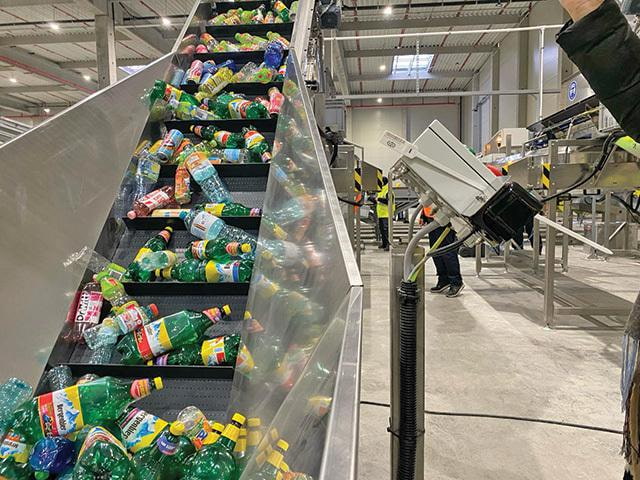
The heavier lifting waits until 2030. Single-use plastic drinks bottles must then contain at least 30 per cent recycled material, beverage distributors must hit a 10 per cent reuse target measured on sales volume, and everything placed on the market must be recyclable. Member states also face binding per-person cuts in packaging waste of 5 per cent by 2030 and 15 per cent by 2040, measured against a 2018 baseline. Those numbers look modest until you consider the starting point: Europeans discard roughly 180 kilogrammes of packaging each per year, and Eurostat put the plastic slice alone at 35.3 kilogrammes per person in 2023.
Sceptics will note that the regulation front-loads the paperwork and back-loads the environmental payoff. That reading is fair as far as it goes. The counterargument is that a single legal text removes the arbitrage that let producers shop between national regimes, and harmonised definitions of manufacturer and producer give enforcement authorities someone to call when packaging fails. Whether that translates into less waste depends entirely on the acts Brussels has not yet written.
For now the new packaging rules deliver certainty about chemistry and ambiguity about everything a consumer will actually see. That is a strange way to launch a circular economy flagship, and the Commission has roughly one quarter to fix the second half.