August 23, 2026
LATEST
Europe Now Runs Trade Defence Against China One Product at a TimeWhat Seoul Must Sign Before Korean Firms Can Touch SAFE MoneyNorth Korea’s Money Moves Faster Than Europe Can List Its OwnersNew Zealand Is Still Waiting for the Pact Japan and Korea SignedFarmers Won a CAP Budget Floor and Lost the Second PillarAustralia Wants Into Horizon Europe Before the Money DoublesOcean Act Drafters Face a Deadline and Two Rival DirectivesFive Joint Defence Projects Start With 325 Million in Seed MoneyVehicle Circularity Rules Now Land on Suppliers, Not Just CarmakersArmenia Is Halfway Through a Visa Roadmap of 74 BenchmarksSyria Regained a Trade Agreement While Sanctions Remain in PlaceHeatwave Preparedness Now Needs a Law, Not Another PlanEurope’s Tobacco Tax Overhaul Now Doubles as an EU Budget FixCrypto Rules Reopened Two Years After They Took EffectETIAS Has Quietly Lost the Only Launch Date It Ever Committed ToSteel Quotas Fell 47 Percent and Buyers Are Still AdjustingWill the Space Act Survive Its Second Half of Negotiations in CouncilFishermen Want More Herring While Scientists Advise Zero CodDestroying Unsold Clothes Became Illegal and Little Has ChangedCivil Society Gets Double the Money and Loses Its ProgrammeEurope Now Runs Trade Defence Against China One Product at a TimeWhat Seoul Must Sign Before Korean Firms Can Touch SAFE MoneyNorth Korea’s Money Moves Faster Than Europe Can List Its OwnersNew Zealand Is Still Waiting for the Pact Japan and Korea SignedFarmers Won a CAP Budget Floor and Lost the Second PillarAustralia Wants Into Horizon Europe Before the Money DoublesOcean Act Drafters Face a Deadline and Two Rival DirectivesFive Joint Defence Projects Start With 325 Million in Seed MoneyVehicle Circularity Rules Now Land on Suppliers, Not Just CarmakersArmenia Is Halfway Through a Visa Roadmap of 74 BenchmarksSyria Regained a Trade Agreement While Sanctions Remain in PlaceHeatwave Preparedness Now Needs a Law, Not Another PlanEurope’s Tobacco Tax Overhaul Now Doubles as an EU Budget FixCrypto Rules Reopened Two Years After They Took EffectETIAS Has Quietly Lost the Only Launch Date It Ever Committed ToSteel Quotas Fell 47 Percent and Buyers Are Still AdjustingWill the Space Act Survive Its Second Half of Negotiations in CouncilFishermen Want More Herring While Scientists Advise Zero CodDestroying Unsold Clothes Became Illegal and Little Has ChangedCivil Society Gets Double the Money and Loses Its Programme
August 23, 2026
LATEST
Europe Now Runs Trade Defence Against China One Product at a TimeWhat Seoul Must Sign Before Korean Firms Can Touch SAFE MoneyNorth Korea’s Money Moves Faster Than Europe Can List Its OwnersNew Zealand Is Still Waiting for the Pact Japan and Korea SignedFarmers Won a CAP Budget Floor and Lost the Second PillarAustralia Wants Into Horizon Europe Before the Money DoublesOcean Act Drafters Face a Deadline and Two Rival DirectivesFive Joint Defence Projects Start With 325 Million in Seed MoneyVehicle Circularity Rules Now Land on Suppliers, Not Just CarmakersArmenia Is Halfway Through a Visa Roadmap of 74 BenchmarksSyria Regained a Trade Agreement While Sanctions Remain in PlaceHeatwave Preparedness Now Needs a Law, Not Another PlanEurope’s Tobacco Tax Overhaul Now Doubles as an EU Budget FixCrypto Rules Reopened Two Years After They Took EffectETIAS Has Quietly Lost the Only Launch Date It Ever Committed ToSteel Quotas Fell 47 Percent and Buyers Are Still AdjustingWill the Space Act Survive Its Second Half of Negotiations in CouncilFishermen Want More Herring While Scientists Advise Zero CodDestroying Unsold Clothes Became Illegal and Little Has ChangedCivil Society Gets Double the Money and Loses Its ProgrammeEurope Now Runs Trade Defence Against China One Product at a TimeWhat Seoul Must Sign Before Korean Firms Can Touch SAFE MoneyNorth Korea’s Money Moves Faster Than Europe Can List Its OwnersNew Zealand Is Still Waiting for the Pact Japan and Korea SignedFarmers Won a CAP Budget Floor and Lost the Second PillarAustralia Wants Into Horizon Europe Before the Money DoublesOcean Act Drafters Face a Deadline and Two Rival DirectivesFive Joint Defence Projects Start With 325 Million in Seed MoneyVehicle Circularity Rules Now Land on Suppliers, Not Just CarmakersArmenia Is Halfway Through a Visa Roadmap of 74 BenchmarksSyria Regained a Trade Agreement While Sanctions Remain in PlaceHeatwave Preparedness Now Needs a Law, Not Another PlanEurope’s Tobacco Tax Overhaul Now Doubles as an EU Budget FixCrypto Rules Reopened Two Years After They Took EffectETIAS Has Quietly Lost the Only Launch Date It Ever Committed ToSteel Quotas Fell 47 Percent and Buyers Are Still AdjustingWill the Space Act Survive Its Second Half of Negotiations in CouncilFishermen Want More Herring While Scientists Advise Zero CodDestroying Unsold Clothes Became Illegal and Little Has ChangedCivil Society Gets Double the Money and Loses Its Programme

Joint Patrols Will Show Whether the India Defence Pact Works

Kochi: The Indian Navy’s Southern Naval Command runs its training establishments from this Kerala port, and it is here and at Mumbai that the practical content of Europe’s newest security arrangement will either appear or fail to. On 27 January the EU High Representative and India’s external affairs minister signed a Security and Defence Partnership at the sixteenth EU-India summit in New Delhi. It was the first of its kind between Brussels and Delhi.

The document is broad. It covers maritime security, defence industry and technology, cyber and hybrid threats, space, counter-terrorism, non-proliferation, and consular cooperation. Its central institutional promise is an annual security and defence dialogue. The first round met in New Delhi on 6 March, six weeks after signature, and identified areas for closer coordination rather than committing to specific operations.

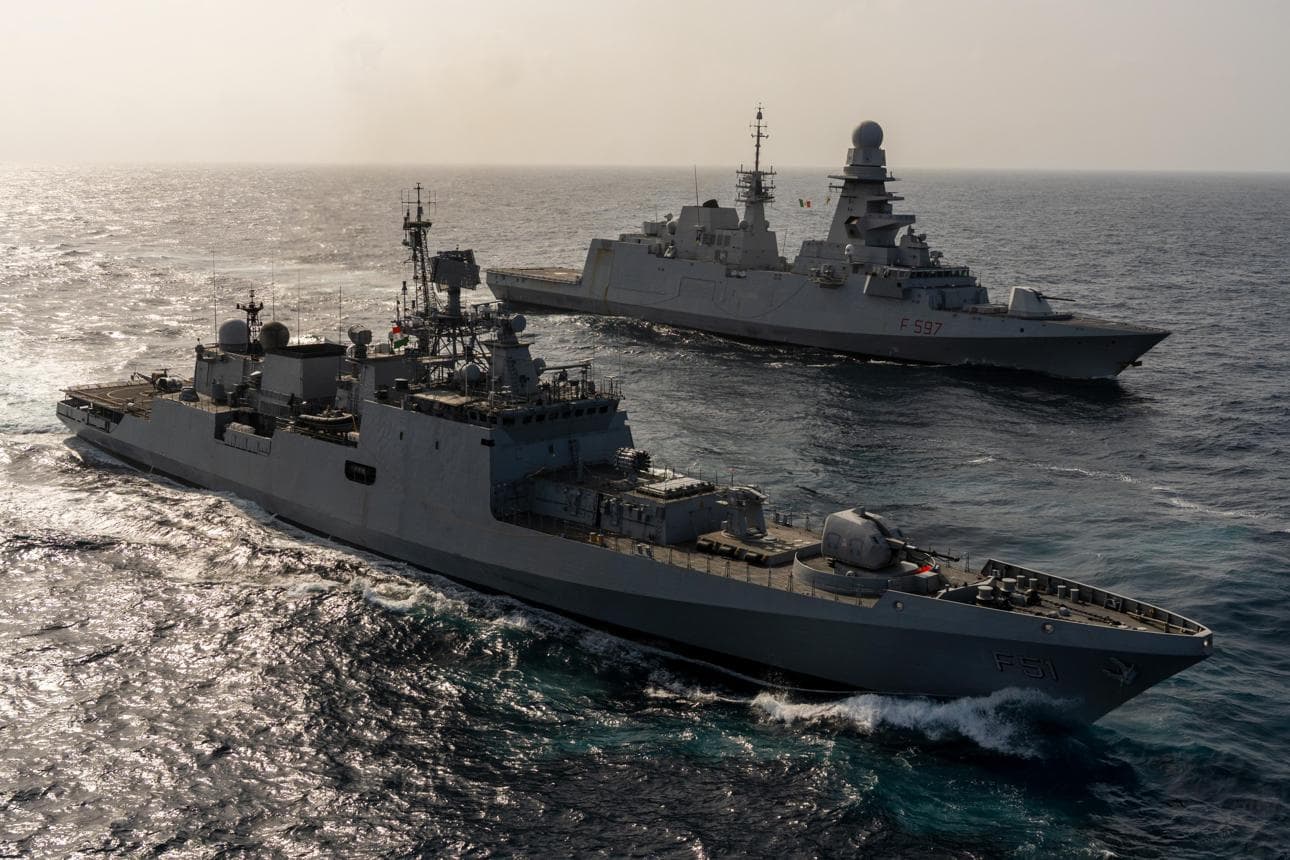
An annual meeting produces communiques. Joint exercises produce habits. The partnership’s operational language is the part worth tracking, and it is unusually concrete for a document of this kind: joint exercises, port calls, and the exchange of information for maritime domain awareness. Those three items are how navies learn each other’s procedures, and they cost far less political capital than a procurement decision.

Europe already has an instrument in the region. Operation Atalanta has worked with the Indian Navy in the western Indian Ocean for years, well before any partnership text existed, and both sides escort shipping through the same waters. Building on that is straightforward. The harder half is defence industry and technology, where Brussels has less to offer than the announcement implies.

European defence funding instruments are built for member states and a narrow set of associated countries. India is neither. Its procurement system runs through domestic production requirements and offsets, and the companies that actually sell India submarines, engines and artillery are French, German, Italian and Spanish, negotiating bilaterally. The partnership does not change who signs those contracts. It sets a frame around them.

That frame still has value, and the sceptical reading undersells it. India’s European defence relationships have grown up separately, with Paris far ahead of everyone else, and nothing coordinates them. A Union-level structure gives smaller member states a way into a market they cannot reach alone, and it gives India a single interlocutor for the parts of European policy that are genuinely centralised, such as export controls, dual-use rules and space cooperation.

It also arrives with an obvious geopolitical caveat. India buys Russian equipment, keeps its strategic autonomy doctrine intact, and has declined to align with European sanctions policy. Brussels signed the partnership knowing this, which suggests the calculation was about the Indian Ocean rather than about Ukraine. Trade helped: the free trade agreement signed at the same summit gave both sides a reason to add a security chapter to the relationship.

Seven months in, the honest scorecard is one dialogue held and a text that lists intentions. The measurable tests are simple enough. Does the second dialogue produce a named exercise schedule with dates. Does India join any European maritime information sharing architecture in the Indian Ocean. Do European port calls in Kochi and Mumbai become routine rather than notable. Partnerships that meet once a year drift. Ones that sail together do not.