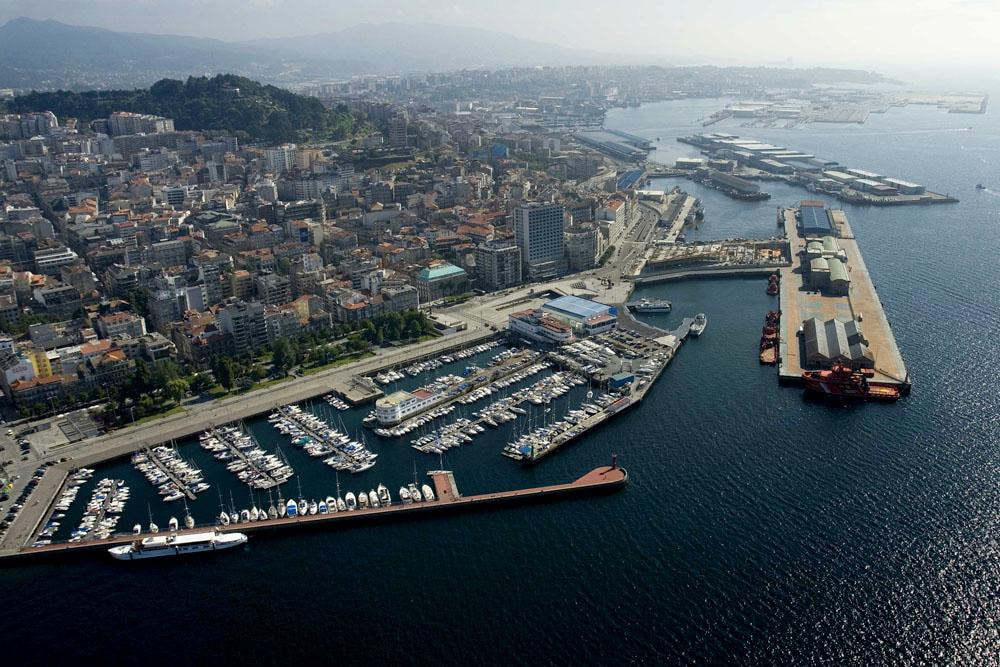
Vigo: The Ocean Act moved into drafting this summer after a European Commission consultation closed on 16 July 2026, leaving officials in DG MARE roughly four months to turn a strategy with six priorities into a legislative text the Commission has promised to table before the end of the year.
The consultation opened on 23 April 2026 and asked ports, fishers, offshore wind developers, scientists and coastal municipalities the same structured questions. Their answers pointed in opposite directions, which is the central problem the Ocean Act now has to solve. Everyone wants clearer rules on who may use which stretch of sea. Almost nobody wants the rules to bind them first.
Costas Kadis, the Commissioner for Fisheries and Oceans, told the Parliament’s fisheries committee on 3 December 2025 that the Act could incorporate both the spatial planning and the marine environment directives. He has defended the Pact underneath it in consistent terms.
The first ever holistic strategy for the sustainable management and preservation of our ocean.
That absorption is the hard part. The Maritime Spatial Planning Directive of 2014 tells member states to draw maps allocating sea space between shipping, energy, aquaculture and conservation. The Marine Strategy Framework Directive of 2008 sets an environmental outcome, good environmental status, that most member states failed to reach by the 2020 deadline. Merging a planning tool with a results tool forces a choice the EU has avoided for a decade, because a plan that must deliver good environmental status constrains national ministries far more than a plan that merely records their intentions.
The Commission has set out what the Act should carry.
- A single legal reference point for the economic, climate, environmental and social targets already scattered across EU ocean law.
- Modernised maritime spatial planning built around sea basins rather than national waters alone.
- A legal basis for OceanEye, the European ocean observation initiative.
- Fewer reporting obligations, in line with the Commission’s wider simplification drive.
Fishing ports read that list with justified suspicion. Simplification has meant fewer forms in some files and fewer vessels in others, and Galician and Breton fleets have watched offshore wind concessions move into grounds they have worked for generations. Sea-basin planning gives them a formal seat at a table where the decisions get made, but it also creates a forum where their claims lose to grid connections and defence corridors on any objective scoring of national interest.
Conservation groups worry about the opposite failure. The Ocean Pact, which the Commission adopted on 5 June 2025, commits the EU to protecting and restoring ocean health alongside boosting the blue economy, strengthening maritime security and supporting coastal communities. Nothing in the Commission consultation on the European Ocean Act explains how a directive resolves a conflict between those objectives when a member state cannot satisfy both in the same square kilometre.
Institutional groundwork has advanced faster than the legal text. The Commission established the Ocean Board in the first quarter of 2026 to coordinate implementation across services, and it aligned the Act with a parallel revision of the Marine Strategy Framework Directive so the two files do not contradict each other. Officials describe the sequencing as deliberate. Critics describe it as a way of settling substance in comitology before legislators see a proposal.
Timing now drives everything. A Q4 2026 proposal reaches Parliament and Council during 2027, which means trilogues run into the next budget cycle and the negotiation over the European Maritime, Fisheries and Aquaculture Fund. Coastal regions will judge the Ocean Act by whether it moves money, not by whether it tidies the statute book. On current drafting, it does the second and leaves the first to a fund nobody has agreed yet.