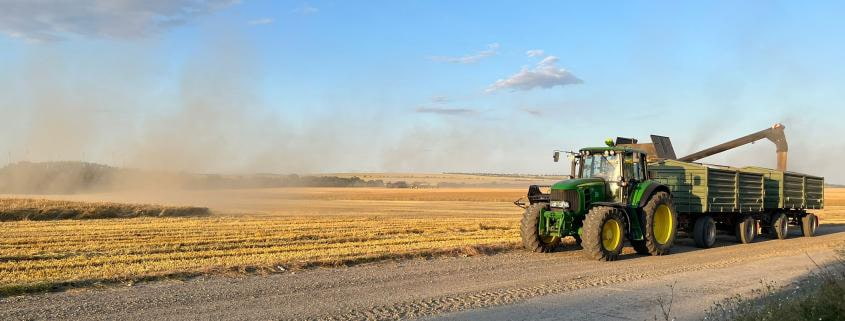
Magdeburg: Eastern Germany farms at a scale most of the Union does not. Holdings of several thousand hectares are ordinary here, inherited from a cooperative structure that never fragmented. Under the Commission’s plan for the next farm budget, that scale becomes expensive.
The proposal for the 2028 to 2034 period folds agriculture into a National and Regional Partnership Fund worth 865 billion euro, and ring-fences at least 293.7 billion of that for direct income support to farmers. The Commission presents the redesign as fairer and better targeted, replacing a thicket of payment schemes with a single degressive area-based payment.
Degressive means the rate falls as the holding grows, and the plan caps area-based income support at 100,000 euro per farmer per year. Support tilts toward smaller and family-owned farms, toward young farmers, and toward producers working land with natural constraints. For a 200-hectare family holding in France or Poland, the arithmetic improves. For a 3,000-hectare operation in Saxony-Anhalt or Bohemia, it does not.
Large producers make an efficiency argument. They supply a disproportionate share of European grain, carry the machinery and storage that smaller neighbours cannot finance, and absorb price volatility that would bankrupt a family farm. Penalising size, they say, subsidises structure rather than output. Smallholder organisations reply that decades of area payments quietly funded consolidation, and that a cap merely stops the budget paying for its own concentration.
Both arguments assume the cap survives, which is far from settled. Capping and degressivity have appeared in reform proposals since 2011 and legislators have diluted them in every final text, usually by allowing labour costs to be deducted before the ceiling applies. Governments with large-farm sectors will press for that deduction again, and they carry blocking weight in Council.
Separately, the Commission has been trimming administrative burden inside the current period. It adopted nine acts in January cutting paperwork, which it estimates will save up to 215 million euro a year for farmers and national administrations, and gave member states more room to amend their strategic plans mid-cycle.
Farm organisations welcomed the savings and immediately noted the scale. Two hundred and fifteen million against a fund measured in hundreds of billions is a rounding error, and the paperwork farmers complain about most comes from conditionality rules the simplification package left standing.
The structural question stays open. A budget that pays less per hectare as holdings expand pushes against the direction European agriculture has travelled for forty years. Whether legislators mean to reverse that trend or merely to be seen resisting it becomes clear once the Council working parties finish with the ceiling.