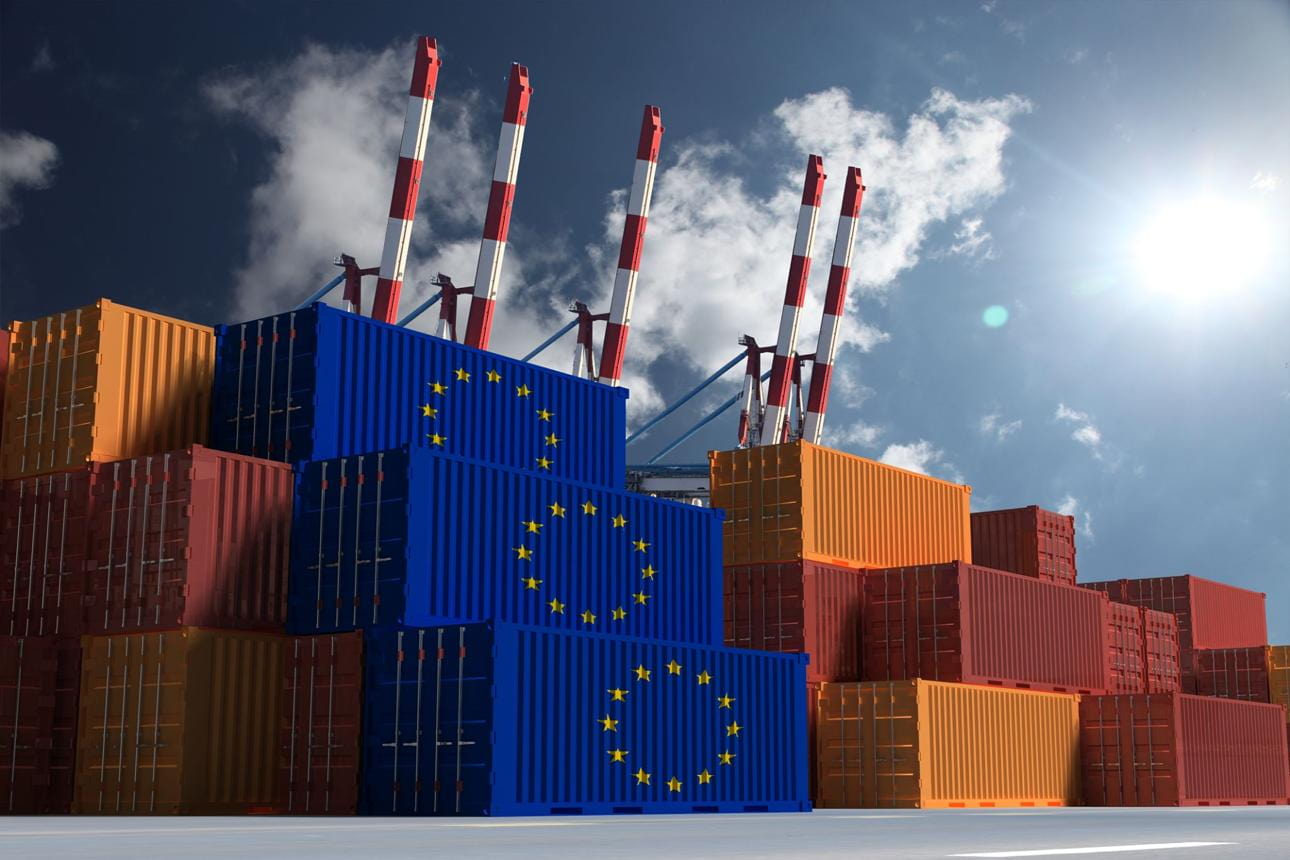
Rotterdam: Standing on the quaysides of Europe’s busiest port, where the containers stacked against the horizon are the rawest measure of the continent’s trade, the latest figures from Eurostat land with a thud. The euro area recorded a goods trade surplus of just 7.8 billion euros in March, a steep drop from the 34.1 billion euros logged a year earlier, and a number that captures how quickly the bloc’s export strength has softened.
A trade surplus, the gap by which a region’s exports exceed its imports, has long been a point of pride for a manufacturing heavyweight like the euro area. The scale of the fall therefore matters. Eurostat’s first estimate points to two culprits in particular: a marked shrinking of the surplus in chemicals and related products, and a similar erosion in machinery and vehicles, the very sectors that anchor the European export model. When the goods that fill the world’s factories and pharmacies sell less briskly, the effect ripples through the entire balance.
The trade reading does not stand alone. The same run of Eurostat indicators showed the euro area economy barely moving, with gross domestic product up just 0.1 percent in the first quarter, a near standstill that helps explain why demand for European exports and the appetite for imports have both lost momentum. Taken together, the data sketch an economy idling rather than accelerating, exposed to every shift in global appetite for its goods.
Numbers like these are easy to wave away as statistical housekeeping, but they feed directly into the decisions that shape daily life. Central bankers weighing interest rates read the trade and growth figures for signs of whether the economy needs cooling or coaxing. Finance ministries building next year’s budgets lean on the same releases to forecast tax receipts. A surplus that shrinks by three quarters in twelve months is precisely the kind of signal that sharpens those debates.
There are gentler ways to read the slide. A narrowing surplus can reflect a healthy pickup in imports, a sign that European households and businesses are buying more from abroad, rather than a collapse in competitiveness. But the concentration of the decline in chemicals and machinery, sectors buffeted by high energy costs and fierce competition from Asian and American rivals, makes the more benign interpretation harder to sustain. These are the industries Europe most fears losing, and the trade ledger is where their struggles show up first.
For the dockworkers and freight forwarders of Rotterdam, abstractions about surpluses translate into the concrete rhythm of arriving and departing ships. A bloc that sells less to the world eventually moves fewer boxes across its piers. One month’s figures prove nothing on their own, and revisions may yet soften the picture. But a surplus reduced to a fraction of its former self is a reminder that Europe’s reputation as the world’s workshop can no longer be taken for granted, and that the data drops arriving quietly each month are worth more attention than they usually receive.