August 10, 2026
LATEST
Europe Finally Locks In Its 348-Satellite Answer to StarlinkPlatform Work Rules Face a National Scramble Before DecemberDuty-Free Parcels Reach the End of the Line for EU ShoppersAfter Nine Years, Europe and Australia Seal a Trade PactBeijing Answers Europe’s Russia Sanctions in KindOne Year On, the EU-Japan Alliance Faces Its First TestEurope’s Chip Ambitions Still Run Through Taiwan’s FabsWhy South Korea Bet Its Research Future on Europe’s ProgrammeEurope and Japan Deepen Their Economic Alliance as Rivals CircleFive Joint Defence Projects Launch Europe’s Military ShieldElectrification Plan Aims to Make Europe First Electro ContinentHorizon Europe Budget Fight Heats Up as Ministers Push BackGoogle’s DMA Fine Sets Off a Transatlantic Tariff ClashTwenty New University Alliances Join Erasmus for Two YearsForeign Subsidies Case Puts Temu in the EU’s SightsVan Tachographs Now Mandatory for Cross-Border FleetsStress Test Exposes Gaps in Euro Area Bank DefencesEurope Bets on a Gulf Partnership Before the Riyadh SummitWhy the Atlantic Route Now Runs Through MauritaniaKyiv and Chisinau Advance as the EU Accession Talks Gather PaceEurope Finally Locks In Its 348-Satellite Answer to StarlinkPlatform Work Rules Face a National Scramble Before DecemberDuty-Free Parcels Reach the End of the Line for EU ShoppersAfter Nine Years, Europe and Australia Seal a Trade PactBeijing Answers Europe’s Russia Sanctions in KindOne Year On, the EU-Japan Alliance Faces Its First TestEurope’s Chip Ambitions Still Run Through Taiwan’s FabsWhy South Korea Bet Its Research Future on Europe’s ProgrammeEurope and Japan Deepen Their Economic Alliance as Rivals CircleFive Joint Defence Projects Launch Europe’s Military ShieldElectrification Plan Aims to Make Europe First Electro ContinentHorizon Europe Budget Fight Heats Up as Ministers Push BackGoogle’s DMA Fine Sets Off a Transatlantic Tariff ClashTwenty New University Alliances Join Erasmus for Two YearsForeign Subsidies Case Puts Temu in the EU’s SightsVan Tachographs Now Mandatory for Cross-Border FleetsStress Test Exposes Gaps in Euro Area Bank DefencesEurope Bets on a Gulf Partnership Before the Riyadh SummitWhy the Atlantic Route Now Runs Through MauritaniaKyiv and Chisinau Advance as the EU Accession Talks Gather Pace
August 10, 2026
LATEST
Europe Finally Locks In Its 348-Satellite Answer to StarlinkPlatform Work Rules Face a National Scramble Before DecemberDuty-Free Parcels Reach the End of the Line for EU ShoppersAfter Nine Years, Europe and Australia Seal a Trade PactBeijing Answers Europe’s Russia Sanctions in KindOne Year On, the EU-Japan Alliance Faces Its First TestEurope’s Chip Ambitions Still Run Through Taiwan’s FabsWhy South Korea Bet Its Research Future on Europe’s ProgrammeEurope and Japan Deepen Their Economic Alliance as Rivals CircleFive Joint Defence Projects Launch Europe’s Military ShieldElectrification Plan Aims to Make Europe First Electro ContinentHorizon Europe Budget Fight Heats Up as Ministers Push BackGoogle’s DMA Fine Sets Off a Transatlantic Tariff ClashTwenty New University Alliances Join Erasmus for Two YearsForeign Subsidies Case Puts Temu in the EU’s SightsVan Tachographs Now Mandatory for Cross-Border FleetsStress Test Exposes Gaps in Euro Area Bank DefencesEurope Bets on a Gulf Partnership Before the Riyadh SummitWhy the Atlantic Route Now Runs Through MauritaniaKyiv and Chisinau Advance as the EU Accession Talks Gather PaceEurope Finally Locks In Its 348-Satellite Answer to StarlinkPlatform Work Rules Face a National Scramble Before DecemberDuty-Free Parcels Reach the End of the Line for EU ShoppersAfter Nine Years, Europe and Australia Seal a Trade PactBeijing Answers Europe’s Russia Sanctions in KindOne Year On, the EU-Japan Alliance Faces Its First TestEurope’s Chip Ambitions Still Run Through Taiwan’s FabsWhy South Korea Bet Its Research Future on Europe’s ProgrammeEurope and Japan Deepen Their Economic Alliance as Rivals CircleFive Joint Defence Projects Launch Europe’s Military ShieldElectrification Plan Aims to Make Europe First Electro ContinentHorizon Europe Budget Fight Heats Up as Ministers Push BackGoogle’s DMA Fine Sets Off a Transatlantic Tariff ClashTwenty New University Alliances Join Erasmus for Two YearsForeign Subsidies Case Puts Temu in the EU’s SightsVan Tachographs Now Mandatory for Cross-Border FleetsStress Test Exposes Gaps in Euro Area Bank DefencesEurope Bets on a Gulf Partnership Before the Riyadh SummitWhy the Atlantic Route Now Runs Through MauritaniaKyiv and Chisinau Advance as the EU Accession Talks Gather Pace

Regions Funnel 34 Billion Euros Into Defence And Housing Plans

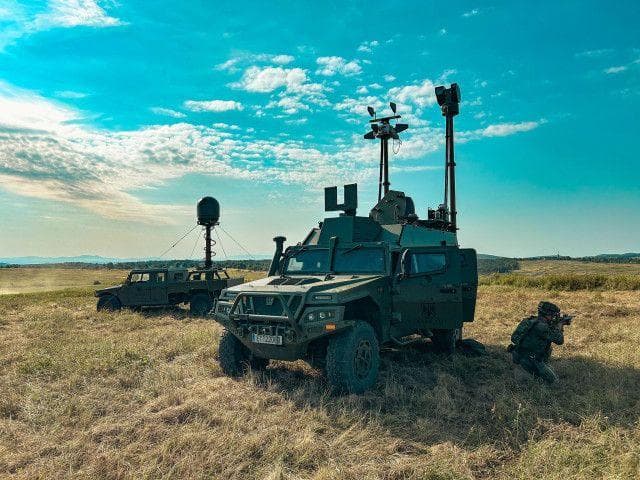
A vast pool of regional development money is being redirected away from its original purpose, and the scale of the shift marks one of the biggest changes to cohesion policy in years. Member states have reprogrammed 34.6 billion euros of their 2021-2027 cohesion funds toward the bloc’s most pressing strategic priorities, according to figures confirmed this spring. Roughly 11.9 billion euros is heading to defence capabilities, military mobility and civil preparedness, while 3.3 billion is earmarked for affordable and sustainable housing. The rest targets competitiveness, water resilience and energy connectivity.

The reallocation flows from the mid-term review of cohesion policy, agreed in 2025, which freed up a flexibility reserve covering half of all funds programmed for 2026 and 2027. Since the September 2025 adoption, the Commission has approved amendments to 186 national and regional programmes across 25 member states. To encourage the pivot, the EU offered higher co-financing rates and a 20 percent one-off pre-financing payment for sums moved in 2026, with extra support for regions bordering Russia, Belarus and Ukraine.

Supporters cast this as cohesion policy growing up, proof that Europe’s largest investment instrument can respond to war on the continent and a housing crunch squeezing its cities. Critics see something more troubling. Cohesion funds exist to narrow the gap between richer and poorer regions, and the Greens together with several regional bodies warn that turning the policy into an emergency toolbox risks hollowing out that founding mission. Money moved into defence factories or mobility corridors is money not spent on the long, unglamorous work of helping lagging regions catch up.

There is also a delivery question. Reprogramming on this scale, this late in the funding cycle, compresses the time left to actually spend the money before the programmes close. Regions that struggled to absorb funds under the original plan will not suddenly find it easier to build housing or military infrastructure at speed, and unspent allocations risk being lost altogether. The generous pre-financing helps cash flow, but it does not solve the bottlenecks in planning, permitting and procurement that slowed disbursement in the first place.

The shift also redraws who decides. Channelling money into defence and strategic technologies tends to favour national governments and large firms over the local authorities that cohesion policy was designed to empower, raising questions about whether regional voices are being crowded out of their own funds.

The debate is a preview of a far larger fight. The Commission’s proposals for the post-2027 budget float folding cohesion money into national plans steered from capitals, a model regional governments fear would cut them out entirely. This year’s reallocation, fast and centrally encouraged, will be read by both camps as evidence for their case, making the next budget negotiation a battle over not just how much regions receive but who controls it.