
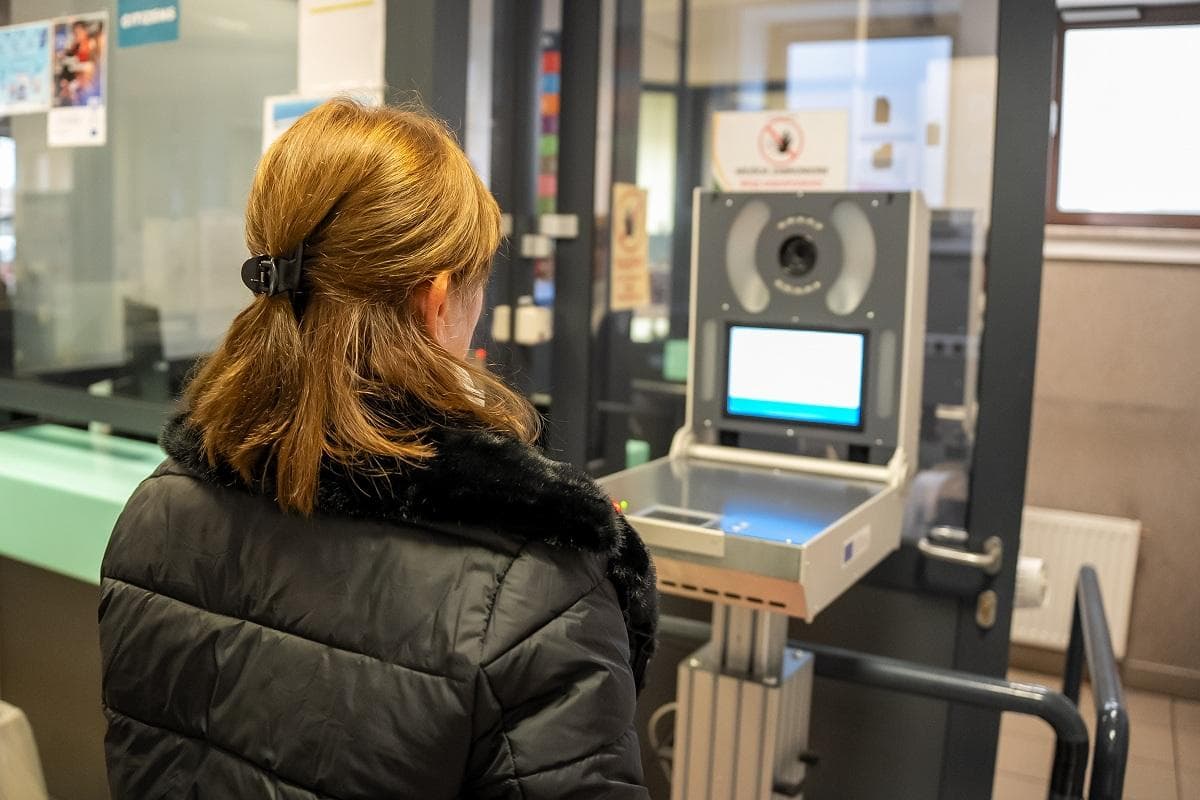
Medyka: Border guards at the European Union’s external crossings have been registering fingerprints and facial images under full legal obligation since 10 April 2026, yet four months into the regime the practical experience of biometric checks still varies sharply from one crossing point to the next. The Entry/Exit System applies everywhere in law. It does not yet behave the same way everywhere in practice.
The system began operating on 12 October 2025 under a phased schedule that gave twenty-nine countries a 180-day window to switch on their booths gradually. During that period a traveller could clear one airport with a passport stamp and the next with a full biometric enrolment. The Commission confirmed the end of that transition in a statement that the Entry/Exit System would become fully operational on 10 April.
What the legislators wrote into the phasing regulation, however, was a safety valve that outlived the rollout. Member states may partially suspend biometric checks for up to ninety days after full deployment, with a possible sixty-day extension, when traffic volumes threaten to overwhelm a crossing. Greek authorities used that flexibility during the spring, pausing registration for British visitors at pressured entry points. Others have throttled enrolment quietly at peak hours without issuing a press release.
This creates an awkward gap between the legal position and the traveller experience. On paper there is no national opt-out and no exemption by nationality: every third-country national crossing an external border surrenders four fingerprints, a facial image and a passport scan on the first trip, and the record then governs the ninety-day short-stay calculation for three years. In practice a family flying into one Mediterranean airport in August may pass through untouched while the same passports trigger a fifteen-minute enrolment at a land border in Poland.
Land borders remain the hardest case. Coach passengers cannot easily queue at a kiosk, and freight corridors carry commercial pressure that airports do not. National authorities have responded with mobile enrolment units, pre-registration apps and dedicated lanes, but the equipment reached different crossings at different times and the staffing did not always follow it.
The consequences run beyond queue length. The whole rationale for biometric checks is a reliable, machine-readable record of who entered, when, and whether they left. Every suspended registration leaves a hole in that dataset. Enforcement of the short-stay rule depends on completeness, and the system will only produce dependable overstay figures once a full three-year cycle of clean records exists.
The next dependency is already visible. ETIAS, the pre-travel authorisation for visa-exempt visitors, cannot start until the Entry/Exit System runs stably, and officials now point to the final quarter of 2026. Each month of uneven biometric checks pushes that date further out and delays the screening layer that justified the border package politically. The Commission maintains the operational detail on its smart borders page.
Travellers, meanwhile, should assume the strictest version applies. Carrying the passport used for the original enrolment matters, because a new document means a new registration. The gap between what the rulebook says and what a given booth does will close eventually. Planning around the rulebook is the safer bet.


