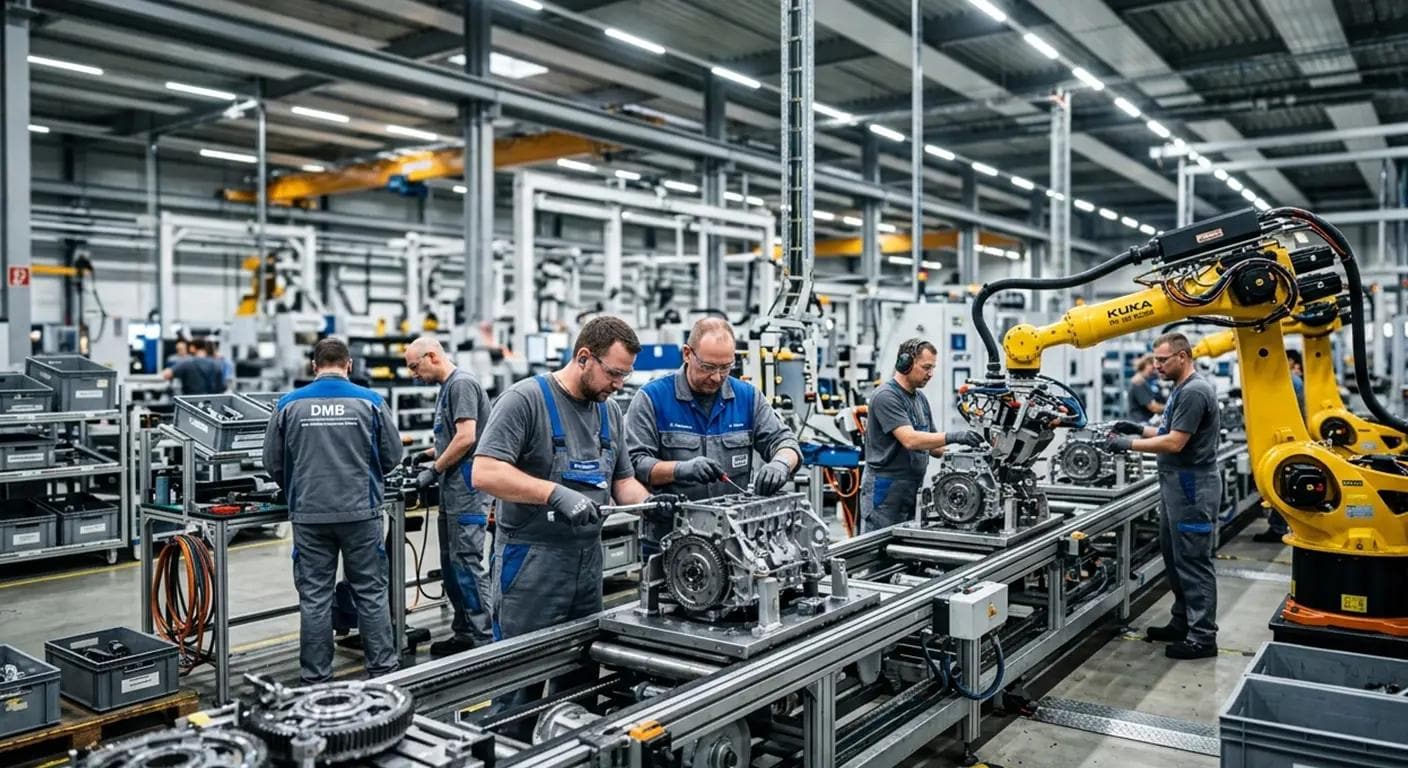
Eindhoven: Machine builders in this Dutch manufacturing cluster sell into public tenders across the continent, and the Accelerator Act would rewrite the rules those tenders follow. Parliament’s three co-rapporteurs finished their draft report this month, and they want far more European content in strategic purchases than the European Commission asked for when it tabled the proposal on 4 March.
The Commission built the Accelerator Act around a blunt number. It wants industrial manufacturing to reach 20 percent of EU gross domestic product by 2035, up from 14.3 percent in 2024, and it covers energy-intensive industries, net-zero technologies and the automotive sector. The proposal pairs Made in EU and low-carbon preferences in public procurement with faster permitting, designated industrial acceleration areas and tighter screening of foreign direct investment in emerging strategic sectors.
Those origin requirements bite from 1 January 2029 for procurement procedures, with comparable timing for public support schemes. Buyers therefore have three years to learn how the new tests work before they start losing tenders over them.
Christophe Grudler for Renew, Pierre Jouvet for the Socialists and Anna Cavazzini for the Greens took the file on 29 April under a joint committee procedure spanning industry, internal market and trade. Their draft pushes the required share of Made in Europe and low-carbon products in strategic sectors to 50 percent by 2036, and it widens the list of strategic materials to include construction plastics alongside steel, aluminium and cement.
Parliament is also writing a gate for imports. Members propose seven conditions a third-country product must satisfy before anyone treats it as equivalent to a European one, which turns a vague origin preference into an administrable test. Trading partners will read that list closely, because equivalence decides who can still bid.
The European Trade Union Confederation wants the text to go further still, arguing that procurement leverage should buy employment commitments rather than only factory locations. Industry groups push the opposite way, warning that a 50 percent threshold raises costs for public authorities that already struggle to fund infrastructure. Both camps agree the number decides the law’s character.
Momentum on the Council side looks thinner. Internal market ministers gather in Brussels next week, and diplomats expect the Accelerator Act to appear as an information point rather than a policy debate, because work in the working parties has not advanced far enough. The Irish presidency has said it intends to land political agreements on the file before its term ends in December, a timetable that assumes capitals move quickly in October and November.
The deeper question sits beneath the percentages. Local content rules protect factories that exist and can raise input prices for the ones that follow, and Europe has little recent experience calibrating them. Parliament’s legislative tracker shows the file still at the tabled stage, which leaves room for either ambition to win.