August 10, 2026
LATEST
Europe Finally Locks In Its 348-Satellite Answer to StarlinkPlatform Work Rules Face a National Scramble Before DecemberDuty-Free Parcels Reach the End of the Line for EU ShoppersAfter Nine Years, Europe and Australia Seal a Trade PactBeijing Answers Europe’s Russia Sanctions in KindOne Year On, the EU-Japan Alliance Faces Its First TestEurope’s Chip Ambitions Still Run Through Taiwan’s FabsWhy South Korea Bet Its Research Future on Europe’s ProgrammeEurope and Japan Deepen Their Economic Alliance as Rivals CircleFive Joint Defence Projects Launch Europe’s Military ShieldElectrification Plan Aims to Make Europe First Electro ContinentHorizon Europe Budget Fight Heats Up as Ministers Push BackGoogle’s DMA Fine Sets Off a Transatlantic Tariff ClashTwenty New University Alliances Join Erasmus for Two YearsForeign Subsidies Case Puts Temu in the EU’s SightsVan Tachographs Now Mandatory for Cross-Border FleetsStress Test Exposes Gaps in Euro Area Bank DefencesEurope Bets on a Gulf Partnership Before the Riyadh SummitWhy the Atlantic Route Now Runs Through MauritaniaKyiv and Chisinau Advance as the EU Accession Talks Gather PaceEurope Finally Locks In Its 348-Satellite Answer to StarlinkPlatform Work Rules Face a National Scramble Before DecemberDuty-Free Parcels Reach the End of the Line for EU ShoppersAfter Nine Years, Europe and Australia Seal a Trade PactBeijing Answers Europe’s Russia Sanctions in KindOne Year On, the EU-Japan Alliance Faces Its First TestEurope’s Chip Ambitions Still Run Through Taiwan’s FabsWhy South Korea Bet Its Research Future on Europe’s ProgrammeEurope and Japan Deepen Their Economic Alliance as Rivals CircleFive Joint Defence Projects Launch Europe’s Military ShieldElectrification Plan Aims to Make Europe First Electro ContinentHorizon Europe Budget Fight Heats Up as Ministers Push BackGoogle’s DMA Fine Sets Off a Transatlantic Tariff ClashTwenty New University Alliances Join Erasmus for Two YearsForeign Subsidies Case Puts Temu in the EU’s SightsVan Tachographs Now Mandatory for Cross-Border FleetsStress Test Exposes Gaps in Euro Area Bank DefencesEurope Bets on a Gulf Partnership Before the Riyadh SummitWhy the Atlantic Route Now Runs Through MauritaniaKyiv and Chisinau Advance as the EU Accession Talks Gather Pace
August 10, 2026
LATEST
Europe Finally Locks In Its 348-Satellite Answer to StarlinkPlatform Work Rules Face a National Scramble Before DecemberDuty-Free Parcels Reach the End of the Line for EU ShoppersAfter Nine Years, Europe and Australia Seal a Trade PactBeijing Answers Europe’s Russia Sanctions in KindOne Year On, the EU-Japan Alliance Faces Its First TestEurope’s Chip Ambitions Still Run Through Taiwan’s FabsWhy South Korea Bet Its Research Future on Europe’s ProgrammeEurope and Japan Deepen Their Economic Alliance as Rivals CircleFive Joint Defence Projects Launch Europe’s Military ShieldElectrification Plan Aims to Make Europe First Electro ContinentHorizon Europe Budget Fight Heats Up as Ministers Push BackGoogle’s DMA Fine Sets Off a Transatlantic Tariff ClashTwenty New University Alliances Join Erasmus for Two YearsForeign Subsidies Case Puts Temu in the EU’s SightsVan Tachographs Now Mandatory for Cross-Border FleetsStress Test Exposes Gaps in Euro Area Bank DefencesEurope Bets on a Gulf Partnership Before the Riyadh SummitWhy the Atlantic Route Now Runs Through MauritaniaKyiv and Chisinau Advance as the EU Accession Talks Gather PaceEurope Finally Locks In Its 348-Satellite Answer to StarlinkPlatform Work Rules Face a National Scramble Before DecemberDuty-Free Parcels Reach the End of the Line for EU ShoppersAfter Nine Years, Europe and Australia Seal a Trade PactBeijing Answers Europe’s Russia Sanctions in KindOne Year On, the EU-Japan Alliance Faces Its First TestEurope’s Chip Ambitions Still Run Through Taiwan’s FabsWhy South Korea Bet Its Research Future on Europe’s ProgrammeEurope and Japan Deepen Their Economic Alliance as Rivals CircleFive Joint Defence Projects Launch Europe’s Military ShieldElectrification Plan Aims to Make Europe First Electro ContinentHorizon Europe Budget Fight Heats Up as Ministers Push BackGoogle’s DMA Fine Sets Off a Transatlantic Tariff ClashTwenty New University Alliances Join Erasmus for Two YearsForeign Subsidies Case Puts Temu in the EU’s SightsVan Tachographs Now Mandatory for Cross-Border FleetsStress Test Exposes Gaps in Euro Area Bank DefencesEurope Bets on a Gulf Partnership Before the Riyadh SummitWhy the Atlantic Route Now Runs Through MauritaniaKyiv and Chisinau Advance as the EU Accession Talks Gather Pace

Albania Enters The Final Stretch Of Its Long EU Membership Bid

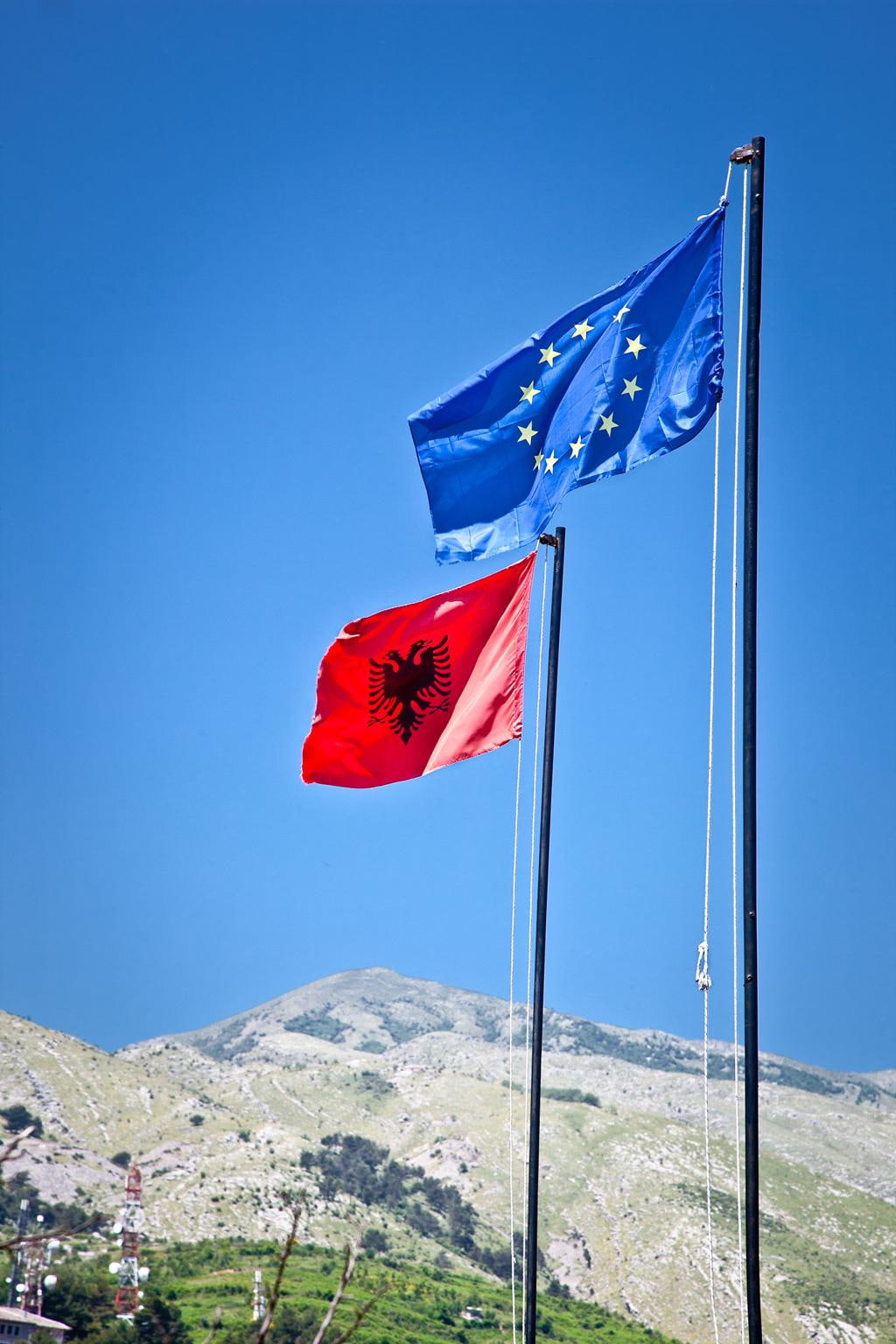
Tirana: For a country that has spent more than a decade in the European Union’s waiting room, the past two weeks have brought a rare sense of momentum. Albania has formally crossed into the concluding phase of its accession negotiations, becoming only the second candidate after Montenegro to reach a milestone that the bloc’s enlargement officials treat as the point of no easy return.

The breakthrough came in two steps. In late May a working group of member state experts signed off on an interim benchmark assessment report on Albania, the technical document that certifies a candidate has done enough on the most sensitive questions to be trusted with the rest. Days later, an intergovernmental conference, the eighth in the sequence, marked the official start of the final stage of talks. In the careful choreography of enlargement, where every step is laden with conditionality, that conference was the moment Tirana had been working towards for years.

What unlocked it was progress on the chapters that matter most and frighten capitals the most. The assessment confirmed that Albania had met the interim benchmarks on the judiciary and fundamental rights, and on justice, freedom and security, the two files that sit at the heart of what the Union calls its fundamentals. These are the areas where backsliding elsewhere has burned the bloc badly, and where it now insists candidates demonstrate durable reform before, not after, they join. Clearing them set the closing benchmarks for the first and most symbolically loaded cluster of negotiations, the one that is opened first and shut last precisely because it underpins everything else.

The enlargement commissioner framed the moment as proof that the accession process can still deliver when a candidate puts in the work, a message aimed as much at the other hopefuls in the western Balkans as at Albania itself. After years in which enlargement felt stalled, hostage to internal disputes and fatigue, the Union has been keen to show that the door is genuinely open and that merit, rather than geopolitics alone, can move a country through it. Albania’s government, which has staked considerable political capital on a sprint towards membership by the end of the decade, has seized on the symbolism.

Yet the hard part lies ahead. Reaching the final phase means Albania can now begin to provisionally close individual negotiating chapters, of which there are more than thirty, each carrying its own thicket of legislation to be transposed and institutions to be built or reformed. Closing benchmarks tend to be more demanding than the opening ones, and the Union has grown more exacting with each enlargement round, mindful of past admissions where rule-of-law problems proved easier to wave through than to fix. Corruption, the independence of the courts and the strength of public administration remain the issues on which Albania will be judged, and on which it has the furthest still to travel.

There is also the matter of the Union itself, which has not settled how it will absorb new members or reform its own decision-making and budget to make room for them. A candidate can do everything asked of it and still find the goalposts shifted by debates in the larger capitals over what an enlarged Union should look like. For now, though, the mood in Tirana is one of cautious vindication. The country has reached a stage only one other has managed, and after years of waiting, movement of any kind feels like progress.