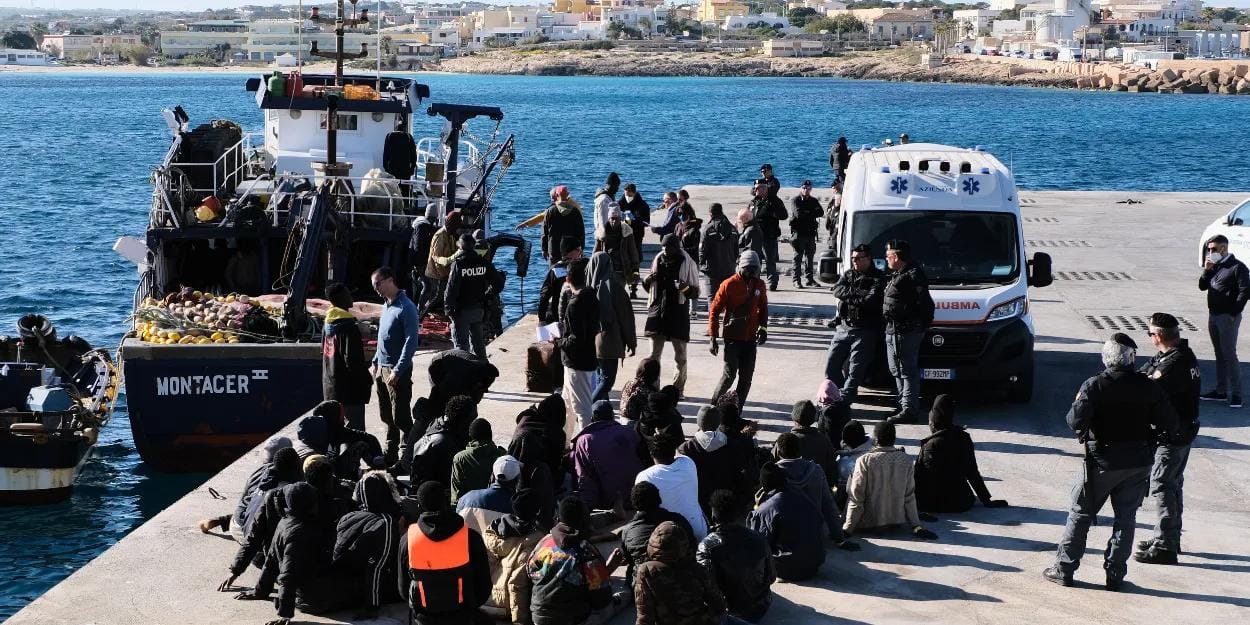
Lampedusa: The small Italian island that came to symbolise Europe’s migration pressures is registering a quieter year. Figures from the EU border agency show irregular border crossings into the union fell by 37 percent in the first half of 2026 compared with the same period a year earlier, with more than 49,000 detections recorded across all routes.
The decline held steady through the spring. Over the first five months of the year the agency counted a drop of almost 40 percent, with close to 39,000 crossings, suggesting the trend was not a brief seasonal dip. Officials caution that the numbers track detections of illegal crossings rather than individual people, since the same person may attempt a border several times.
Several forces sit behind the fall. Tighter cooperation with departure and transit countries, rougher weather on some sea routes and shifting smuggling patterns have all played a part, and the agency warns that flows can rebound quickly when conditions change. It urges governments to keep reception and screening capacity ready rather than treating the lull as permanent.
The first half of 2026 also brought a structural change. The EU Pact on Migration and Asylum began to take effect, introducing a single standardised screening process at the external border that checks identity, health and security before deciding whether an arrival enters the asylum system or a return procedure. Supporters say the common approach ends years of improvised national responses.
Implementation remains uneven. Frontline states along the Mediterranean and the eastern land borders carry the heaviest operational burden, and disputes persist over how solidarity obligations, including relocations and financial contributions, should be shared. Rights groups continue to press for safeguards so that faster screening does not erode access to protection for those genuinely fleeing danger.
The route picture keeps shifting. Movements across the central Mediterranean, the western African corridor toward the Canary Islands and the western Balkans each rise and fall as smuggling networks adapt, making any single month a poor guide to the year. That volatility is precisely why analysts warn against reading too much triumph into a strong first half.
For island communities like Lampedusa, the statistics translate into calmer harbours and less strain on shelters, at least for now. The agency has published the latest breakdown in its half-year update, and it frames the lower border crossings as a chance to prepare rather than a reason to relax.