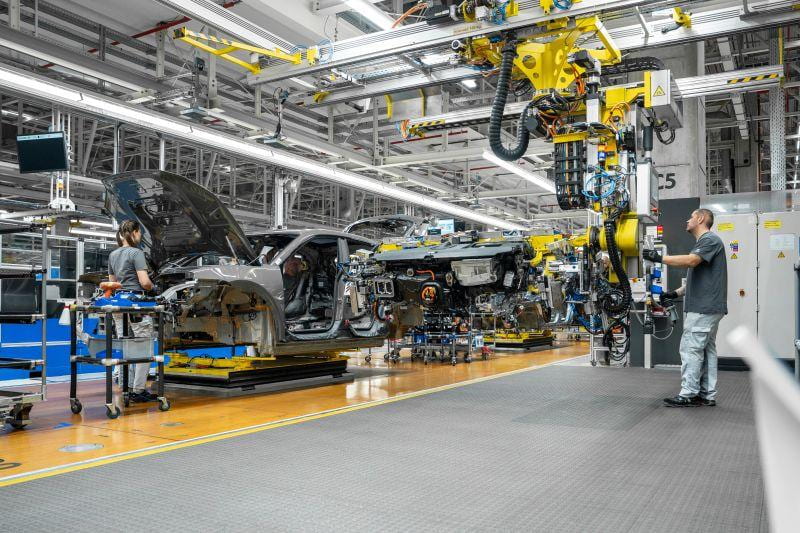
Bratislava: In a country where car plants set the economic mood, every Eurostat release lands like a weather report. The latest reading gave little comfort. Seasonally adjusted industrial output fell 0.2 percent across the euro area and 0.1 percent in the wider EU, a soft patch that Slovakia’s assembly lines feel keenly.
The dip extends a pattern of stop-start recovery that has defined European manufacturing for the better part of two years. Energy-intensive producers, capital goods makers and the sprawling automotive supply chain have all struggled to find a steady footing, and the numbers show the sector treading water rather than climbing.
Eurostat compiles the figure from national statistical offices and strips out seasonal noise before publishing, which lets analysts compare a quiet August with a busy October on equal terms. The agency releases the industrial output series monthly, and its next update lands on 13 August, carrying the readings that will show whether early summer brought any turn.
The trade picture offers a partial counterweight. The bloc still runs a surplus in goods, though the cushion has thinned, with the EU balance recording a 13 billion euro surplus in the first quarter, down 11 billion on the previous three months. A shrinking surplus alongside flat output points to demand that has cooled at home and abroad at once.
Economists read the industrial output data as a live gauge of whether the European Central Bank has room to ease. Persistent weakness in factories argues for lower rates to revive investment, yet policymakers remain wary of loosening while services inflation stays sticky. The monthly print therefore carries weight well beyond the plants it measures.
Revisions add another layer of caution. Eurostat routinely updates earlier months as slow-reporting firms file, so a figure that looks grim on release can soften weeks later, and the reverse. Seasoned analysts treat any single print as a signal to watch rather than a verdict, waiting for two or three readings before calling a turn in the industrial cycle.
Country detail matters as much as the headline. Germany’s heavy industry, Italy’s machinery makers and central Europe’s car hubs move the aggregate, while smaller states can swing sharply on a single large order. Eurostat publishes the full breakdown alongside the summary in its euro indicators.
For Bratislava, the abstraction of a decimal-point decline turns concrete fast. A softer order book in Wolfsburg or Stuttgart reaches Slovak suppliers within weeks, and workers watch the shift patterns, not the spreadsheets. The 13 August release will tell them which way the summer leaned.