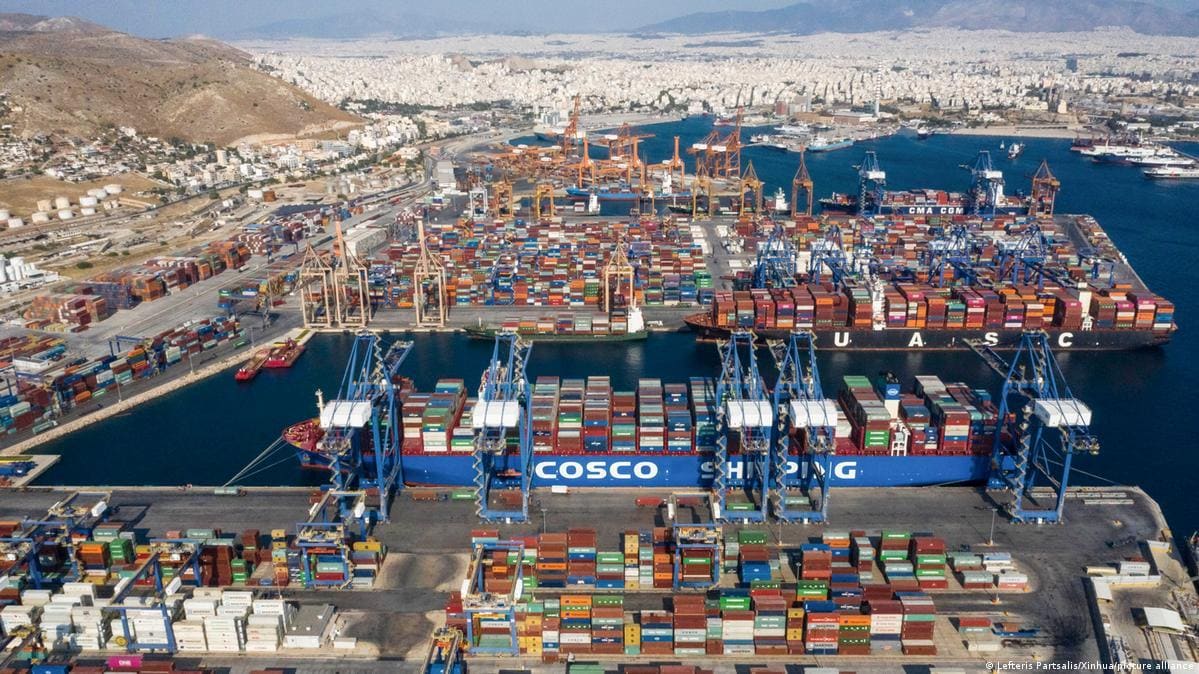
Piraeus: Few places illustrate the argument about foreign investment as neatly as this port, which became a Chinese logistics hub while Europe was still debating whether it had a view on such things. The Union now has one, written into law.
The revised screening regulation replaces the 2019 framework that member states could adopt or ignore. Under the new text every member state must operate a screening mechanism, and a defined minimum scope falls under mandatory review. That scope reaches hyper-critical technologies, critical entities in energy, transport and digital infrastructure, critical raw materials, electoral infrastructure and a narrow list of financial system entities. Parliament approved the text in May, the Council signed it off in June, and it appeared in the Official Journal shortly afterwards.
The practical change is administrative rather than dramatic. Several member states had no screening system at all when the reform began, and others ran mechanisms so narrow that transactions of obvious strategic relevance escaped review. Investors learned to route deals through the permissive jurisdictions. A binding minimum ends that arbitrage, which is the point.
Building the machinery is harder than legislating it. Screening authorities need people who can read a semiconductor supply chain, trace ownership through several corporate layers and reach a defensible decision inside statutory deadlines. Smaller administrations do not have those people sitting idle. The Council’s own account of the reform leans heavily on cooperation between national authorities and the Commission, which is a polite way of saying capacity will be shared because it cannot be duplicated twenty-seven times.
Business groups worry about a different failure mode. Mandatory scope plus untested authorities plus political attention produces caution, and caution in investment screening looks like delay. Greenfield projects in exactly the sectors Europe says it wants, from batteries to data infrastructure, are the ones most likely to trigger review. A framework designed to protect strategic assets can end up taxing strategic investment if deadlines slip.
Outbound investment remains the unfinished half of the agenda. The Commission recommended in January 2025 that member states examine capital flowing out into semiconductors, artificial intelligence and quantum technologies, on the reasoning that exporting capability can matter as much as importing ownership. Recommendations are not obligations, and national responses have been uneven. Whether that gap gets filled will say a great deal about how far economic security thinking has actually travelled.
For ports, utilities and grid operators the immediate consequence is procedural. Deals that once closed on commercial timetables now carry a regulatory clock, and sellers will price that in. For governments the harder work starts after the transition period, when the first genuinely contested case forces a national authority to tell a large investor no and then defend the decision in court.
Europe spent a decade deciding it needed this instrument. It will spend the next few years discovering what using it costs.