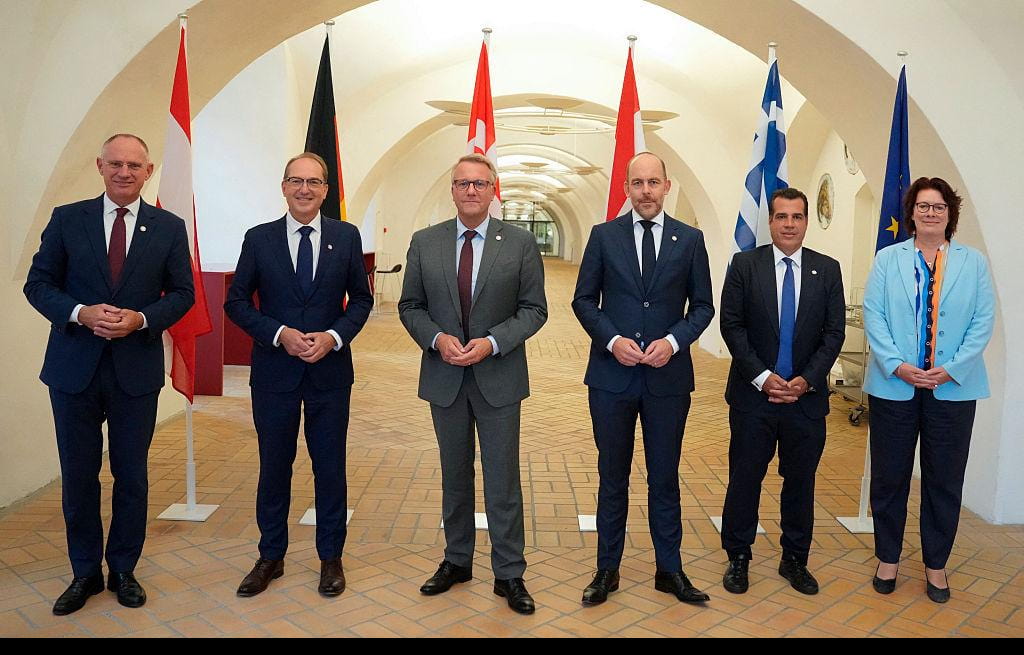
Munich: Denmark, Austria, Germany, the Netherlands and Greece have agreed a common template for deportation centres outside the union. The five interior ministers settled the model in early September and meet again in Munich at the end of the month. They expect a first agreement with a third country around the new year. They have not said which country.
That silence is the interesting part. A template without a partner is a negotiating position, and the five governments are effectively advertising terms before finding a counterparty. Austria’s interior minister has referred to bilateral contacts with Uzbekistan. Nothing else has surfaced.
The legal ground was laid in June, when Council and Parliament agreed the Return Regulation, approved in plenary on 17 June by 418 votes to 218. The text permits returns to transit countries, safe third countries, first countries of asylum and states with which a member state has concluded a formal agreement or an informal arrangement. It allows return hubs, leaving the operating conditions to the bilateral deals themselves.
Everything therefore depends on those deals. The regulation sets a frame. Whether a hub resembles a supervised residence with onward travel options or something closer to detention depends on text nobody outside five interior ministries has read.
The Commission’s justification rests on a number. Around 28 percent of people ordered to leave the union actually go. That gap sustains the argument that the current system fails on its own terms, and it has moved governments that resisted externalisation for a decade.
Critics attack the same number from the other direction. Most non-returns reflect origin countries refusing readmission, not a shortage of places to hold people. A hub in a third state does not by itself produce the documents that make a return possible, and it risks creating a population that cannot move onward and cannot come back.
The Council of Europe’s human rights commissioner has already written to several of the governments involved, questioning how monitoring will work once responsibility crosses a border. Member states answer that the regulation preserves fundamental rights obligations. The harder question is who inspects a facility on foreign territory, and under whose law a complaint gets heard.
Precedent offers little comfort. Italy’s Albanian centres consumed substantial money and processed very few people before courts intervened. The five ministers argue that a shared model with proper legal underpinning avoids those failures. They may be right about the drafting. They have not yet shown a partner government willing to sign.
By 2027, the stated target, either a hub exists or the model remains an unsigned document. The Munich meeting will indicate which.