August 9, 2026
LATEST
New EU Gas Market Rules Take Effect With Consumer SafeguardsDeforestation Regulation Holds Its December Deadline Despite CutsDigital Omnibus Delays Europe’s High-Risk AI Deadline to 2027Europe’s Schools Confront a Widening Basic Skills GapRule of Law Report Finds Progress but Trust Still LagsIRIS2 Gains 66 Satellites as Brussels Signs the Rollout DealNature Restoration Plans Come Due as Member States Race a DeadlineECB Rates Hold at 2.25 Percent as Frankfurt Waits on the DataEU Budget Talks Turn to Cohesion as Ireland Takes OverWildfire Response Stretches Europe’s Emergency Fleet ThinCan Europe’s Quantum Plan Match Its Big Ambitions?Armenia Edges West as Moscow’s Grip Slips AwayEurope Inherits the World’s Aid Bill It Cannot Fully PayAir Passenger Rights Get Their First Overhaul in Two DecadesErasmus Opens a 5 Billion Euro Round for Skills and MobilityCeuta Crisis Pushes the EU Toward Faster Migrant ReturnsBulky Parcels Face a Packaging Crackdown From August 12Can Europe Build Its Drone Wall Before 2030 Arrives?Indonesia’s Trade Deal With Europe Nears Its Final SignatureEurope Leans on Beijing to Keep Climate Talks Alive Before AntalyaNew EU Gas Market Rules Take Effect With Consumer SafeguardsDeforestation Regulation Holds Its December Deadline Despite CutsDigital Omnibus Delays Europe’s High-Risk AI Deadline to 2027Europe’s Schools Confront a Widening Basic Skills GapRule of Law Report Finds Progress but Trust Still LagsIRIS2 Gains 66 Satellites as Brussels Signs the Rollout DealNature Restoration Plans Come Due as Member States Race a DeadlineECB Rates Hold at 2.25 Percent as Frankfurt Waits on the DataEU Budget Talks Turn to Cohesion as Ireland Takes OverWildfire Response Stretches Europe’s Emergency Fleet ThinCan Europe’s Quantum Plan Match Its Big Ambitions?Armenia Edges West as Moscow’s Grip Slips AwayEurope Inherits the World’s Aid Bill It Cannot Fully PayAir Passenger Rights Get Their First Overhaul in Two DecadesErasmus Opens a 5 Billion Euro Round for Skills and MobilityCeuta Crisis Pushes the EU Toward Faster Migrant ReturnsBulky Parcels Face a Packaging Crackdown From August 12Can Europe Build Its Drone Wall Before 2030 Arrives?Indonesia’s Trade Deal With Europe Nears Its Final SignatureEurope Leans on Beijing to Keep Climate Talks Alive Before Antalya
August 9, 2026
LATEST
New EU Gas Market Rules Take Effect With Consumer SafeguardsDeforestation Regulation Holds Its December Deadline Despite CutsDigital Omnibus Delays Europe’s High-Risk AI Deadline to 2027Europe’s Schools Confront a Widening Basic Skills GapRule of Law Report Finds Progress but Trust Still LagsIRIS2 Gains 66 Satellites as Brussels Signs the Rollout DealNature Restoration Plans Come Due as Member States Race a DeadlineECB Rates Hold at 2.25 Percent as Frankfurt Waits on the DataEU Budget Talks Turn to Cohesion as Ireland Takes OverWildfire Response Stretches Europe’s Emergency Fleet ThinCan Europe’s Quantum Plan Match Its Big Ambitions?Armenia Edges West as Moscow’s Grip Slips AwayEurope Inherits the World’s Aid Bill It Cannot Fully PayAir Passenger Rights Get Their First Overhaul in Two DecadesErasmus Opens a 5 Billion Euro Round for Skills and MobilityCeuta Crisis Pushes the EU Toward Faster Migrant ReturnsBulky Parcels Face a Packaging Crackdown From August 12Can Europe Build Its Drone Wall Before 2030 Arrives?Indonesia’s Trade Deal With Europe Nears Its Final SignatureEurope Leans on Beijing to Keep Climate Talks Alive Before AntalyaNew EU Gas Market Rules Take Effect With Consumer SafeguardsDeforestation Regulation Holds Its December Deadline Despite CutsDigital Omnibus Delays Europe’s High-Risk AI Deadline to 2027Europe’s Schools Confront a Widening Basic Skills GapRule of Law Report Finds Progress but Trust Still LagsIRIS2 Gains 66 Satellites as Brussels Signs the Rollout DealNature Restoration Plans Come Due as Member States Race a DeadlineECB Rates Hold at 2.25 Percent as Frankfurt Waits on the DataEU Budget Talks Turn to Cohesion as Ireland Takes OverWildfire Response Stretches Europe’s Emergency Fleet ThinCan Europe’s Quantum Plan Match Its Big Ambitions?Armenia Edges West as Moscow’s Grip Slips AwayEurope Inherits the World’s Aid Bill It Cannot Fully PayAir Passenger Rights Get Their First Overhaul in Two DecadesErasmus Opens a 5 Billion Euro Round for Skills and MobilityCeuta Crisis Pushes the EU Toward Faster Migrant ReturnsBulky Parcels Face a Packaging Crackdown From August 12Can Europe Build Its Drone Wall Before 2030 Arrives?Indonesia’s Trade Deal With Europe Nears Its Final SignatureEurope Leans on Beijing to Keep Climate Talks Alive Before Antalya

Manufacturers Lose Their Right To Block Your Next Home Repair

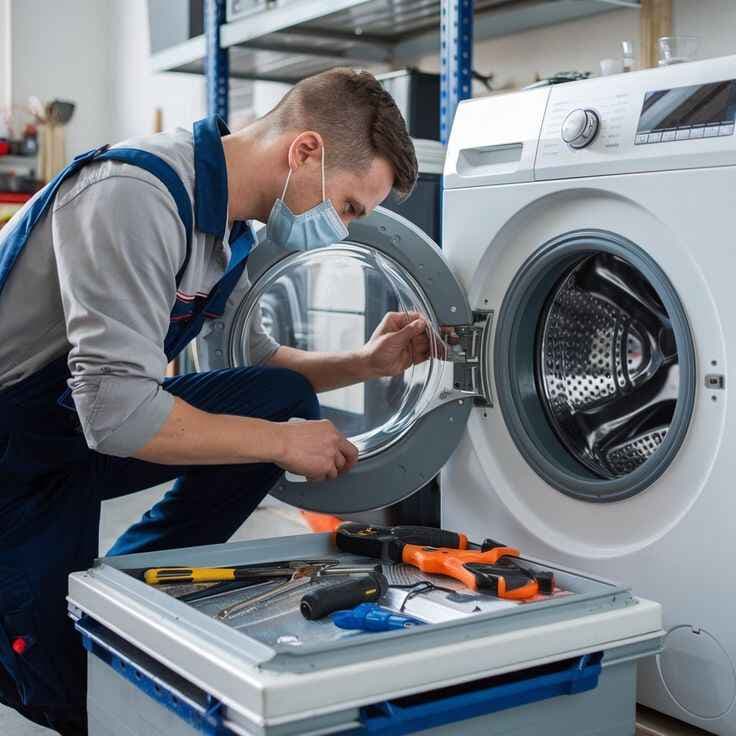
Stockholm: The broken washing machine that once meant a trip to the appliance store is about to become, by law, a thing worth fixing. The European Union’s Right to Repair Directive must be written into national law across the bloc by the end of July, and the rules it brings will reshape the quiet contest between manufacturers who profit from replacement and consumers who would rather mend what they own.

At the heart of the directive is an attack on the techniques companies have used to make repair impractical. Parts pairing, the practice of digitally tethering a component to a single device so that a replacement fitted by anyone but the maker is rejected, will be prohibited. So will software locks and other technical tricks that block independent repairers from doing legitimate work. Manufacturers will be obliged to repair a range of everyday goods that EU law already requires to be repairable, from washing machines and dishwashers to vacuum cleaners and smartphones, and to do so at a reasonable price and within a reasonable time.

The incentives are sharpened by a clever twist in the guarantee rules. Any repair carried out within the legal guarantee period will extend that guarantee by a further twelve months, nudging consumers toward fixing rather than discarding and giving manufacturers a reason to make repairs durable. A European information platform will let people find repairers and refurbished goods near them, chipping away at the convenience gap that has long made replacement the path of least resistance.

Why this matters is measured in mountains of discarded electronics and appliances, among the fastest-growing waste streams on the continent, and in the resources and emissions embedded in every product thrown away while still fixable. The circular-economy logic is that the greenest device is the one that already exists, kept in service rather than replaced. There is an economic argument too. A revived repair sector promises local jobs that cannot be offshored, and household savings for consumers weary of treating expensive goods as disposable.

The directive is also a deliberate cultural intervention. For decades the trend ran the other way, toward sealed, glued and unserviceable products that nudged buyers back to the checkout. By forcing repairability into the design and aftermarket, Brussels is betting it can bend that trajectory, and the Commission has signalled it intends to widen the net, with furniture, textiles and other categories lined up under the broader ecodesign rules now taking shape.

Resistance has been predictable. Some manufacturers warn of higher compliance costs and argue that mandated spare-part availability and repair obligations will raise prices or stifle innovation in tightly integrated designs. Independent repairers and consumer groups counter that the same companies have spent years engineering repair out of existence to protect replacement sales.

What comes next is transposition and enforcement, where the directive’s promise will either materialise on workshop benches or stall in legal fine print. Member states are at varying stages of readiness, and how vigorously each polices the ban on parts pairing and software locks will determine whether the right to repair becomes a genuine consumer power or merely a well-meaning slogan.