August 9, 2026
LATEST
New EU Gas Market Rules Take Effect With Consumer SafeguardsDeforestation Regulation Holds Its December Deadline Despite CutsDigital Omnibus Delays Europe’s High-Risk AI Deadline to 2027Europe’s Schools Confront a Widening Basic Skills GapRule of Law Report Finds Progress but Trust Still LagsIRIS2 Gains 66 Satellites as Brussels Signs the Rollout DealNature Restoration Plans Come Due as Member States Race a DeadlineECB Rates Hold at 2.25 Percent as Frankfurt Waits on the DataEU Budget Talks Turn to Cohesion as Ireland Takes OverWildfire Response Stretches Europe’s Emergency Fleet ThinCan Europe’s Quantum Plan Match Its Big Ambitions?Armenia Edges West as Moscow’s Grip Slips AwayEurope Inherits the World’s Aid Bill It Cannot Fully PayAir Passenger Rights Get Their First Overhaul in Two DecadesErasmus Opens a 5 Billion Euro Round for Skills and MobilityCeuta Crisis Pushes the EU Toward Faster Migrant ReturnsBulky Parcels Face a Packaging Crackdown From August 12Can Europe Build Its Drone Wall Before 2030 Arrives?Indonesia’s Trade Deal With Europe Nears Its Final SignatureEurope Leans on Beijing to Keep Climate Talks Alive Before AntalyaNew EU Gas Market Rules Take Effect With Consumer SafeguardsDeforestation Regulation Holds Its December Deadline Despite CutsDigital Omnibus Delays Europe’s High-Risk AI Deadline to 2027Europe’s Schools Confront a Widening Basic Skills GapRule of Law Report Finds Progress but Trust Still LagsIRIS2 Gains 66 Satellites as Brussels Signs the Rollout DealNature Restoration Plans Come Due as Member States Race a DeadlineECB Rates Hold at 2.25 Percent as Frankfurt Waits on the DataEU Budget Talks Turn to Cohesion as Ireland Takes OverWildfire Response Stretches Europe’s Emergency Fleet ThinCan Europe’s Quantum Plan Match Its Big Ambitions?Armenia Edges West as Moscow’s Grip Slips AwayEurope Inherits the World’s Aid Bill It Cannot Fully PayAir Passenger Rights Get Their First Overhaul in Two DecadesErasmus Opens a 5 Billion Euro Round for Skills and MobilityCeuta Crisis Pushes the EU Toward Faster Migrant ReturnsBulky Parcels Face a Packaging Crackdown From August 12Can Europe Build Its Drone Wall Before 2030 Arrives?Indonesia’s Trade Deal With Europe Nears Its Final SignatureEurope Leans on Beijing to Keep Climate Talks Alive Before Antalya
August 9, 2026
LATEST
New EU Gas Market Rules Take Effect With Consumer SafeguardsDeforestation Regulation Holds Its December Deadline Despite CutsDigital Omnibus Delays Europe’s High-Risk AI Deadline to 2027Europe’s Schools Confront a Widening Basic Skills GapRule of Law Report Finds Progress but Trust Still LagsIRIS2 Gains 66 Satellites as Brussels Signs the Rollout DealNature Restoration Plans Come Due as Member States Race a DeadlineECB Rates Hold at 2.25 Percent as Frankfurt Waits on the DataEU Budget Talks Turn to Cohesion as Ireland Takes OverWildfire Response Stretches Europe’s Emergency Fleet ThinCan Europe’s Quantum Plan Match Its Big Ambitions?Armenia Edges West as Moscow’s Grip Slips AwayEurope Inherits the World’s Aid Bill It Cannot Fully PayAir Passenger Rights Get Their First Overhaul in Two DecadesErasmus Opens a 5 Billion Euro Round for Skills and MobilityCeuta Crisis Pushes the EU Toward Faster Migrant ReturnsBulky Parcels Face a Packaging Crackdown From August 12Can Europe Build Its Drone Wall Before 2030 Arrives?Indonesia’s Trade Deal With Europe Nears Its Final SignatureEurope Leans on Beijing to Keep Climate Talks Alive Before AntalyaNew EU Gas Market Rules Take Effect With Consumer SafeguardsDeforestation Regulation Holds Its December Deadline Despite CutsDigital Omnibus Delays Europe’s High-Risk AI Deadline to 2027Europe’s Schools Confront a Widening Basic Skills GapRule of Law Report Finds Progress but Trust Still LagsIRIS2 Gains 66 Satellites as Brussels Signs the Rollout DealNature Restoration Plans Come Due as Member States Race a DeadlineECB Rates Hold at 2.25 Percent as Frankfurt Waits on the DataEU Budget Talks Turn to Cohesion as Ireland Takes OverWildfire Response Stretches Europe’s Emergency Fleet ThinCan Europe’s Quantum Plan Match Its Big Ambitions?Armenia Edges West as Moscow’s Grip Slips AwayEurope Inherits the World’s Aid Bill It Cannot Fully PayAir Passenger Rights Get Their First Overhaul in Two DecadesErasmus Opens a 5 Billion Euro Round for Skills and MobilityCeuta Crisis Pushes the EU Toward Faster Migrant ReturnsBulky Parcels Face a Packaging Crackdown From August 12Can Europe Build Its Drone Wall Before 2030 Arrives?Indonesia’s Trade Deal With Europe Nears Its Final SignatureEurope Leans on Beijing to Keep Climate Talks Alive Before Antalya

Oversized Boxes And Toxic Wrappers Hit A Hard August Deadline

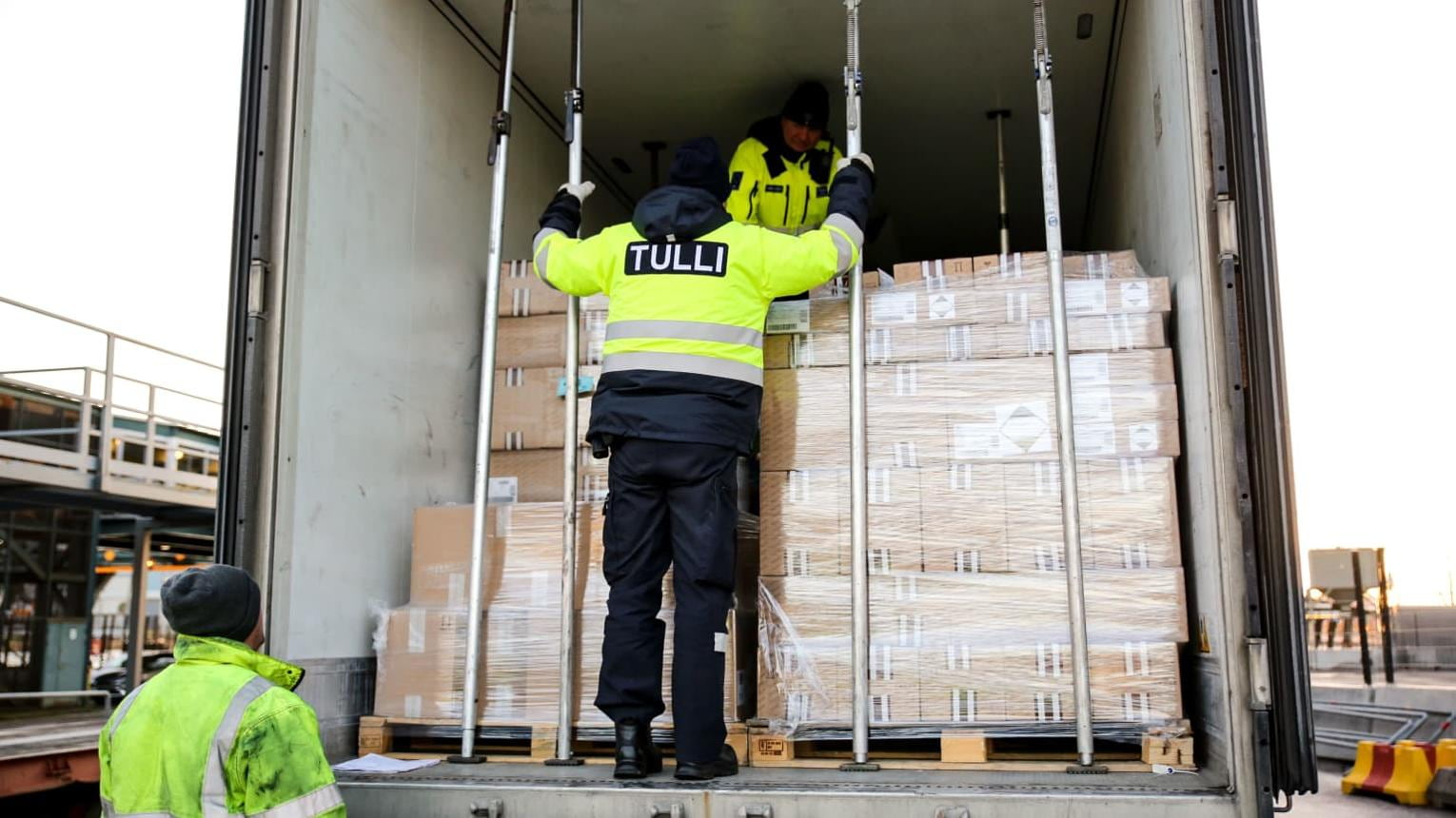
Verona: In the warehouses that ring this northern Italian crossroads, where pallets of wine, machinery and consumer goods are bundled for shipment across the continent, logistics managers are recalculating the dimensions of almost everything they send. From the twelfth of August, the Union’s sweeping packaging regulation begins to bite, and one of its first targets is the half-empty parcel that has become the signature of the online age.

The rule is disarmingly simple to state. Empty space inside a box must not exceed two-fifths of its volume unless there is a genuine technical reason, an attempt to stamp out the practice of dispatching a paperback in a carton large enough for a microwave. Anyone who has unpacked an e-commerce delivery and watched a cloud of air cushions tumble out understands the waste the measure is chasing. Behind the absurdity lies real cost, in cardboard, in transport emissions and in the mountains of packaging that Europe buries and burns each year.

The regulation, which entered into force early last year and now starts to apply in stages, goes well beyond box sizes. From the same August date, food packaging will be barred from the market if it contains more than trace levels of the long-lived industrial chemicals known as PFAS, the so-called forever compounds that resist breaking down and accumulate in water and bodies alike. Manufacturers of wrappers, trays and cartons have spent months reformulating to stay on the right side of the threshold, and some product lines will simply vanish.

A third strand obliges businesses to put reuse systems in place, the beginnings of a shift away from packaging that is used once and discarded toward containers designed to circulate. This is the part that worries industry most, because it touches not just materials but the whole logistics of how goods move. Setting up the collection, cleaning and redistribution of reusable packaging is expensive and complex, and the early obligations are only the leading edge of a far more demanding timetable that stretches through the rest of the decade.

What unsettles smaller firms is the absence of a general escape hatch. Unlike many Union laws, the packaging regulation offers no blanket exemption for micro or small enterprises, meaning a family workshop that ships a few hundred orders a month faces the same core duties on design, reporting and registration as a multinational. Trade bodies argue that this even-handedness, however principled, risks crushing the very small producers the bloc claims to champion, and that the compliance burden will land hardest on those least able to absorb it.

Supporters of the law are unmoved. Packaging waste has been rising for years, they point out, faster than recycling has been able to keep pace, and a rule riddled with exemptions would simply leave the problem to grow. If every small firm is excused, they argue, the cumulative volume of discarded material barely shifts, and the responsible majority is undercut by the careless minority. A level obligation, in this telling, is the only honest one.

For Verona’s distribution hubs, the philosophical argument is secondary to the practical scramble. Boxes are being resized, suppliers requalified and contracts rewritten before the deadline arrives. The age of the oversized parcel and the forever-chemical wrapper is closing, and the warehouses of the north are racing to be ready when it does.