August 10, 2026
LATEST
Europe Finally Locks In Its 348-Satellite Answer to StarlinkPlatform Work Rules Face a National Scramble Before DecemberDuty-Free Parcels Reach the End of the Line for EU ShoppersAfter Nine Years, Europe and Australia Seal a Trade PactBeijing Answers Europe’s Russia Sanctions in KindOne Year On, the EU-Japan Alliance Faces Its First TestEurope’s Chip Ambitions Still Run Through Taiwan’s FabsWhy South Korea Bet Its Research Future on Europe’s ProgrammeEurope and Japan Deepen Their Economic Alliance as Rivals CircleFive Joint Defence Projects Launch Europe’s Military ShieldElectrification Plan Aims to Make Europe First Electro ContinentHorizon Europe Budget Fight Heats Up as Ministers Push BackGoogle’s DMA Fine Sets Off a Transatlantic Tariff ClashTwenty New University Alliances Join Erasmus for Two YearsForeign Subsidies Case Puts Temu in the EU’s SightsVan Tachographs Now Mandatory for Cross-Border FleetsStress Test Exposes Gaps in Euro Area Bank DefencesEurope Bets on a Gulf Partnership Before the Riyadh SummitWhy the Atlantic Route Now Runs Through MauritaniaKyiv and Chisinau Advance as the EU Accession Talks Gather PaceEurope Finally Locks In Its 348-Satellite Answer to StarlinkPlatform Work Rules Face a National Scramble Before DecemberDuty-Free Parcels Reach the End of the Line for EU ShoppersAfter Nine Years, Europe and Australia Seal a Trade PactBeijing Answers Europe’s Russia Sanctions in KindOne Year On, the EU-Japan Alliance Faces Its First TestEurope’s Chip Ambitions Still Run Through Taiwan’s FabsWhy South Korea Bet Its Research Future on Europe’s ProgrammeEurope and Japan Deepen Their Economic Alliance as Rivals CircleFive Joint Defence Projects Launch Europe’s Military ShieldElectrification Plan Aims to Make Europe First Electro ContinentHorizon Europe Budget Fight Heats Up as Ministers Push BackGoogle’s DMA Fine Sets Off a Transatlantic Tariff ClashTwenty New University Alliances Join Erasmus for Two YearsForeign Subsidies Case Puts Temu in the EU’s SightsVan Tachographs Now Mandatory for Cross-Border FleetsStress Test Exposes Gaps in Euro Area Bank DefencesEurope Bets on a Gulf Partnership Before the Riyadh SummitWhy the Atlantic Route Now Runs Through MauritaniaKyiv and Chisinau Advance as the EU Accession Talks Gather Pace
August 10, 2026
LATEST
Europe Finally Locks In Its 348-Satellite Answer to StarlinkPlatform Work Rules Face a National Scramble Before DecemberDuty-Free Parcels Reach the End of the Line for EU ShoppersAfter Nine Years, Europe and Australia Seal a Trade PactBeijing Answers Europe’s Russia Sanctions in KindOne Year On, the EU-Japan Alliance Faces Its First TestEurope’s Chip Ambitions Still Run Through Taiwan’s FabsWhy South Korea Bet Its Research Future on Europe’s ProgrammeEurope and Japan Deepen Their Economic Alliance as Rivals CircleFive Joint Defence Projects Launch Europe’s Military ShieldElectrification Plan Aims to Make Europe First Electro ContinentHorizon Europe Budget Fight Heats Up as Ministers Push BackGoogle’s DMA Fine Sets Off a Transatlantic Tariff ClashTwenty New University Alliances Join Erasmus for Two YearsForeign Subsidies Case Puts Temu in the EU’s SightsVan Tachographs Now Mandatory for Cross-Border FleetsStress Test Exposes Gaps in Euro Area Bank DefencesEurope Bets on a Gulf Partnership Before the Riyadh SummitWhy the Atlantic Route Now Runs Through MauritaniaKyiv and Chisinau Advance as the EU Accession Talks Gather PaceEurope Finally Locks In Its 348-Satellite Answer to StarlinkPlatform Work Rules Face a National Scramble Before DecemberDuty-Free Parcels Reach the End of the Line for EU ShoppersAfter Nine Years, Europe and Australia Seal a Trade PactBeijing Answers Europe’s Russia Sanctions in KindOne Year On, the EU-Japan Alliance Faces Its First TestEurope’s Chip Ambitions Still Run Through Taiwan’s FabsWhy South Korea Bet Its Research Future on Europe’s ProgrammeEurope and Japan Deepen Their Economic Alliance as Rivals CircleFive Joint Defence Projects Launch Europe’s Military ShieldElectrification Plan Aims to Make Europe First Electro ContinentHorizon Europe Budget Fight Heats Up as Ministers Push BackGoogle’s DMA Fine Sets Off a Transatlantic Tariff ClashTwenty New University Alliances Join Erasmus for Two YearsForeign Subsidies Case Puts Temu in the EU’s SightsVan Tachographs Now Mandatory for Cross-Border FleetsStress Test Exposes Gaps in Euro Area Bank DefencesEurope Bets on a Gulf Partnership Before the Riyadh SummitWhy the Atlantic Route Now Runs Through MauritaniaKyiv and Chisinau Advance as the EU Accession Talks Gather Pace

Plant Disease Threat Pushes EFSA to Sharpen Xylella Defences

Parma: As the European Food Safety Authority prepares to convene its fifth European conference on Xylella fastidiosa later this month in the Italian south, the gathering is a reminder that one of the most damaging plant pathogens to reach the continent in a generation remains an unfinished emergency. The bacterium, which starves trees and vines by clogging the vessels that carry water, has resisted eradication since it was first confirmed in European olive groves, and EFSA’s continuing scientific work sits at the centre of the bloc’s response.

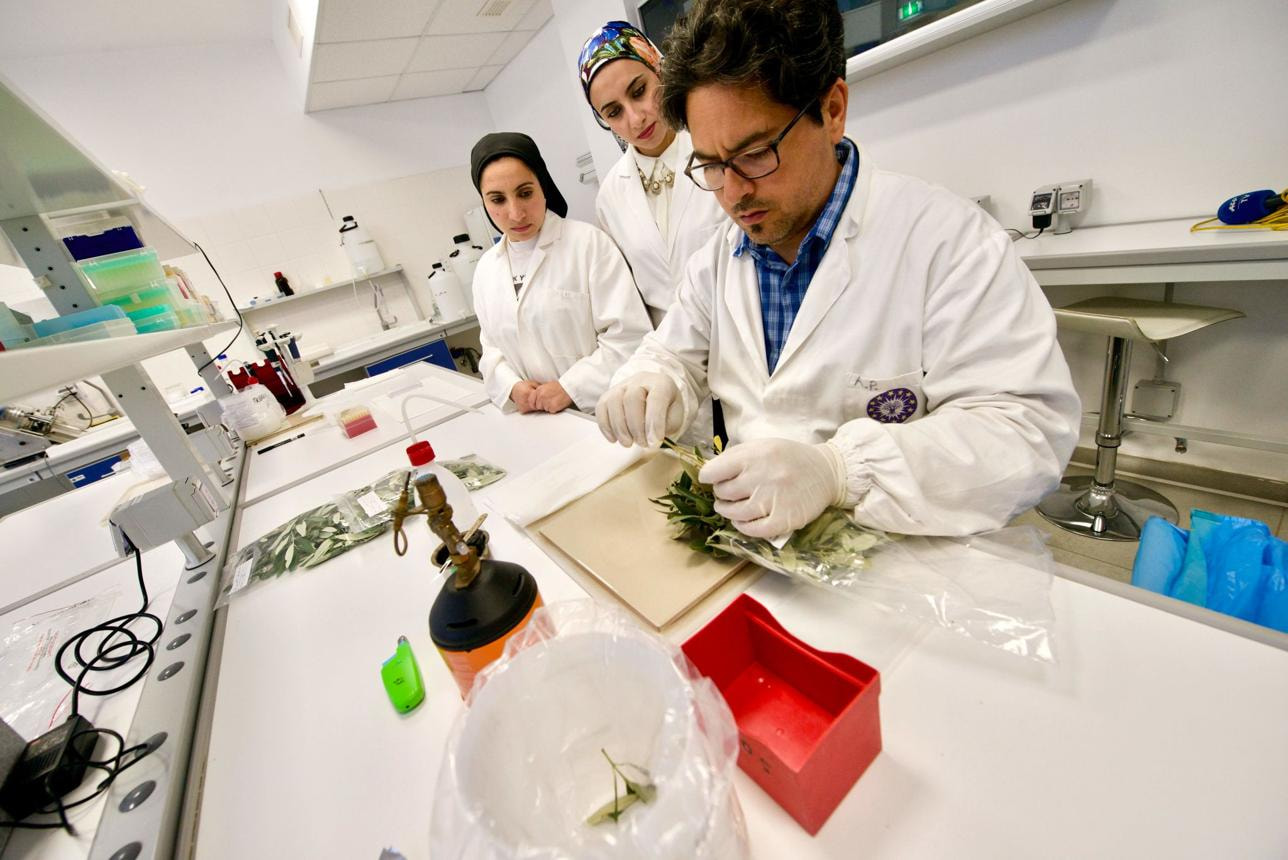
The stakes are agricultural and cultural at once. Xylella fastidiosa attacks a remarkably wide range of hosts, but its most visible victims have been the ancient olive trees of southern Italy, some of them centuries old, whose decline has scarred both landscapes and livelihoods. There is no cure for an infected tree. Containment depends instead on surveillance, on removing diseased plants, on controlling the sap-feeding insects that spread the bacterium, and on restricting the movement of host material across regions. Each of those measures rests on the risk assessments and host-range analyses that the authority, based in Parma, produces for risk managers across the Union.

The division of labour is the point worth understanding. EFSA does not legislate or enforce; it supplies the independent scientific opinion on which the European Commission and member states base their phytosanitary rules. When the authority updates its database of susceptible species or refines its modelling of how the disease spreads under different climates, those findings feed directly into the demarcated zones, inspection regimes and planting restrictions that growers actually experience. A conference that convenes researchers from across and beyond Europe is part of how that evidence base is kept current, because the science of an evolving pathogen does not stand still.

A candid assessment must acknowledge how partial the victory has been. Years of intervention have slowed Xylella’s advance and improved the tools for detecting it, yet the bacterium persists, new outbreaks surface, and warming conditions threaten to widen the territory its insect vectors can occupy. Containment has bought time and protected uninfected regions, but it has not delivered elimination, and honest plant-health policy treats the disease as a long-term presence to be managed rather than a crisis that will soon pass. The economics of that management fall heavily on growers asked to fell productive trees for the protection of a wider region.

The broader lesson reaches past a single bacterium. Xylella is one of several pests whose arrival has been eased by global trade in plants and by a climate that increasingly suits organisms once confined to warmer continents. The European response, built on harmonised surveillance and shared scientific assessment, is a test of whether a union of member states can mount a coordinated biological defence when a threat respects no internal border. The authority’s painstaking work is unglamorous, but it is the connective tissue that allows twenty-seven national systems to act on a common reading of the danger.

The sober conclusion is that the coming conference will mark progress measured in vigilance rather than triumph. Better detection, wider host knowledge and tighter coordination are real gains, and they are also the permanent price of keeping a chronic pathogen in check. For the olive growers of the Mediterranean, the science produced in Parma is not an abstraction but the difference between a managed disease and an uncontrolled one.