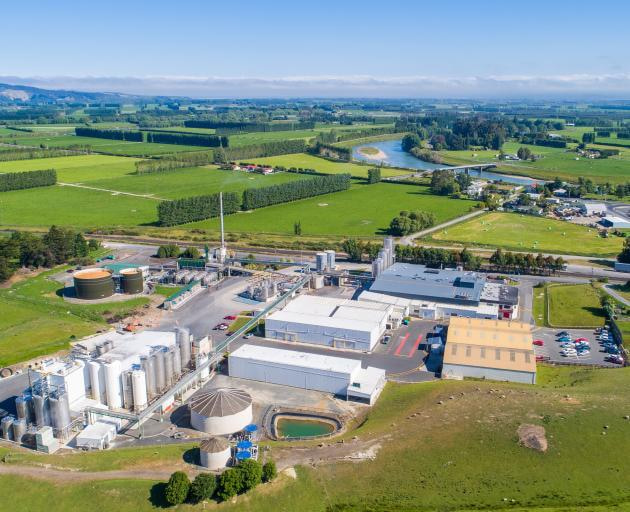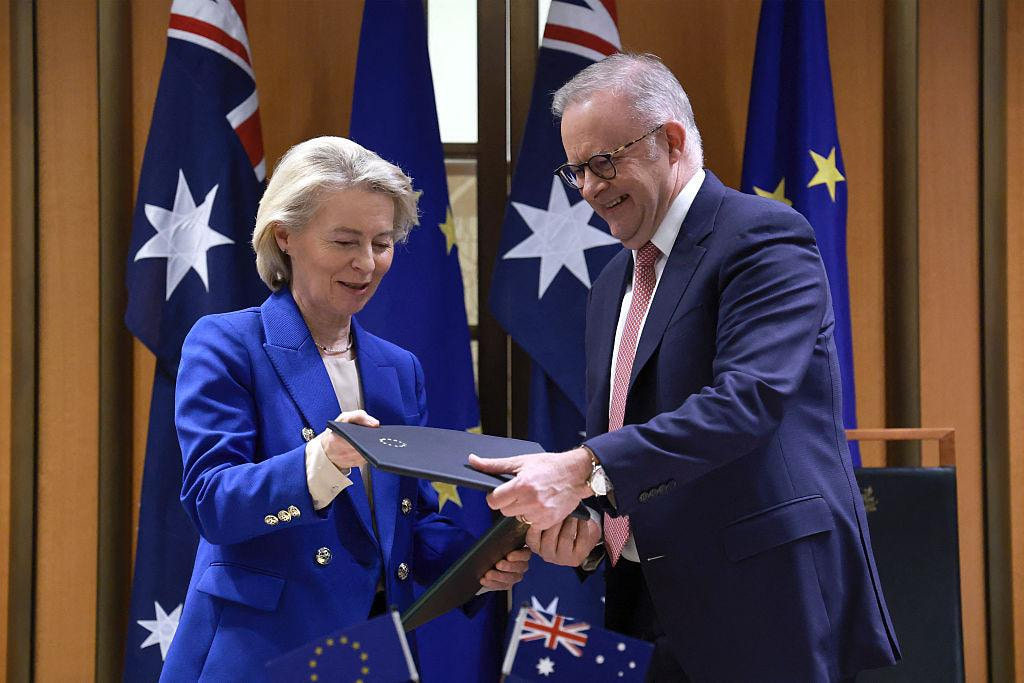
Kwinana: The lithium hydroxide refinery on this stretch of Western Australian coast will ship into Europe this year under exactly the tariff line it faced last year, because the Australia trade deal that removes that duty still carries no signature date.
Negotiators closed the file on 24 March 2026 after eight years of stop-start talks, and they closed it well. Australia will let in more than 99 percent of European goods exports duty free, worth roughly a billion euros a year in avoided duties. Europe will drop tariffs on about 98 percent of Australian exports, including wine, dairy, grain and seafood. Canberra puts the annual value to its own economy at around ten billion Australian dollars.
The strategic core sits in the minerals chapters. Europe agreed to eliminate duties on critical minerals, lithium hydroxide, hydrogen and hydrogen carriers, and it paired the trade text with a separate defence and security framework. Both moves point at the same anxiety, which is that Europe processes almost none of what its battery and magnet plants consume. The Commission’s own summary leans heavily on that supply argument.
Geographical indications, the issue that killed the 2023 round, ended in a bargain rather than a victory. Names such as Pecorino Romano and ouzo win full protection after a short phase-out. Feta producers in Australia can keep selling under the name provided they label origin clearly. Southern European ministers wanted more. They settled because the alternative was another decade of nothing.
None of it binds anyone yet. Lawyers are still scrubbing the text and translating it into 24 languages. The Council must then adopt a decision authorising signature, the European Parliament must give consent, and Australia’s Joint Standing Committee on Treaties runs its own scrutiny in parallel. Officials on both sides talk about signature in late 2026 or early 2027, which puts application somewhere beyond that.
That interval matters more than the ratification calendar usually does. Refiners in Kwinana and Kalgoorlie are making capital decisions now about where processed output goes, and a tariff that disappears in 2028 does not change a 2026 offtake contract. The agreement’s practical value to an Australian processor is a date, not a text.
Two things could still slow it. The Commission has to decide how to split the package, because an agreement covering investment protection needs every national parliament and one covering trade alone does not. Beef and sheepmeat quotas will also draw fire in Paris and Dublin when the Parliament’s trade committee takes the file, and European farm groups spent the summer arguing that Mercosur and Australia together concede too much at once. The Commission’s negotiations tracker still lists the agreement as concluded rather than signed.
A fair objection says this is ordinary. European trade agreements routinely take eighteen months from conclusion to signature, and the tariffs Europe charges on lithium hydroxide were never the binding constraint on Australian refining. Capital cost, power prices and offtake certainty were. That objection is largely right, which is why the honest way to read the March announcement is as a political signal to Washington and Beijing rather than as a commercial event.
Watch three markers before assuming momentum. The Council decision authorising signature is the first real test. The Parliament’s trade committee timetable is the second. The Australian treaties committee report is the third, and it is the one Brussels tends to forget exists.