August 23, 2026
LATEST
What Seoul Must Sign Before Korean Firms Can Touch SAFE MoneyNorth Korea’s Money Moves Faster Than Europe Can List Its OwnersNew Zealand Is Still Waiting for the Pact Japan and Korea SignedFarmers Won a CAP Budget Floor and Lost the Second PillarAustralia Wants Into Horizon Europe Before the Money DoublesOcean Act Drafters Face a Deadline and Two Rival DirectivesFive Joint Defence Projects Start With 325 Million in Seed MoneyVehicle Circularity Rules Now Land on Suppliers, Not Just CarmakersArmenia Is Halfway Through a Visa Roadmap of 74 BenchmarksSyria Regained a Trade Agreement While Sanctions Remain in PlaceHeatwave Preparedness Now Needs a Law, Not Another PlanEurope’s Tobacco Tax Overhaul Now Doubles as an EU Budget FixCrypto Rules Reopened Two Years After They Took EffectETIAS Has Quietly Lost the Only Launch Date It Ever Committed ToSteel Quotas Fell 47 Percent and Buyers Are Still AdjustingWill the Space Act Survive Its Second Half of Negotiations in CouncilFishermen Want More Herring While Scientists Advise Zero CodDestroying Unsold Clothes Became Illegal and Little Has ChangedCivil Society Gets Double the Money and Loses Its ProgrammeNine Days Remain Before Restoration Plans Fall Due in BrusselsWhat Seoul Must Sign Before Korean Firms Can Touch SAFE MoneyNorth Korea’s Money Moves Faster Than Europe Can List Its OwnersNew Zealand Is Still Waiting for the Pact Japan and Korea SignedFarmers Won a CAP Budget Floor and Lost the Second PillarAustralia Wants Into Horizon Europe Before the Money DoublesOcean Act Drafters Face a Deadline and Two Rival DirectivesFive Joint Defence Projects Start With 325 Million in Seed MoneyVehicle Circularity Rules Now Land on Suppliers, Not Just CarmakersArmenia Is Halfway Through a Visa Roadmap of 74 BenchmarksSyria Regained a Trade Agreement While Sanctions Remain in PlaceHeatwave Preparedness Now Needs a Law, Not Another PlanEurope’s Tobacco Tax Overhaul Now Doubles as an EU Budget FixCrypto Rules Reopened Two Years After They Took EffectETIAS Has Quietly Lost the Only Launch Date It Ever Committed ToSteel Quotas Fell 47 Percent and Buyers Are Still AdjustingWill the Space Act Survive Its Second Half of Negotiations in CouncilFishermen Want More Herring While Scientists Advise Zero CodDestroying Unsold Clothes Became Illegal and Little Has ChangedCivil Society Gets Double the Money and Loses Its ProgrammeNine Days Remain Before Restoration Plans Fall Due in Brussels
August 23, 2026
LATEST
What Seoul Must Sign Before Korean Firms Can Touch SAFE MoneyNorth Korea’s Money Moves Faster Than Europe Can List Its OwnersNew Zealand Is Still Waiting for the Pact Japan and Korea SignedFarmers Won a CAP Budget Floor and Lost the Second PillarAustralia Wants Into Horizon Europe Before the Money DoublesOcean Act Drafters Face a Deadline and Two Rival DirectivesFive Joint Defence Projects Start With 325 Million in Seed MoneyVehicle Circularity Rules Now Land on Suppliers, Not Just CarmakersArmenia Is Halfway Through a Visa Roadmap of 74 BenchmarksSyria Regained a Trade Agreement While Sanctions Remain in PlaceHeatwave Preparedness Now Needs a Law, Not Another PlanEurope’s Tobacco Tax Overhaul Now Doubles as an EU Budget FixCrypto Rules Reopened Two Years After They Took EffectETIAS Has Quietly Lost the Only Launch Date It Ever Committed ToSteel Quotas Fell 47 Percent and Buyers Are Still AdjustingWill the Space Act Survive Its Second Half of Negotiations in CouncilFishermen Want More Herring While Scientists Advise Zero CodDestroying Unsold Clothes Became Illegal and Little Has ChangedCivil Society Gets Double the Money and Loses Its ProgrammeNine Days Remain Before Restoration Plans Fall Due in BrusselsWhat Seoul Must Sign Before Korean Firms Can Touch SAFE MoneyNorth Korea’s Money Moves Faster Than Europe Can List Its OwnersNew Zealand Is Still Waiting for the Pact Japan and Korea SignedFarmers Won a CAP Budget Floor and Lost the Second PillarAustralia Wants Into Horizon Europe Before the Money DoublesOcean Act Drafters Face a Deadline and Two Rival DirectivesFive Joint Defence Projects Start With 325 Million in Seed MoneyVehicle Circularity Rules Now Land on Suppliers, Not Just CarmakersArmenia Is Halfway Through a Visa Roadmap of 74 BenchmarksSyria Regained a Trade Agreement While Sanctions Remain in PlaceHeatwave Preparedness Now Needs a Law, Not Another PlanEurope’s Tobacco Tax Overhaul Now Doubles as an EU Budget FixCrypto Rules Reopened Two Years After They Took EffectETIAS Has Quietly Lost the Only Launch Date It Ever Committed ToSteel Quotas Fell 47 Percent and Buyers Are Still AdjustingWill the Space Act Survive Its Second Half of Negotiations in CouncilFishermen Want More Herring While Scientists Advise Zero CodDestroying Unsold Clothes Became Illegal and Little Has ChangedCivil Society Gets Double the Money and Loses Its ProgrammeNine Days Remain Before Restoration Plans Fall Due in Brussels

Five Joint Defence Projects Start With 325 Million in Seed Money

Every few months the Commission publishes a number that sounds enormous and a number that sounds small, and the gap between them explains most of what is wrong with European defence industrial policy. The five European Defence Projects of Common Interest tabled in July carry a combined funding ambition of roughly 190 billion euros by 2036. The seed money the Commission actually controls for them is 325 million.

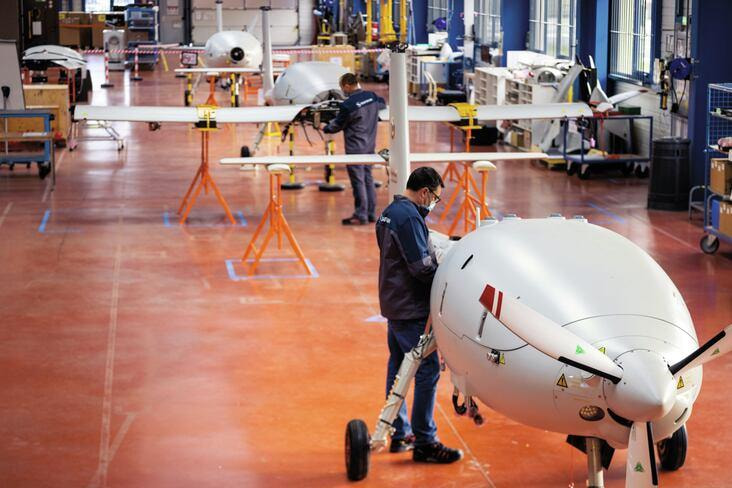
That is the arithmetic behind the new label. The five defence projects cover drones and counter-drone systems, maritime and seabed defence, space, air and missile defence, and the fortification of the eastern flank. On average eighteen member states sit inside each one. Ukraine takes part in four. The money comes from the 1.5 billion euro European Defence Industry Programme, whose work programme the Commission adopted at the end of March.

Officials in the Berlaymont describe the 325 million as catalytic rather than sufficient, and on the mechanics they have a point. An EDPCI label does not buy hardware. It gives a consortium of capitals a legal structure, a shared governance framework, and access to procurement advantages that ordinary national programmes never receive. Value added tax exemption on joint acquisitions is the most concrete of those. So is the ability to plan a twenty-year production run against a document that survives changes of government.

The harder question is whether structure alone changes behaviour. Europe has tried labels before. Permanent Structured Cooperation produced dozens of projects, a handful of which shipped anything. The difference this time lies less in Brussels than in the order books. Ammunition lines, counter-drone systems and air defence interceptors face demand that no single national budget can absorb efficiently, and defence ministries know it. Consolidation is being driven by scarcity rather than by treaty language.

Ukraine’s participation deserves more attention than it has received. Four of the five projects include Ukrainian industry, and a separate 260 million euro strand of EDIP funds integration of Ukrainian production capacity into European supply chains. That decision quietly resolves an argument that ran through 2024 and 2025 about whether Ukraine counts as a partner or a recipient. Kyiv’s drone manufacturers now iterate faster than most western European primes, and the Commission has stopped pretending otherwise.

Member states still hold the decisive levers. The Council must approve the labels, and national procurement agencies decide whether to route real purchases through the new structures or keep them domestic. Industrial policy in defence has always collided with employment policy: a French frigate yard and a Polish ammunition plant are jobs before they are capabilities. Nothing in the EDPCI framework overrides that logic. It merely raises the cost of ignoring it.

Watch three indicators over the autumn. First, whether any capital converts a national programme of record into an EDPCI rather than simply relabelling something it planned anyway. Second, whether the eastern flank project produces engineering contracts or another study. Third, whether the Commission secures a defence line in the next long-term budget large enough to make 325 million look like a pilot rather than a ceiling.

The projects will be judged on deliveries, not on labels. A drone that reaches a Baltic brigade in 2028 vindicates the framework. A governance charter signed by eighteen ministers in a Brussels press room does not.