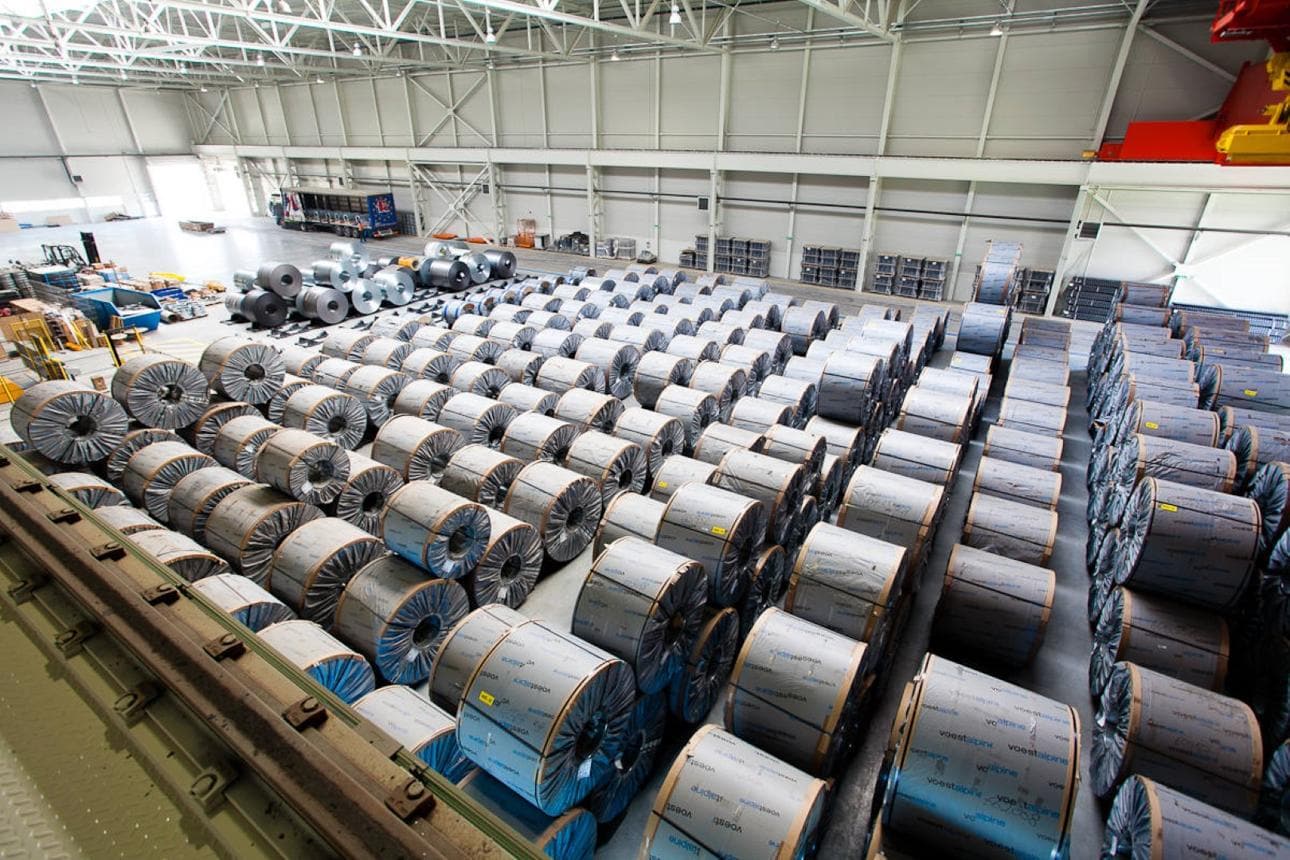
Duisburg: The European Union doubled its out-of-quota steel tariff to 50% and slashed duty-free import quotas by nearly half from 1 July 2026, enforcing a new steel safeguard regulation that the European Commission and co-legislators designed to shield the bloc’s mills from a wave of cheap foreign metal. The measure, published in the Official Journal on 24 June 2026, replaces the safeguard that expired on 30 June and marks the toughest EU steel tariff regime since the trade defence was first imposed in 2018.
What the new steel safeguard does
The regulation limits tariff-free steel imports to 18.3 million tonnes a year, a 47% cut compared with 2024 volumes. Any steel arriving above that ceiling now faces a 50% duty, up sharply from the previous 25% out-of-quota rate. The Commission says the tighter regime is a direct response to global overcapacity that is projected to reach 721 million tonnes by 2027, roughly five times the EU’s annual consumption.
The new EU steel safeguard also tightens origin rules to stop trans-shipment. Key features include:
- A duty-free tariff-rate quota capped at 18.3 million tonnes per year.
- A 50% tariff on volumes exceeding the quota, double the old rate.
- A “melt and pour” traceability requirement forcing importers to prove where steel was originally produced.
- Exemptions for imports originating in Norway, Iceland and Liechtenstein.
Official reaction
Executive Vice-President for Prosperity and Industrial Strategy Stephane Sejourne framed the overhaul as a defence of fair competition rather than protectionism, tying it to the Commission’s wider industrial strategy.
EU trade is about fair, rules-based competition, and this measure will help our steel industry compete fairly amid increasing global overcapacity. I look forward to opening consultations and negotiations with the EU’s key trading partners in this sector through the WTO rules-based process.
Industry lobby EUROFER welcomed the deal as a “major leap forward” for a sector that employs hundreds of thousands of workers, while urging swift and stable implementation. Steelmakers had warned that the expiring safeguard left the market exposed as US and Asian tariffs diverted surplus metal toward Europe.
Trade partners and legal risk
Because the tighter quotas cut market access for major exporters, the Commission has signalled it will pursue talks under World Trade Organization rules and may renegotiate some tariff commitments. Analysts expect the reshaped tariff-rate quota to redirect global stainless and carbon steel trade flows, with exporters in Turkey, India and South Korea among the most affected. You can read the Council and Parliament agreement on the steel measure for the full negotiating outcome.
Background
The EU first introduced steel safeguards in 2018 after US Section 232 tariffs threatened to divert exports into the European market. That instrument was due to lapse in mid-2026, and the Commission proposed a permanent successor in October 2025 rather than let protection disappear. The Council adopted its negotiating mandate in December 2025, and the Parliament and Council struck a political deal in April 2026 before final publication in June.
The steel safeguard now feeds into a broader Steel and Metals Action Plan that also covers energy costs, decarbonisation and the Carbon Border Adjustment Mechanism. With the new EU steel tariff live from 1 July, importers face immediate changes to customs declarations, while the Commission has promised to review quota volumes periodically to reflect demand. For the technical detail, the European Parliament summary of the new steel measures sets out the quota mechanics.