August 10, 2026
LATEST
Europe Finally Locks In Its 348-Satellite Answer to StarlinkPlatform Work Rules Face a National Scramble Before DecemberDuty-Free Parcels Reach the End of the Line for EU ShoppersAfter Nine Years, Europe and Australia Seal a Trade PactBeijing Answers Europe’s Russia Sanctions in KindOne Year On, the EU-Japan Alliance Faces Its First TestEurope’s Chip Ambitions Still Run Through Taiwan’s FabsWhy South Korea Bet Its Research Future on Europe’s ProgrammeEurope and Japan Deepen Their Economic Alliance as Rivals CircleFive Joint Defence Projects Launch Europe’s Military ShieldElectrification Plan Aims to Make Europe First Electro ContinentHorizon Europe Budget Fight Heats Up as Ministers Push BackGoogle’s DMA Fine Sets Off a Transatlantic Tariff ClashTwenty New University Alliances Join Erasmus for Two YearsForeign Subsidies Case Puts Temu in the EU’s SightsVan Tachographs Now Mandatory for Cross-Border FleetsStress Test Exposes Gaps in Euro Area Bank DefencesEurope Bets on a Gulf Partnership Before the Riyadh SummitWhy the Atlantic Route Now Runs Through MauritaniaKyiv and Chisinau Advance as the EU Accession Talks Gather PaceEurope Finally Locks In Its 348-Satellite Answer to StarlinkPlatform Work Rules Face a National Scramble Before DecemberDuty-Free Parcels Reach the End of the Line for EU ShoppersAfter Nine Years, Europe and Australia Seal a Trade PactBeijing Answers Europe’s Russia Sanctions in KindOne Year On, the EU-Japan Alliance Faces Its First TestEurope’s Chip Ambitions Still Run Through Taiwan’s FabsWhy South Korea Bet Its Research Future on Europe’s ProgrammeEurope and Japan Deepen Their Economic Alliance as Rivals CircleFive Joint Defence Projects Launch Europe’s Military ShieldElectrification Plan Aims to Make Europe First Electro ContinentHorizon Europe Budget Fight Heats Up as Ministers Push BackGoogle’s DMA Fine Sets Off a Transatlantic Tariff ClashTwenty New University Alliances Join Erasmus for Two YearsForeign Subsidies Case Puts Temu in the EU’s SightsVan Tachographs Now Mandatory for Cross-Border FleetsStress Test Exposes Gaps in Euro Area Bank DefencesEurope Bets on a Gulf Partnership Before the Riyadh SummitWhy the Atlantic Route Now Runs Through MauritaniaKyiv and Chisinau Advance as the EU Accession Talks Gather Pace
August 10, 2026
LATEST
Europe Finally Locks In Its 348-Satellite Answer to StarlinkPlatform Work Rules Face a National Scramble Before DecemberDuty-Free Parcels Reach the End of the Line for EU ShoppersAfter Nine Years, Europe and Australia Seal a Trade PactBeijing Answers Europe’s Russia Sanctions in KindOne Year On, the EU-Japan Alliance Faces Its First TestEurope’s Chip Ambitions Still Run Through Taiwan’s FabsWhy South Korea Bet Its Research Future on Europe’s ProgrammeEurope and Japan Deepen Their Economic Alliance as Rivals CircleFive Joint Defence Projects Launch Europe’s Military ShieldElectrification Plan Aims to Make Europe First Electro ContinentHorizon Europe Budget Fight Heats Up as Ministers Push BackGoogle’s DMA Fine Sets Off a Transatlantic Tariff ClashTwenty New University Alliances Join Erasmus for Two YearsForeign Subsidies Case Puts Temu in the EU’s SightsVan Tachographs Now Mandatory for Cross-Border FleetsStress Test Exposes Gaps in Euro Area Bank DefencesEurope Bets on a Gulf Partnership Before the Riyadh SummitWhy the Atlantic Route Now Runs Through MauritaniaKyiv and Chisinau Advance as the EU Accession Talks Gather PaceEurope Finally Locks In Its 348-Satellite Answer to StarlinkPlatform Work Rules Face a National Scramble Before DecemberDuty-Free Parcels Reach the End of the Line for EU ShoppersAfter Nine Years, Europe and Australia Seal a Trade PactBeijing Answers Europe’s Russia Sanctions in KindOne Year On, the EU-Japan Alliance Faces Its First TestEurope’s Chip Ambitions Still Run Through Taiwan’s FabsWhy South Korea Bet Its Research Future on Europe’s ProgrammeEurope and Japan Deepen Their Economic Alliance as Rivals CircleFive Joint Defence Projects Launch Europe’s Military ShieldElectrification Plan Aims to Make Europe First Electro ContinentHorizon Europe Budget Fight Heats Up as Ministers Push BackGoogle’s DMA Fine Sets Off a Transatlantic Tariff ClashTwenty New University Alliances Join Erasmus for Two YearsForeign Subsidies Case Puts Temu in the EU’s SightsVan Tachographs Now Mandatory for Cross-Border FleetsStress Test Exposes Gaps in Euro Area Bank DefencesEurope Bets on a Gulf Partnership Before the Riyadh SummitWhy the Atlantic Route Now Runs Through MauritaniaKyiv and Chisinau Advance as the EU Accession Talks Gather Pace

Imported Gas Will Soon Have To Prove It Is Not Leaking Methane

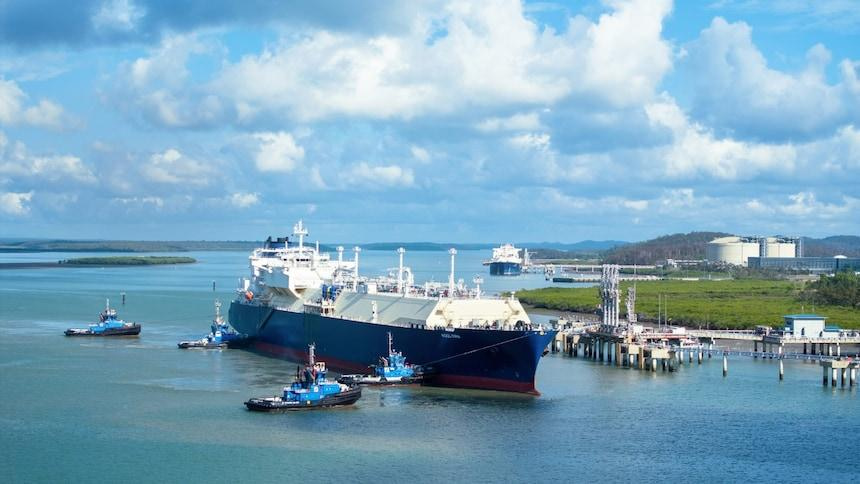
Rotterdam: For most of the gas that arrives at Europe’s terminals, the journey that matters is the one nobody can see. Before a tanker docks here, the fuel inside it has travelled through wells, compressors and pipelines where methane routinely escapes into the atmosphere, invisible and, until now, largely unmeasured. The European Union’s methane regulation is about to make that leakage Europe’s business, and the companies that import the continent’s energy are realising how little they actually know about their own supply chains.

Methane is the awkward sibling of the climate debate. It lingers in the atmosphere for barely a decade, far less than carbon dioxide, but while it is there it traps heat dozens of times more effectively. Cutting it is the fastest lever the world has to slow near-term warming, and roughly a third of human-caused methane comes from fossil fuels. Europe produces little gas of its own; it imports the overwhelming majority. A rule that only policed domestic operators would therefore miss most of the problem, which is precisely why the regulation reaches across the border.

The mechanism is staged, and deliberately so. First come the obligations on European operators to find and fix leaks and to stop the routine venting and flaring that has long been treated as a cost of doing business. Then the gaze turns outward. Importers must begin gathering and reporting information on the methane footprint of the gas, oil and coal they bring in, and over the rest of the decade the Union moves toward binding methane-intensity limits that imported fuel will have to meet. Miss the threshold and, eventually, the cargo becomes harder to sell here.

For exporters that have invested in monitoring, this is an opportunity dressed as a burden; clean gas suddenly carries a marketable advantage. For others it is a genuine threat. Several major suppliers cannot yet document the methane intensity of their production to the standard Brussels will demand, and bringing older fields up to scratch costs money that some national operators are reluctant to spend for a single market, however large. The quiet diplomacy over how strictly the thresholds will bite has already begun.

The harder problem is verification. It is one thing to demand a number on a form and another to trust it. Satellites can now spot large plumes from orbit, and independent monitoring is improving fast, but matching a specific leak to a specific cargo that has been blended, shipped and resold remains genuinely difficult. If the reported figures cannot be checked, the regulation risks rewarding good paperwork rather than clean production. Officials insist the reporting phase exists precisely to build that verification muscle before the penalties arrive.

There is also a tension Europe would rather not dwell on. Having spent two years scrambling to replace Russian pipeline gas with seaborne cargoes from wherever it could find them, the Union now wants those same new suppliers to clean up fast. Energy security and methane ambition do not always point the same way, and the timetable leaves room to lean toward whichever feels more urgent in a given winter.

Still, the direction is set. The era in which Europe could import its energy and outsource the emissions that came with it is ending. The first reports will be incomplete and the early thresholds forgiving, but the principle is now embedded in law: what leaks abroad is no longer someone else’s problem once the gas is bound for a European coast.