August 22, 2026
LATEST
Korea Signed a Digital Trade Deal That Nobody Has RatifiedCritical Minerals in Mongolia Still Have to Cross Two BordersCan an Indonesia Trade Deal Survive Two Years of RatifyingCross-Border Data Orders Went Live Before the Plumbing DidPlatform Work Rules Take Effect in December and Few Are ReadyCan Europe’s Firefighting Fleet Keep Pace With EU WildfiresThe AI Act Deadline Passed on 2 August and Nothing BitWhy Construction Keeps Shrinking While Confidence ImprovesAccession Talks Stall Again and September 1 Is the TestBrussels Applied a Trade Deal It Cannot Yet RatifyAfrica’s Power Market Now Needs Money More Than BlueprintsLong-Term Budget Talks Enter Autumn Without a Council LineForeign Subsidies Enforcement Now Turns on a Dublin RaidWho Writes Europe’s Telecom Rules Once Copper DisappearsDisability Cards Exist on Paper and Nowhere Else Until 2028Losing Visa-Free Travel Now Takes a Thirty Percent SwingTwenty Flagship Actions Will Test Whether the Culture Compass WorksEurope’s Quality Jobs Act Now Rests on What Unions Do by SeptemberDoes a Three Euro Parcel Duty Change Anything About Cheap ImportsEurope’s Satellite Constellation Grew by 66 Before a Single LaunchKorea Signed a Digital Trade Deal That Nobody Has RatifiedCritical Minerals in Mongolia Still Have to Cross Two BordersCan an Indonesia Trade Deal Survive Two Years of RatifyingCross-Border Data Orders Went Live Before the Plumbing DidPlatform Work Rules Take Effect in December and Few Are ReadyCan Europe’s Firefighting Fleet Keep Pace With EU WildfiresThe AI Act Deadline Passed on 2 August and Nothing BitWhy Construction Keeps Shrinking While Confidence ImprovesAccession Talks Stall Again and September 1 Is the TestBrussels Applied a Trade Deal It Cannot Yet RatifyAfrica’s Power Market Now Needs Money More Than BlueprintsLong-Term Budget Talks Enter Autumn Without a Council LineForeign Subsidies Enforcement Now Turns on a Dublin RaidWho Writes Europe’s Telecom Rules Once Copper DisappearsDisability Cards Exist on Paper and Nowhere Else Until 2028Losing Visa-Free Travel Now Takes a Thirty Percent SwingTwenty Flagship Actions Will Test Whether the Culture Compass WorksEurope’s Quality Jobs Act Now Rests on What Unions Do by SeptemberDoes a Three Euro Parcel Duty Change Anything About Cheap ImportsEurope’s Satellite Constellation Grew by 66 Before a Single Launch
August 22, 2026
LATEST
Korea Signed a Digital Trade Deal That Nobody Has RatifiedCritical Minerals in Mongolia Still Have to Cross Two BordersCan an Indonesia Trade Deal Survive Two Years of RatifyingCross-Border Data Orders Went Live Before the Plumbing DidPlatform Work Rules Take Effect in December and Few Are ReadyCan Europe’s Firefighting Fleet Keep Pace With EU WildfiresThe AI Act Deadline Passed on 2 August and Nothing BitWhy Construction Keeps Shrinking While Confidence ImprovesAccession Talks Stall Again and September 1 Is the TestBrussels Applied a Trade Deal It Cannot Yet RatifyAfrica’s Power Market Now Needs Money More Than BlueprintsLong-Term Budget Talks Enter Autumn Without a Council LineForeign Subsidies Enforcement Now Turns on a Dublin RaidWho Writes Europe’s Telecom Rules Once Copper DisappearsDisability Cards Exist on Paper and Nowhere Else Until 2028Losing Visa-Free Travel Now Takes a Thirty Percent SwingTwenty Flagship Actions Will Test Whether the Culture Compass WorksEurope’s Quality Jobs Act Now Rests on What Unions Do by SeptemberDoes a Three Euro Parcel Duty Change Anything About Cheap ImportsEurope’s Satellite Constellation Grew by 66 Before a Single LaunchKorea Signed a Digital Trade Deal That Nobody Has RatifiedCritical Minerals in Mongolia Still Have to Cross Two BordersCan an Indonesia Trade Deal Survive Two Years of RatifyingCross-Border Data Orders Went Live Before the Plumbing DidPlatform Work Rules Take Effect in December and Few Are ReadyCan Europe’s Firefighting Fleet Keep Pace With EU WildfiresThe AI Act Deadline Passed on 2 August and Nothing BitWhy Construction Keeps Shrinking While Confidence ImprovesAccession Talks Stall Again and September 1 Is the TestBrussels Applied a Trade Deal It Cannot Yet RatifyAfrica’s Power Market Now Needs Money More Than BlueprintsLong-Term Budget Talks Enter Autumn Without a Council LineForeign Subsidies Enforcement Now Turns on a Dublin RaidWho Writes Europe’s Telecom Rules Once Copper DisappearsDisability Cards Exist on Paper and Nowhere Else Until 2028Losing Visa-Free Travel Now Takes a Thirty Percent SwingTwenty Flagship Actions Will Test Whether the Culture Compass WorksEurope’s Quality Jobs Act Now Rests on What Unions Do by SeptemberDoes a Three Euro Parcel Duty Change Anything About Cheap ImportsEurope’s Satellite Constellation Grew by 66 Before a Single Launch

Europe Keeps Signing Bilateral Deals While ASEAN Waits Its Turn

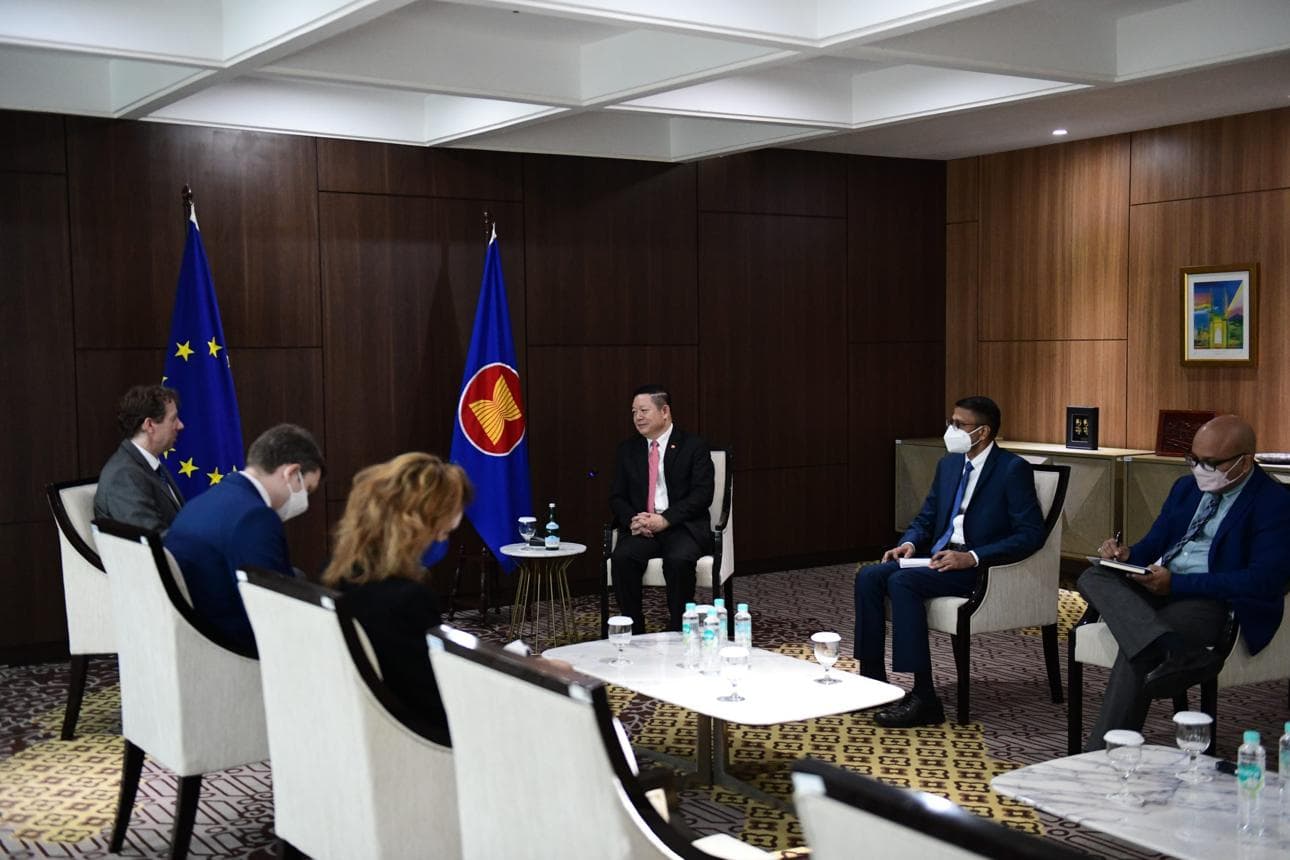
Jakarta: The ASEAN Secretariat sits a short drive from ministries that have already negotiated their own terms with Europe, which is the quiet difficulty inside the region-to-region agreement Brussels keeps naming as an ambition.

The European Union has spent five years rebuilding its Indo-Pacific presence on a bilateral chassis. Singapore and Vietnam hold agreements in force. Indonesia concluded a comprehensive economic partnership. Talks continue with the Philippines and Thailand, and the bloc treats India as the next large prize. Each deal makes commercial sense on its own. Together they hollow out the constituency for the bloc-to-bloc arrangement that officials still describe as the destination.

The logic is straightforward. A country that already enjoys duty-free access on its main export lines gains little from a regional text and risks accepting chapters it dodged bilaterally. ASEAN trade negotiators know this, which is why the region-to-region track advances through workshops and scoping papers rather than through rounds.

ASEAN’s internal spread makes the arithmetic harder. The grouping runs from Singapore’s per capita income to Myanmar’s, and a single European agreement would need a common floor on labour standards, state-owned enterprises, procurement and data flows that the least developed members cannot meet on any near timetable. Brussels will not drop those chapters, because they carry the political consent that keeps trade policy ratifiable in European capitals. Neither side can move first.

The Council restated the strategic case when it approved conclusions on the Indo-Pacific in October 2025, available on its press service, and Kaja Kallas repeated the reliability message at the Indo-Pacific Ministerial Forum, where the External Action Service recorded the chair’s conclusions. Reliability is the right pitch. Southeast Asian governments have spent two years absorbing tariff decisions made in Washington with little notice, and predictability now has a price they will pay.

What Europe offers in return needs sharper definition. Market access is largely spoken for. Development finance competes with better-capitalised alternatives and slower disbursement. The genuine European advantage lies in regulatory weight, in standards for products, data and sustainability that firms selling into the single market must meet anyway. Turning that into partnership rather than imposition means funding the compliance side, not only publishing the requirement.

There is a diplomatic cost to the current approach that trade officials tend to discount. ASEAN’s members guard the bloc’s centrality because it protects them from choosing between larger powers. A partner that negotiates only with capitals signals that the grouping matters less than its members, and that signal reaches the security file too, where Europe wants ASEAN to weigh in.

None of this argues for abandoning bilaterals. It argues for saying plainly that they are the strategy, and for building the region-to-region relationship around the things a bloc can actually deliver, which are standards, connectivity finance and crisis coordination. Ambiguity flatters nobody, least of all in a region that reads it fluently.