August 10, 2026
LATEST
Europe Finally Locks In Its 348-Satellite Answer to StarlinkPlatform Work Rules Face a National Scramble Before DecemberDuty-Free Parcels Reach the End of the Line for EU ShoppersAfter Nine Years, Europe and Australia Seal a Trade PactBeijing Answers Europe’s Russia Sanctions in KindOne Year On, the EU-Japan Alliance Faces Its First TestEurope’s Chip Ambitions Still Run Through Taiwan’s FabsWhy South Korea Bet Its Research Future on Europe’s ProgrammeEurope and Japan Deepen Their Economic Alliance as Rivals CircleFive Joint Defence Projects Launch Europe’s Military ShieldElectrification Plan Aims to Make Europe First Electro ContinentHorizon Europe Budget Fight Heats Up as Ministers Push BackGoogle’s DMA Fine Sets Off a Transatlantic Tariff ClashTwenty New University Alliances Join Erasmus for Two YearsForeign Subsidies Case Puts Temu in the EU’s SightsVan Tachographs Now Mandatory for Cross-Border FleetsStress Test Exposes Gaps in Euro Area Bank DefencesEurope Bets on a Gulf Partnership Before the Riyadh SummitWhy the Atlantic Route Now Runs Through MauritaniaKyiv and Chisinau Advance as the EU Accession Talks Gather PaceEurope Finally Locks In Its 348-Satellite Answer to StarlinkPlatform Work Rules Face a National Scramble Before DecemberDuty-Free Parcels Reach the End of the Line for EU ShoppersAfter Nine Years, Europe and Australia Seal a Trade PactBeijing Answers Europe’s Russia Sanctions in KindOne Year On, the EU-Japan Alliance Faces Its First TestEurope’s Chip Ambitions Still Run Through Taiwan’s FabsWhy South Korea Bet Its Research Future on Europe’s ProgrammeEurope and Japan Deepen Their Economic Alliance as Rivals CircleFive Joint Defence Projects Launch Europe’s Military ShieldElectrification Plan Aims to Make Europe First Electro ContinentHorizon Europe Budget Fight Heats Up as Ministers Push BackGoogle’s DMA Fine Sets Off a Transatlantic Tariff ClashTwenty New University Alliances Join Erasmus for Two YearsForeign Subsidies Case Puts Temu in the EU’s SightsVan Tachographs Now Mandatory for Cross-Border FleetsStress Test Exposes Gaps in Euro Area Bank DefencesEurope Bets on a Gulf Partnership Before the Riyadh SummitWhy the Atlantic Route Now Runs Through MauritaniaKyiv and Chisinau Advance as the EU Accession Talks Gather Pace
August 10, 2026
LATEST
Europe Finally Locks In Its 348-Satellite Answer to StarlinkPlatform Work Rules Face a National Scramble Before DecemberDuty-Free Parcels Reach the End of the Line for EU ShoppersAfter Nine Years, Europe and Australia Seal a Trade PactBeijing Answers Europe’s Russia Sanctions in KindOne Year On, the EU-Japan Alliance Faces Its First TestEurope’s Chip Ambitions Still Run Through Taiwan’s FabsWhy South Korea Bet Its Research Future on Europe’s ProgrammeEurope and Japan Deepen Their Economic Alliance as Rivals CircleFive Joint Defence Projects Launch Europe’s Military ShieldElectrification Plan Aims to Make Europe First Electro ContinentHorizon Europe Budget Fight Heats Up as Ministers Push BackGoogle’s DMA Fine Sets Off a Transatlantic Tariff ClashTwenty New University Alliances Join Erasmus for Two YearsForeign Subsidies Case Puts Temu in the EU’s SightsVan Tachographs Now Mandatory for Cross-Border FleetsStress Test Exposes Gaps in Euro Area Bank DefencesEurope Bets on a Gulf Partnership Before the Riyadh SummitWhy the Atlantic Route Now Runs Through MauritaniaKyiv and Chisinau Advance as the EU Accession Talks Gather PaceEurope Finally Locks In Its 348-Satellite Answer to StarlinkPlatform Work Rules Face a National Scramble Before DecemberDuty-Free Parcels Reach the End of the Line for EU ShoppersAfter Nine Years, Europe and Australia Seal a Trade PactBeijing Answers Europe’s Russia Sanctions in KindOne Year On, the EU-Japan Alliance Faces Its First TestEurope’s Chip Ambitions Still Run Through Taiwan’s FabsWhy South Korea Bet Its Research Future on Europe’s ProgrammeEurope and Japan Deepen Their Economic Alliance as Rivals CircleFive Joint Defence Projects Launch Europe’s Military ShieldElectrification Plan Aims to Make Europe First Electro ContinentHorizon Europe Budget Fight Heats Up as Ministers Push BackGoogle’s DMA Fine Sets Off a Transatlantic Tariff ClashTwenty New University Alliances Join Erasmus for Two YearsForeign Subsidies Case Puts Temu in the EU’s SightsVan Tachographs Now Mandatory for Cross-Border FleetsStress Test Exposes Gaps in Euro Area Bank DefencesEurope Bets on a Gulf Partnership Before the Riyadh SummitWhy the Atlantic Route Now Runs Through MauritaniaKyiv and Chisinau Advance as the EU Accession Talks Gather Pace

Borrowers Brace As The Central Bank Lines Up Another Rate Rise

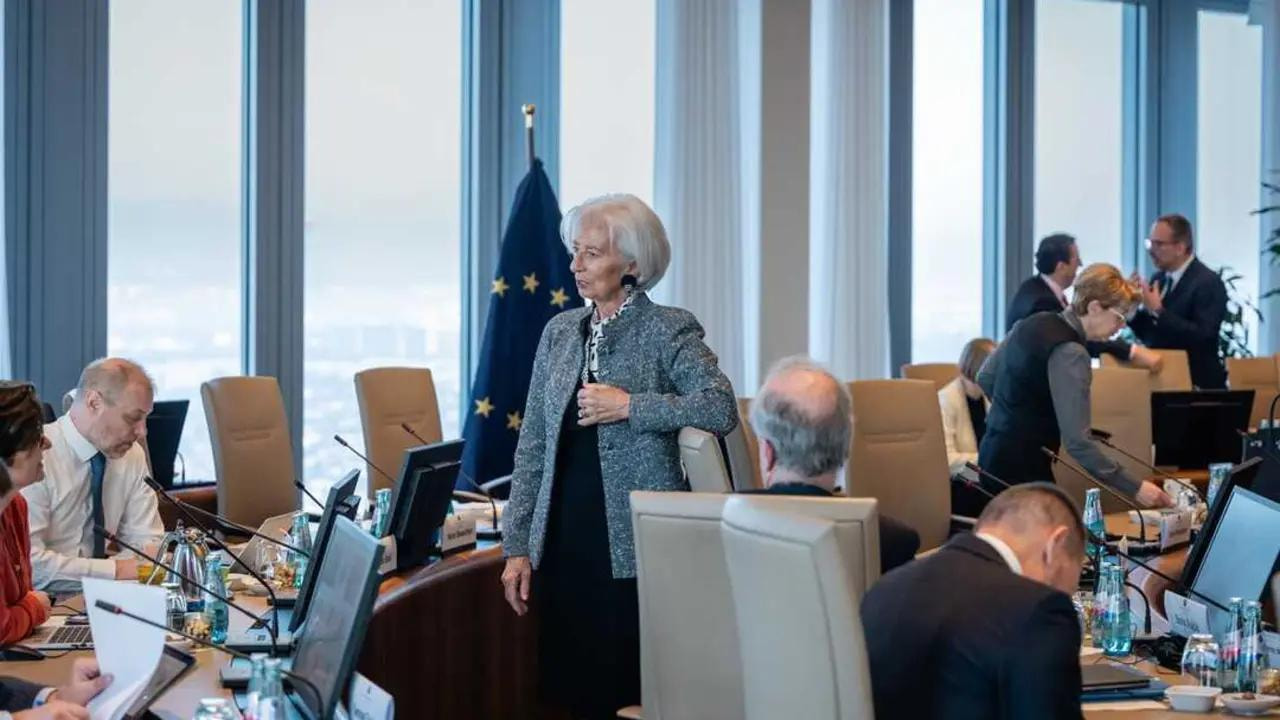
Milan: For households that spent two years adjusting to a long pause in monetary tightening, the message from the markets is uncomfortable. Investors have all but convinced themselves that the central bank will lift its key rates again when the Governing Council meets on 11 June, a move that would push the deposit rate up by a quarter point and reopen a chapter many had hoped was closed.

The pivot reflects a sharp change in the balance of risks. At its late-April meeting the council held the three main rates steady, leaving the deposit facility at two percent and noting that incoming data had broadly matched its earlier outlook. Since then the calculus has shifted. Conflict in the Middle East has driven energy prices higher, feeding directly into headline inflation while also denting the confidence of firms and consumers, an awkward mix that pulls policy in two directions at once.

Faced with rising prices and softening sentiment, the bank appears ready to prioritise the inflation threat. The reasoning is that a fresh energy shock risks unanchoring expectations if it is allowed to seep into wages and contracts, and that acting early is cheaper than chasing prices later. Money-market pricing now leans heavily toward a hike, with at least one further increase penciled in before the year is out.

In a manufacturing heartland like the Italian north, the prospect lands unevenly. Exporters welcome the discipline a firmer currency can bring, but small and mid-sized industrial firms that depend on bank credit fear that dearer borrowing will arrive just as order books wobble. Variable-rate mortgage holders, who watched their monthly payments ratchet up through the last tightening cycle, face the unwelcome return of a familiar squeeze.

The dilemma is that the very shock pushing inflation up is also threatening growth. Higher energy costs act like a tax on activity, draining spending power from households and margins from companies. Raising rates into that headwind risks deepening the slowdown, yet holding steady risks letting a temporary price spike harden into something more persistent. It is the kind of trade-off that has no clean answer, only a choice about which mistake is less costly.

Analysts will parse the accompanying statement as closely as the decision itself. The crucial question is whether policymakers signal that a June move is a one-off insurance step or the start of a renewed campaign. A hawkish tone could tighten financial conditions well beyond the headline quarter point, as banks reprice loans in anticipation of more to come; a more cautious framing might cushion the blow.

For now, businesses and borrowers across the currency bloc are left to plan around uncertainty. Treasurers are locking in funding while they can, mortgage brokers are fielding nervous calls, and finance ministers are recalculating the cost of servicing public debt that has crept higher across the union. The council’s choice on 11 June will not settle the larger argument about where rates ultimately land, but it will set the tone for a summer in which the cost of money is once again on the move.