Esbjerg: Europe’s pivot to cleaner energy is showing up not only in power lines but in payslips, as fresh figures reveal a decade of brisk job growth tied to renewables and efficiency. Data published this month by the bloc’s statistics office show that employment in the environmental economy has expanded sharply, with the clean-energy strand growing fastest of all.
Between 2014 and 2023, the number of people working in energy from renewable sources roughly doubled, climbing from about 0.4 million full-time equivalents to 0.8 million, a rise of 79 percent. Counting renewable energy together with energy efficiency, employment grew from 0.6 million full-time equivalents to 1.0 million over the same period, an increase of 70 percent. In a labour market often described as stagnant, those are striking gains concentrated in a single corner of the economy.
The figures put numbers to a transition that is usually discussed in terms of megawatts and emissions targets. They suggest that the shift away from fossil fuels is also a story about work, drawing in turbine technicians, installers, electricians, insulation fitters and the engineers who design and maintain the systems. For regions that once leaned on coal or heavy industry, the growth hints at where new livelihoods might be found.
The employment surge tracks a wider change in how Europe generates power. In 2024, renewable sources accounted for 48 percent of the energy produced within the bloc, edging the continent’s homegrown output toward an even split between clean and conventional generation. Among renewables, wind turbines supplied the largest share of electricity at 17 percent, followed by hydropower at 13 percent, solar at 11 percent and biofuels at close to 6 percent.
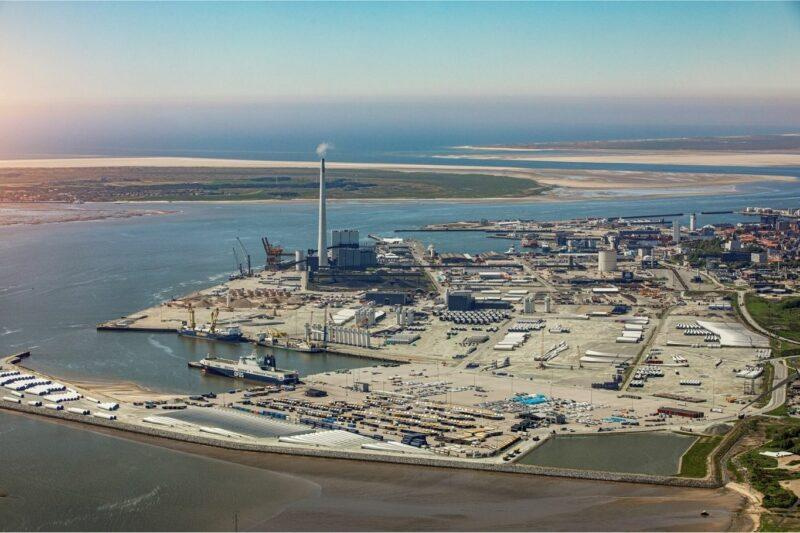
That mix matters for the jobs map. Wind, the leading source, supports dense clusters of manufacturing, installation and maintenance work, much of it along blustery coastlines and in port towns repurposed for assembly and shipping. Solar’s lower but rising share leans toward installation and distribution roles spread across rooftops and fields. The varied profile means the employment dividend is not confined to a handful of industrial giants but is dispersed across communities.
Statisticians caution that the picture is not uniform. Growth has been uneven between member states, shaped by national policy choices, resource endowments and the pace of investment. Some countries have built deep clean-energy workforces, while others lag, and the gap raises questions about whether the benefits of the transition are being shared evenly across the bloc.
Still, the direction is unmistakable. As Europe presses toward its climate goals, the data indicate that decarbonisation is generating employment rather than simply displacing it, at least in the sectors building the new energy system. The challenge for policymakers is to ensure that training, investment and regional planning keep pace, so that the jobs created by the green shift land where they are needed most.