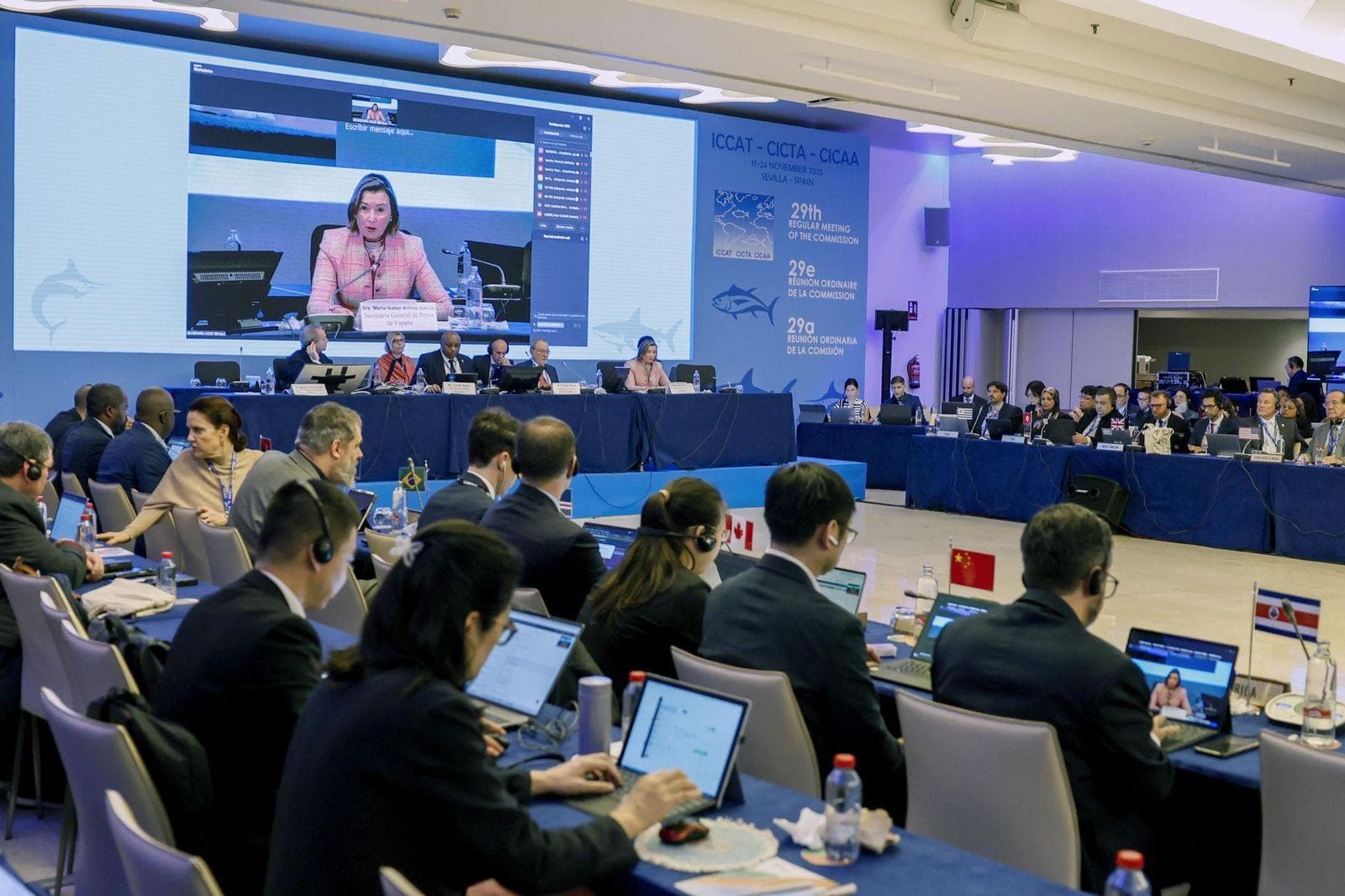
Vilamoura: The ICCAT annual meeting opens in Vilamoura, on Portugal’s Algarve coast, on 16 November 2026, and the European Union arrives seeking larger tropical tuna quotas without weakening the science that guides Atlantic stocks. Delegations from the International Commission for the Conservation of Atlantic Tunas will negotiate until 23 November.
EU fisheries ministers prepared the ground on 26 October 2026, when the Council gave the Commission guidance for the talks. The Commission negotiates on behalf of all 27 member states inside ICCAT, so this mandate shapes what Spanish, French and Portuguese fleets can catch next year.
Spain set the tone. Agriculture and fisheries minister Luis Planas asked for sufficient quotas for tropical tuna and for closed seasons based on scientific evidence. He also wants every contracting party to follow equivalent rules, a recurring complaint from EU fleets that compete with vessels from coastal states and distant-water nations.
Yellowfin tuna will dominate the ICCAT annual meeting agenda. Delegates hold a two-day intersessional session on yellowfin just before the plenary, and scientists remain cautious about the stock. Billfish such as blue marlin, white marlin and roundscale spearfish also feature, together with swordfish and sharks, including shortfin mako and blue shark.
Sharks remain a sensitive file for the EU at every ICCAT annual meeting. ICCAT banned retention of North Atlantic shortfin mako in 2022, and that ban still stands. Conservation groups want stronger measures for blue shark, which EU longliners land in large volumes, while fleet associations warn against cuts that other fishing nations would not mirror.
Bluefin tuna, once the symbol of overfishing, now looks like a recovery story. At the 2025 session the EU secured a 17 percent increase in its bluefin quota under a management procedure that sets catches through a pre-agreed formula. That approach limits room for bargaining this year but gives operators in Malta, Croatia and Spain more stable planning.
Inspection and control will also come up at the ICCAT annual meeting. The EU supports stronger observer coverage and port inspections, arguing that a quota system only works if every flag state enforces it. Progress on observer rules has been slow in recent years, and the Vilamoura session will show whether partners are ready to move.
The ICCAT annual meeting matters for coastal communities far from the Atlantic. Tuna canneries in Galicia and the Basque Country depend on tropical catches landed by EU purse seiners in West Africa and the Indian Ocean. Any quota shift therefore travels quickly through processing jobs and prices on supermarket shelves.
When the ICCAT annual meeting closes on 23 November, the Commission will translate its outcome into EU law through the annual fishing opportunities regulation for 2027. Ministers will then judge whether Brussels balanced fleet demands with the scientific advice that has rebuilt bluefin over the past decade.