rescEU, the shared reserve of emergency aircraft and crews that the Union keeps for the worst days, is facing one of its sternest tests as wildfires tear across the south of the continent. Two countries triggered the alarm within days of each other, and the response has drawn on assets pooled from opposite ends of Europe.
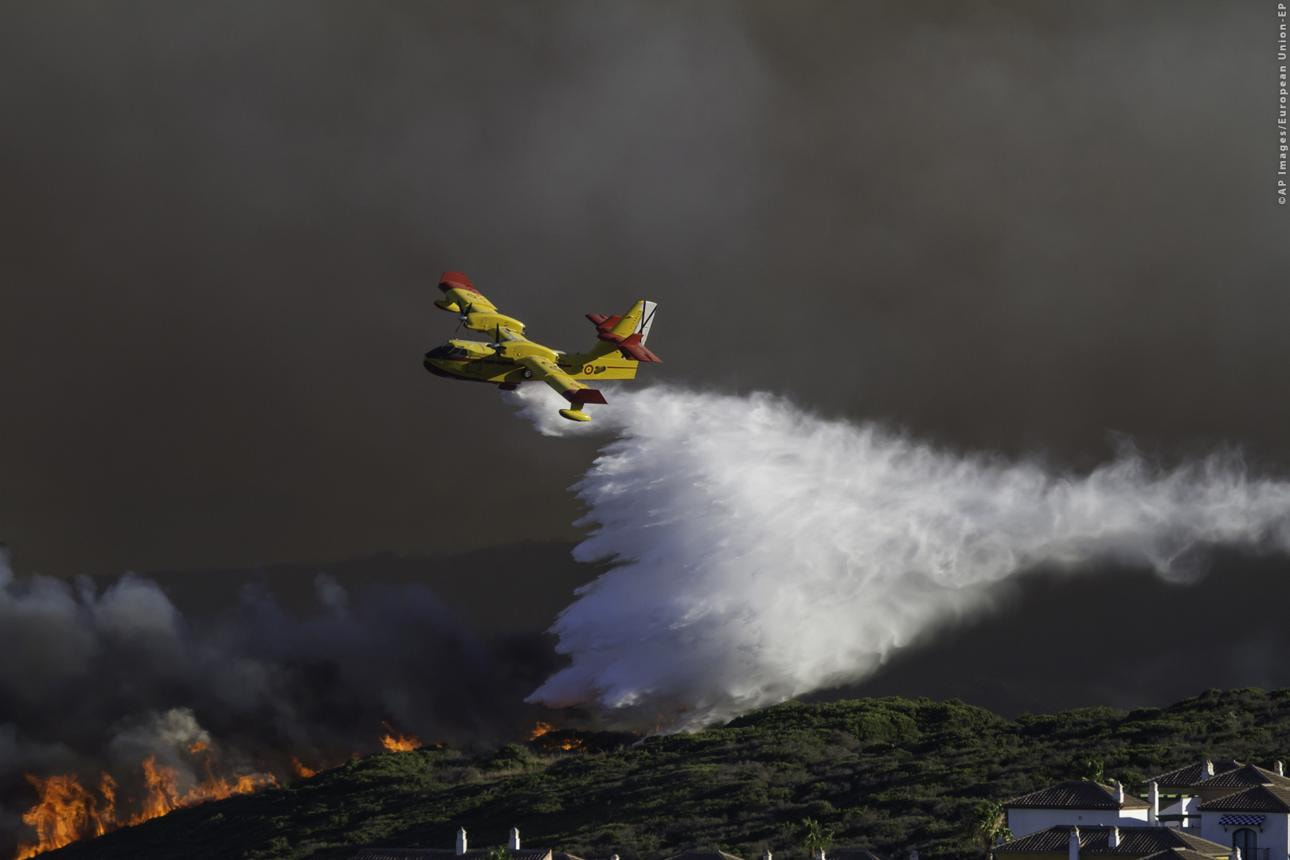
Portugal activated the Union Civil Protection Mechanism on 3 July and France followed on 5 July, both requesting help as fire fronts outran national capacity. The Commission mobilised four rescEU firefighting airplanes from Sweden and Cyprus, while additional aircraft from Italy and Spain joined the effort alongside ground reinforcements.
The speed of the deployment reflected months of preparation rather than luck. Spain sent 118 firefighters and 45 vehicles that reached the affected zones within hours of the request, an arrival time that would have been unthinkable when the mechanism relied on ad hoc offers of help.
Behind the surge sits the largest pre-positioning exercise the bloc has attempted. This summer the Commission stationed 777 firefighters from 14 countries in high-risk regions across Cyprus, Greece, Italy, France, Spain and Portugal, backed by 22 firefighting airplanes and five helicopters held ready to move.
The coordination runs through the Emergency Response Coordination Centre, which fields requests around the clock and matches them to whatever the strategic reserve can spare. When a national fleet is stretched to breaking point, that clearing house decides which planes fly where, turning 27 separate capabilities into something closer to a single European resource.
The strategy carries a clear political message. By investing in aircraft it owns outright rather than borrowing from members in a crisis, the Union is betting that shared assets are cheaper and faster than 27 countries each buying their own. A brutal fire season is the proof-of-concept that either validates the model or exposes its limits.
The gaps are real enough. A handful of aircraft cannot be everywhere at once, and a simultaneous emergency in several member states would force painful choices about priority. For now the fleet is holding, but a hotter, drier climate is steadily raising the bar it must clear. The Commission details the operation in its rescEU overview, and this summer will test how much further the model can stretch.