Brussels: The European Commission launched its largest ever wildfire response for the 2026 summer, pre-positioning firefighters and aircraft across southern Europe before the peak fire season took hold. The Commission announced the deployment on 2 June 2026 as forecasters warned of another dangerous summer.
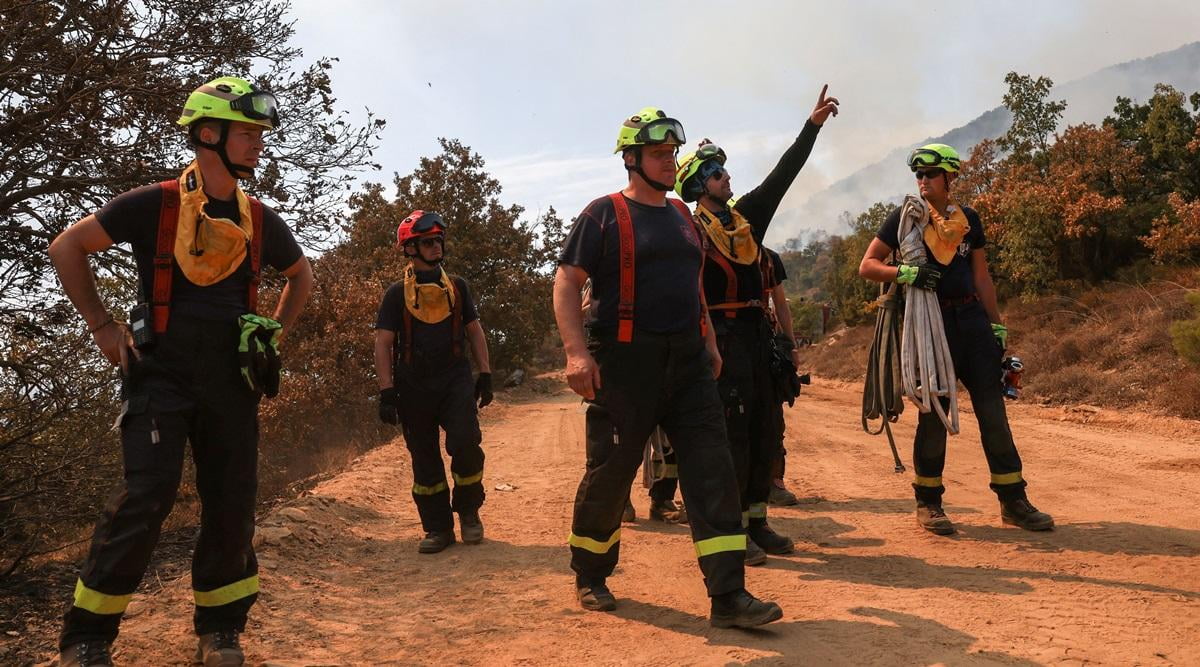
The core of the wildfire response is people on the ground. Some 777 firefighters from 14 European countries have been stationed in high-risk areas across Cyprus, Greece, Italy, France, Spain and Portugal, ready to act before local crews are overwhelmed rather than after.
In the air, the EU has assembled 22 firefighting aeroplanes and five helicopters that can be sent wherever the pressure is greatest. The fleet operates through the Union Civil Protection Mechanism, which lets any country facing a disaster too large for its own services request help from the shared European pool.
The Commission set out the plan when it declared the bloc ready for the summer wildfire season, framing the season as a test of prevention and preparedness, not just emergency reaction.
The system was soon in use. In early July the Commission mobilised four rescEU aeroplanes from Sweden and Cyprus to help France and Portugal battle simultaneous blazes, moving specialist aircraft hundreds of kilometres to where the flames were spreading fastest.
Behind the seasonal surge sits a bigger bet on permanence. The EU is investing roughly 600 million euros to build a standing rescEU fleet of 12 new firefighting aircraft based in France, Spain, Portugal, Italy, Greece and Croatia, so the bloc owns capacity rather than borrowing it each year.
That shift matters because climate change is lengthening the danger period. Fires now strike earlier in spring and burn later into autumn, and blazes have moved north into regions that once rarely faced them, stretching national services that were built for shorter, more predictable seasons.
The Commission has paired the hardware with a strategy. A Communication presented in March 2026 argues that wildfires must be tackled across the whole cycle, from prevention and preparedness through response to recovery, rather than treated as a summer emergency alone. The wider approach is laid out by its civil protection service.
For the member states on Europe’s exposed southern rim, the calculation is stark. National fleets can be overwhelmed within days of a heatwave, and the shared European response increasingly decides whether a fire is contained early or grows into a disaster that costs lives, homes and forests.
Officials also point to a human dividend. Pre-positioning crews close to the fire line means faster first strikes, fewer evacuations and, in the best cases, blazes that never reach the villages and forests they threaten.