August 10, 2026
LATEST
Five Joint Defence Projects Launch Europe’s Military ShieldElectrification Plan Aims to Make Europe First Electro ContinentHorizon Europe Budget Fight Heats Up as Ministers Push BackGoogle’s DMA Fine Sets Off a Transatlantic Tariff ClashTwenty New University Alliances Join Erasmus for Two YearsForeign Subsidies Case Puts Temu in the EU’s SightsVan Tachographs Now Mandatory for Cross-Border FleetsStress Test Exposes Gaps in Euro Area Bank DefencesEurope Bets on a Gulf Partnership Before the Riyadh SummitWhy the Atlantic Route Now Runs Through MauritaniaKyiv and Chisinau Advance as the EU Accession Talks Gather PaceEurope’s New Digital Border System Beds In After a Rocky RolloutBrussels Mounts Its Largest Wildfire Response as the Fires SpreadRetail Spending Slipped in June, Wrong-Footing EconomistsHeatwave Warning Puts Brussels on Alert for Vulnerable GroupsKANAL’s 230 Million Euro Museum Sets a November Opening DatePension Savings Rules Get a Reset as the EU Scraps the 1% CapMedicine Shortages Move to the Heart of Europe’s Pharma ResetJapan Becomes Europe’s Closest Security Partner in AsiaCan Europe’s New Zealand Deal Anchor It in the Pacific?Five Joint Defence Projects Launch Europe’s Military ShieldElectrification Plan Aims to Make Europe First Electro ContinentHorizon Europe Budget Fight Heats Up as Ministers Push BackGoogle’s DMA Fine Sets Off a Transatlantic Tariff ClashTwenty New University Alliances Join Erasmus for Two YearsForeign Subsidies Case Puts Temu in the EU’s SightsVan Tachographs Now Mandatory for Cross-Border FleetsStress Test Exposes Gaps in Euro Area Bank DefencesEurope Bets on a Gulf Partnership Before the Riyadh SummitWhy the Atlantic Route Now Runs Through MauritaniaKyiv and Chisinau Advance as the EU Accession Talks Gather PaceEurope’s New Digital Border System Beds In After a Rocky RolloutBrussels Mounts Its Largest Wildfire Response as the Fires SpreadRetail Spending Slipped in June, Wrong-Footing EconomistsHeatwave Warning Puts Brussels on Alert for Vulnerable GroupsKANAL’s 230 Million Euro Museum Sets a November Opening DatePension Savings Rules Get a Reset as the EU Scraps the 1% CapMedicine Shortages Move to the Heart of Europe’s Pharma ResetJapan Becomes Europe’s Closest Security Partner in AsiaCan Europe’s New Zealand Deal Anchor It in the Pacific?
August 10, 2026
LATEST
Five Joint Defence Projects Launch Europe’s Military ShieldElectrification Plan Aims to Make Europe First Electro ContinentHorizon Europe Budget Fight Heats Up as Ministers Push BackGoogle’s DMA Fine Sets Off a Transatlantic Tariff ClashTwenty New University Alliances Join Erasmus for Two YearsForeign Subsidies Case Puts Temu in the EU’s SightsVan Tachographs Now Mandatory for Cross-Border FleetsStress Test Exposes Gaps in Euro Area Bank DefencesEurope Bets on a Gulf Partnership Before the Riyadh SummitWhy the Atlantic Route Now Runs Through MauritaniaKyiv and Chisinau Advance as the EU Accession Talks Gather PaceEurope’s New Digital Border System Beds In After a Rocky RolloutBrussels Mounts Its Largest Wildfire Response as the Fires SpreadRetail Spending Slipped in June, Wrong-Footing EconomistsHeatwave Warning Puts Brussels on Alert for Vulnerable GroupsKANAL’s 230 Million Euro Museum Sets a November Opening DatePension Savings Rules Get a Reset as the EU Scraps the 1% CapMedicine Shortages Move to the Heart of Europe’s Pharma ResetJapan Becomes Europe’s Closest Security Partner in AsiaCan Europe’s New Zealand Deal Anchor It in the Pacific?Five Joint Defence Projects Launch Europe’s Military ShieldElectrification Plan Aims to Make Europe First Electro ContinentHorizon Europe Budget Fight Heats Up as Ministers Push BackGoogle’s DMA Fine Sets Off a Transatlantic Tariff ClashTwenty New University Alliances Join Erasmus for Two YearsForeign Subsidies Case Puts Temu in the EU’s SightsVan Tachographs Now Mandatory for Cross-Border FleetsStress Test Exposes Gaps in Euro Area Bank DefencesEurope Bets on a Gulf Partnership Before the Riyadh SummitWhy the Atlantic Route Now Runs Through MauritaniaKyiv and Chisinau Advance as the EU Accession Talks Gather PaceEurope’s New Digital Border System Beds In After a Rocky RolloutBrussels Mounts Its Largest Wildfire Response as the Fires SpreadRetail Spending Slipped in June, Wrong-Footing EconomistsHeatwave Warning Puts Brussels on Alert for Vulnerable GroupsKANAL’s 230 Million Euro Museum Sets a November Opening DatePension Savings Rules Get a Reset as the EU Scraps the 1% CapMedicine Shortages Move to the Heart of Europe’s Pharma ResetJapan Becomes Europe’s Closest Security Partner in AsiaCan Europe’s New Zealand Deal Anchor It in the Pacific?

Ministers Weigh Deeper Defence Pact as Ukraine Loan Nears Launch

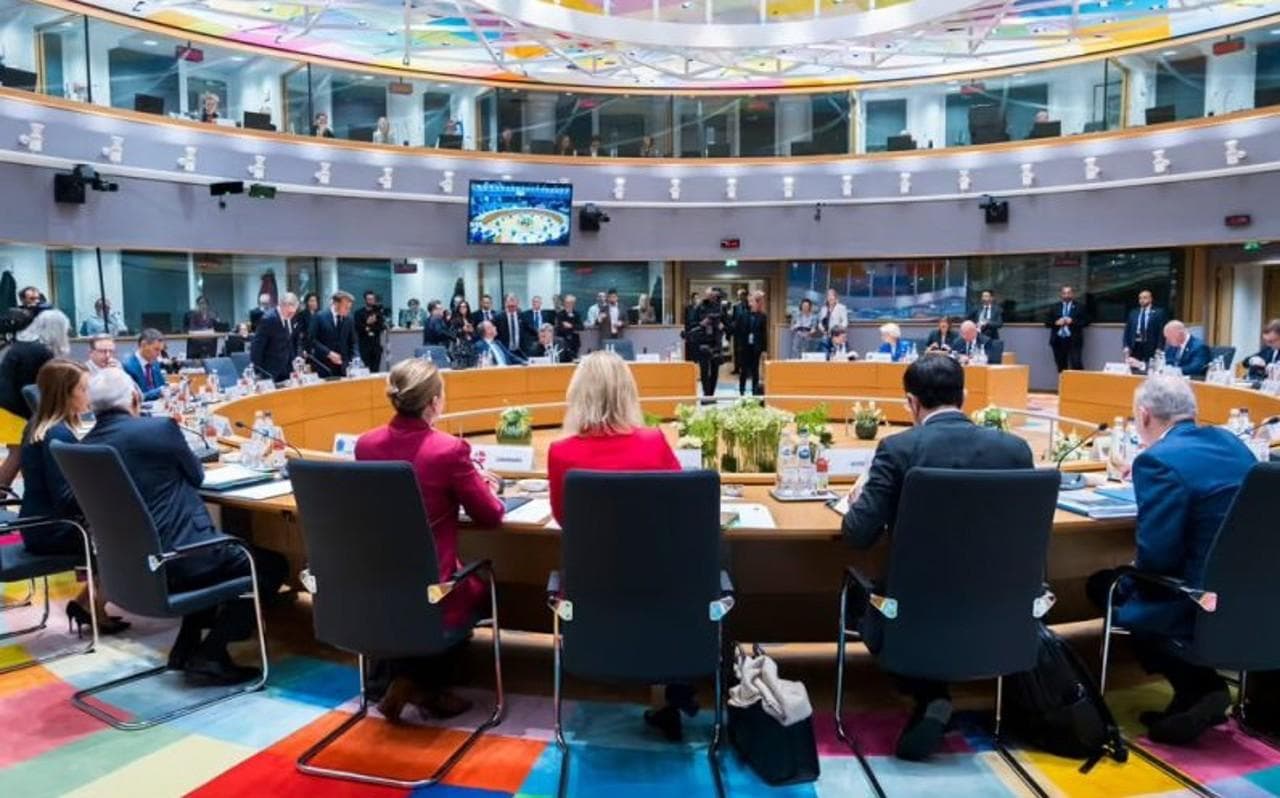
Brussels: The Foreign Affairs Council convened in defence configuration on 12 May, with ministers spending the bulk of the session on two converging files. The first was the operational mechanics of the bloc’s €90 billion loan facility for Ukraine, scheduled for its first disbursement next month. The second was an updated threat assessment that frames the strategic environment confronting the Union over the next budgetary cycle. The session also marked one of the more concrete attempts yet to integrate Ukrainian defence firms into European supply chains, a question High Representative Kaja Kallas described as no longer hypothetical given the scale of capability gaps identified in the latest readiness review.

Discussion of the loan, formally backed by proceeds from immobilised Russian sovereign assets and routed through European facilities, exposed familiar fault lines. Member states broadly supportive of front-loading disbursement to maintain operational tempo on the Ukrainian front argued for the simplest possible conditionality, while others, mindful of state-aid implications and concerned about precedent, pushed for tighter audit and reporting requirements. The June disbursement is widely expected to clear, though procedural ambiguities around how recovered assets are reinvested into European defence-industrial capacity remain to be resolved in subsequent implementing decisions.

Equally significant was the presentation, via video link, by Ukrainian Defence Minister Mykhailo Fedorov, who outlined battlefield priorities ranging from electronic warfare and counter-drone systems to deep-strike capability and ammunition resupply. The integration of Ukrainian companies into the European defence technological and industrial base, long discussed in declarations, is now beginning to take procedural form through joint procurement vehicles and technology transfer arrangements administered by the European Defence Agency. Several member states have signalled willingness to certify Ukrainian-origin components under the bloc’s existing defence equipment frameworks, although the legal questions surrounding intellectual property and dual-use export controls remain non-trivial.

The updated threat analysis circulated to ministers, while classified in detail, was acknowledged in the post-meeting communications to identify Russia as the principal long-term threat to the Union’s security, accompanied by hybrid risks emanating from the Sahel, intensifying maritime contestation in the Indo-Pacific, and instability across the southern Mediterranean. The geographic breadth of the assessment underscores why the figures circulating in informed circles, including a recent paper by German defence investors suggesting roughly €50 billion a year for the next decade as the price of meaningful European strategic autonomy, are unlikely to remain aspirational for much longer. Total cumulative investment, that paper argued, would land between €500 billion and €700 billion before 2035, depending on assumptions about industrial base expansion and joint procurement efficiencies.

Operationally, ministers also reviewed Operation EUNAVFOR ASPIDES, the bloc’s naval mission in the Red Sea and Gulf of Aden, with discussion focused on whether the mandate should be extended geographically and reinforced with additional frigates from member states with available naval capacity. Greece and Italy have so far carried disproportionate shares of the deployment, and the Council appears open to a more equitable rotation if security conditions in the region warrant continued presence.

The political subtext was provided by the Middle East, where ministers exchanged views on regional dynamics and their implications for European energy and migration policy. While no formal decisions were announced, the conversation reinforced a now-familiar pattern in which the Council’s defence-related sessions are increasingly framed by simultaneous pressures from the eastern, southern and maritime flanks. The next major test for the bloc’s defence agenda will arrive with the multiannual financial framework negotiations in late summer, where defence-related expenditure will compete with cohesion, agriculture and migration files for finite budgetary headroom. For now, the unanimity that prevailed in the chamber suggests a degree of political alignment that has not always been visible in the past three years.