August 10, 2026
LATEST
Five Joint Defence Projects Launch Europe’s Military ShieldElectrification Plan Aims to Make Europe First Electro ContinentHorizon Europe Budget Fight Heats Up as Ministers Push BackGoogle’s DMA Fine Sets Off a Transatlantic Tariff ClashTwenty New University Alliances Join Erasmus for Two YearsForeign Subsidies Case Puts Temu in the EU’s SightsVan Tachographs Now Mandatory for Cross-Border FleetsStress Test Exposes Gaps in Euro Area Bank DefencesEurope Bets on a Gulf Partnership Before the Riyadh SummitWhy the Atlantic Route Now Runs Through MauritaniaKyiv and Chisinau Advance as the EU Accession Talks Gather PaceEurope’s New Digital Border System Beds In After a Rocky RolloutBrussels Mounts Its Largest Wildfire Response as the Fires SpreadRetail Spending Slipped in June, Wrong-Footing EconomistsHeatwave Warning Puts Brussels on Alert for Vulnerable GroupsKANAL’s 230 Million Euro Museum Sets a November Opening DatePension Savings Rules Get a Reset as the EU Scraps the 1% CapMedicine Shortages Move to the Heart of Europe’s Pharma ResetJapan Becomes Europe’s Closest Security Partner in AsiaCan Europe’s New Zealand Deal Anchor It in the Pacific?Five Joint Defence Projects Launch Europe’s Military ShieldElectrification Plan Aims to Make Europe First Electro ContinentHorizon Europe Budget Fight Heats Up as Ministers Push BackGoogle’s DMA Fine Sets Off a Transatlantic Tariff ClashTwenty New University Alliances Join Erasmus for Two YearsForeign Subsidies Case Puts Temu in the EU’s SightsVan Tachographs Now Mandatory for Cross-Border FleetsStress Test Exposes Gaps in Euro Area Bank DefencesEurope Bets on a Gulf Partnership Before the Riyadh SummitWhy the Atlantic Route Now Runs Through MauritaniaKyiv and Chisinau Advance as the EU Accession Talks Gather PaceEurope’s New Digital Border System Beds In After a Rocky RolloutBrussels Mounts Its Largest Wildfire Response as the Fires SpreadRetail Spending Slipped in June, Wrong-Footing EconomistsHeatwave Warning Puts Brussels on Alert for Vulnerable GroupsKANAL’s 230 Million Euro Museum Sets a November Opening DatePension Savings Rules Get a Reset as the EU Scraps the 1% CapMedicine Shortages Move to the Heart of Europe’s Pharma ResetJapan Becomes Europe’s Closest Security Partner in AsiaCan Europe’s New Zealand Deal Anchor It in the Pacific?
August 10, 2026
LATEST
Five Joint Defence Projects Launch Europe’s Military ShieldElectrification Plan Aims to Make Europe First Electro ContinentHorizon Europe Budget Fight Heats Up as Ministers Push BackGoogle’s DMA Fine Sets Off a Transatlantic Tariff ClashTwenty New University Alliances Join Erasmus for Two YearsForeign Subsidies Case Puts Temu in the EU’s SightsVan Tachographs Now Mandatory for Cross-Border FleetsStress Test Exposes Gaps in Euro Area Bank DefencesEurope Bets on a Gulf Partnership Before the Riyadh SummitWhy the Atlantic Route Now Runs Through MauritaniaKyiv and Chisinau Advance as the EU Accession Talks Gather PaceEurope’s New Digital Border System Beds In After a Rocky RolloutBrussels Mounts Its Largest Wildfire Response as the Fires SpreadRetail Spending Slipped in June, Wrong-Footing EconomistsHeatwave Warning Puts Brussels on Alert for Vulnerable GroupsKANAL’s 230 Million Euro Museum Sets a November Opening DatePension Savings Rules Get a Reset as the EU Scraps the 1% CapMedicine Shortages Move to the Heart of Europe’s Pharma ResetJapan Becomes Europe’s Closest Security Partner in AsiaCan Europe’s New Zealand Deal Anchor It in the Pacific?Five Joint Defence Projects Launch Europe’s Military ShieldElectrification Plan Aims to Make Europe First Electro ContinentHorizon Europe Budget Fight Heats Up as Ministers Push BackGoogle’s DMA Fine Sets Off a Transatlantic Tariff ClashTwenty New University Alliances Join Erasmus for Two YearsForeign Subsidies Case Puts Temu in the EU’s SightsVan Tachographs Now Mandatory for Cross-Border FleetsStress Test Exposes Gaps in Euro Area Bank DefencesEurope Bets on a Gulf Partnership Before the Riyadh SummitWhy the Atlantic Route Now Runs Through MauritaniaKyiv and Chisinau Advance as the EU Accession Talks Gather PaceEurope’s New Digital Border System Beds In After a Rocky RolloutBrussels Mounts Its Largest Wildfire Response as the Fires SpreadRetail Spending Slipped in June, Wrong-Footing EconomistsHeatwave Warning Puts Brussels on Alert for Vulnerable GroupsKANAL’s 230 Million Euro Museum Sets a November Opening DatePension Savings Rules Get a Reset as the EU Scraps the 1% CapMedicine Shortages Move to the Heart of Europe’s Pharma ResetJapan Becomes Europe’s Closest Security Partner in AsiaCan Europe’s New Zealand Deal Anchor It in the Pacific?

Macron’s Indo-Pacific Coalition Draws Tokyo and Seoul Closer

Tokyo: When Emmanuel Macron used his April visit to Japan and South Korea to call for a “coalition of independents” among middle powers, the phrase was easy to dismiss as another Gaullist rhetorical flourish. A month on, the substance behind it has begun to firm up. The EU has concluded its first Security and Defence Partnerships outside Europe — with Tokyo and Seoul — and Brussels’ broader Indo-Pacific posture has shifted from a 2021 strategy paper that few outside the foreign-policy guild read into an operational programme with budgets, deployments, and defined counterparts.

The architecture is best understood as deliberate redundancy. Faced with a Beijing that increasingly treats trade as a coercive instrument, a Washington whose strategic predictability has weakened, and a regional security environment in which North Korean missile capability, Taiwan Strait crisis management, and South China Sea freedom of navigation are simultaneously live files, the EU has opted not to bet on a single dominant alignment. The Security and Defence Partnerships with Japan and South Korea are the most visible expression of that choice. They formalise consultation channels on cyber threats, hybrid operations, maritime security, and defence industrial cooperation — the categories where European and East Asian middle powers have the most overlapping vulnerability and the most complementary capability.

For Japan, the partnership is a hedge that mirrors its own broader strategy of “lattice” diplomacy. Prime Minister Sanae Takaichi’s government has continued the post-Kishida pivot toward thicker security ties with Europe, Australia, and the Philippines, treating the United States as the anchor but not the only pillar. The January summit with South Korean President Lee Jae-myung — the second between the two leaders in a year — pointed in the same direction. Tokyo and Seoul disagree on much, including questions of historical memory, but they agree on the diagnosis that their security cannot be subcontracted to any single external power without unacceptable risk.

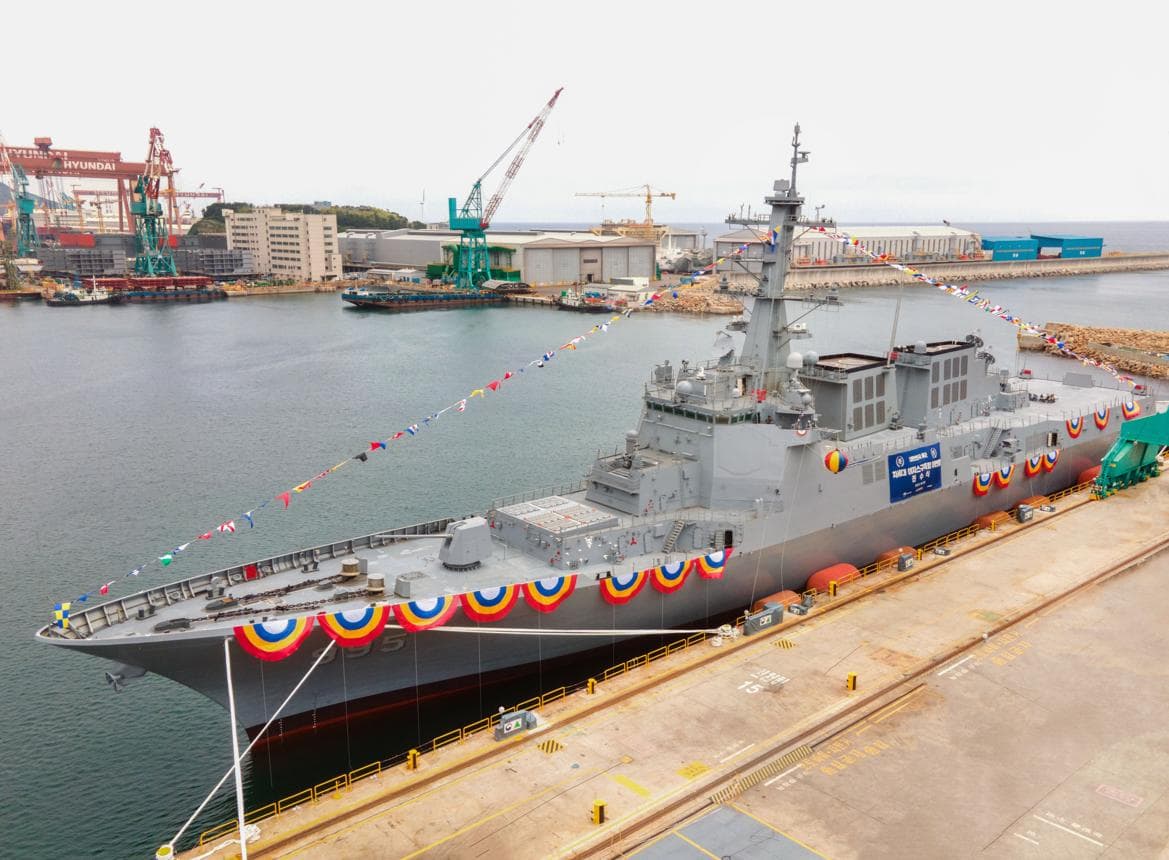
For Seoul, the EU partnership is unusually consequential. South Korea’s defence industry has emerged in the past three years as one of the few global suppliers capable of scaling tank, artillery, and ammunition production on timelines relevant to the war in Ukraine. Poland’s purchases of K2 tanks and K9 howitzers established the commercial proof of concept. The new EU framework opens the prospect of South Korean firms participating, with appropriate safeguards, in European Defence Fund programmes and in joint procurement under the European Defence Industry Programme. That is not a small thing. It would mark the first time a non-Western partner sits inside the bloc’s own defence industrial machinery.

What makes the construct fragile is the same thing that makes it potentially durable. None of the participants — Brussels, Tokyo, Seoul, Canberra, New Delhi, Jakarta — is willing to formalise the arrangement as an alliance. The terminology of “partnerships”, “coalitions of independents”, and “lattice frameworks” is precisely chosen to keep optionality intact. Beijing, predictably, has read the unspoken implication and responded with a steady drumbeat of warnings about “bloc confrontation”, interspersed with offers of fresh economic engagement to those willing to keep distance from the EU’s project.

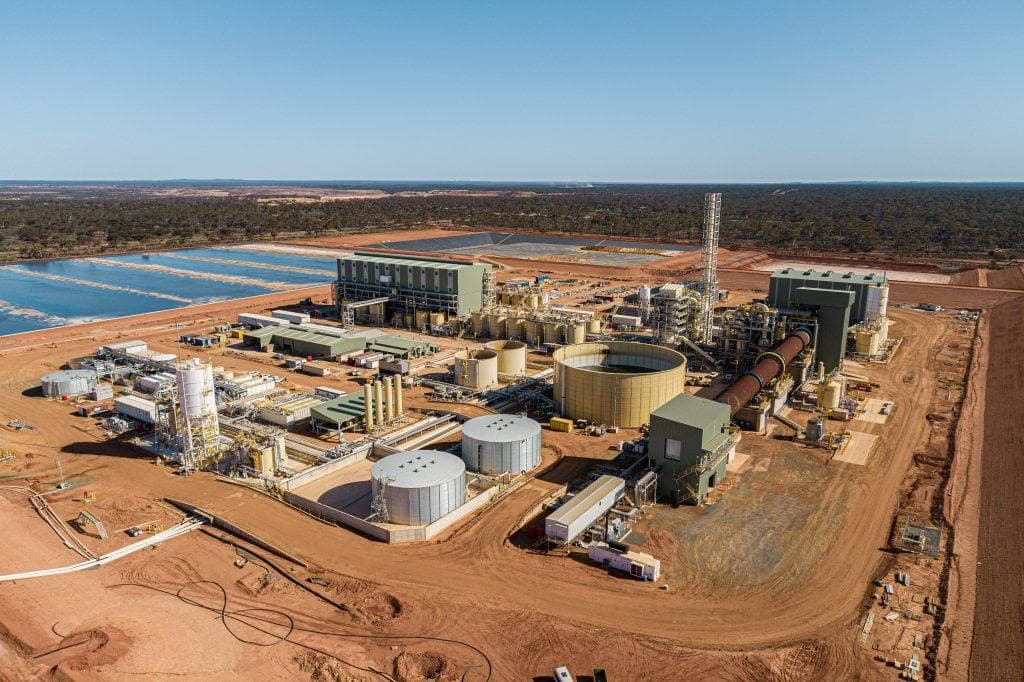
Whether the hedge holds depends less on rhetoric and more on whether the EU can deliver tangible deliverables to its East Asian partners in the next twelve months. Real joint exercises, real ammunition co-production, real co-development of critical-mineral supply chains that bypass Chinese chokepoints — these are the metrics that will determine whether Macron’s coalition graduates from speech to instrument.

For now, the direction is set. Brussels is no longer asking whether Europe has a role in Asian security. It is asking which Asian partners can credibly help shape the European one.