August 10, 2026
LATEST
Five Joint Defence Projects Launch Europe’s Military ShieldElectrification Plan Aims to Make Europe First Electro ContinentHorizon Europe Budget Fight Heats Up as Ministers Push BackGoogle’s DMA Fine Sets Off a Transatlantic Tariff ClashTwenty New University Alliances Join Erasmus for Two YearsForeign Subsidies Case Puts Temu in the EU’s SightsVan Tachographs Now Mandatory for Cross-Border FleetsStress Test Exposes Gaps in Euro Area Bank DefencesEurope Bets on a Gulf Partnership Before the Riyadh SummitWhy the Atlantic Route Now Runs Through MauritaniaKyiv and Chisinau Advance as the EU Accession Talks Gather PaceEurope’s New Digital Border System Beds In After a Rocky RolloutBrussels Mounts Its Largest Wildfire Response as the Fires SpreadRetail Spending Slipped in June, Wrong-Footing EconomistsHeatwave Warning Puts Brussels on Alert for Vulnerable GroupsKANAL’s 230 Million Euro Museum Sets a November Opening DatePension Savings Rules Get a Reset as the EU Scraps the 1% CapMedicine Shortages Move to the Heart of Europe’s Pharma ResetJapan Becomes Europe’s Closest Security Partner in AsiaCan Europe’s New Zealand Deal Anchor It in the Pacific?Five Joint Defence Projects Launch Europe’s Military ShieldElectrification Plan Aims to Make Europe First Electro ContinentHorizon Europe Budget Fight Heats Up as Ministers Push BackGoogle’s DMA Fine Sets Off a Transatlantic Tariff ClashTwenty New University Alliances Join Erasmus for Two YearsForeign Subsidies Case Puts Temu in the EU’s SightsVan Tachographs Now Mandatory for Cross-Border FleetsStress Test Exposes Gaps in Euro Area Bank DefencesEurope Bets on a Gulf Partnership Before the Riyadh SummitWhy the Atlantic Route Now Runs Through MauritaniaKyiv and Chisinau Advance as the EU Accession Talks Gather PaceEurope’s New Digital Border System Beds In After a Rocky RolloutBrussels Mounts Its Largest Wildfire Response as the Fires SpreadRetail Spending Slipped in June, Wrong-Footing EconomistsHeatwave Warning Puts Brussels on Alert for Vulnerable GroupsKANAL’s 230 Million Euro Museum Sets a November Opening DatePension Savings Rules Get a Reset as the EU Scraps the 1% CapMedicine Shortages Move to the Heart of Europe’s Pharma ResetJapan Becomes Europe’s Closest Security Partner in AsiaCan Europe’s New Zealand Deal Anchor It in the Pacific?
August 10, 2026
LATEST
Five Joint Defence Projects Launch Europe’s Military ShieldElectrification Plan Aims to Make Europe First Electro ContinentHorizon Europe Budget Fight Heats Up as Ministers Push BackGoogle’s DMA Fine Sets Off a Transatlantic Tariff ClashTwenty New University Alliances Join Erasmus for Two YearsForeign Subsidies Case Puts Temu in the EU’s SightsVan Tachographs Now Mandatory for Cross-Border FleetsStress Test Exposes Gaps in Euro Area Bank DefencesEurope Bets on a Gulf Partnership Before the Riyadh SummitWhy the Atlantic Route Now Runs Through MauritaniaKyiv and Chisinau Advance as the EU Accession Talks Gather PaceEurope’s New Digital Border System Beds In After a Rocky RolloutBrussels Mounts Its Largest Wildfire Response as the Fires SpreadRetail Spending Slipped in June, Wrong-Footing EconomistsHeatwave Warning Puts Brussels on Alert for Vulnerable GroupsKANAL’s 230 Million Euro Museum Sets a November Opening DatePension Savings Rules Get a Reset as the EU Scraps the 1% CapMedicine Shortages Move to the Heart of Europe’s Pharma ResetJapan Becomes Europe’s Closest Security Partner in AsiaCan Europe’s New Zealand Deal Anchor It in the Pacific?Five Joint Defence Projects Launch Europe’s Military ShieldElectrification Plan Aims to Make Europe First Electro ContinentHorizon Europe Budget Fight Heats Up as Ministers Push BackGoogle’s DMA Fine Sets Off a Transatlantic Tariff ClashTwenty New University Alliances Join Erasmus for Two YearsForeign Subsidies Case Puts Temu in the EU’s SightsVan Tachographs Now Mandatory for Cross-Border FleetsStress Test Exposes Gaps in Euro Area Bank DefencesEurope Bets on a Gulf Partnership Before the Riyadh SummitWhy the Atlantic Route Now Runs Through MauritaniaKyiv and Chisinau Advance as the EU Accession Talks Gather PaceEurope’s New Digital Border System Beds In After a Rocky RolloutBrussels Mounts Its Largest Wildfire Response as the Fires SpreadRetail Spending Slipped in June, Wrong-Footing EconomistsHeatwave Warning Puts Brussels on Alert for Vulnerable GroupsKANAL’s 230 Million Euro Museum Sets a November Opening DatePension Savings Rules Get a Reset as the EU Scraps the 1% CapMedicine Shortages Move to the Heart of Europe’s Pharma ResetJapan Becomes Europe’s Closest Security Partner in AsiaCan Europe’s New Zealand Deal Anchor It in the Pacific?

Shuttered Coal Mines Step Onto The Methane Measurement Clock

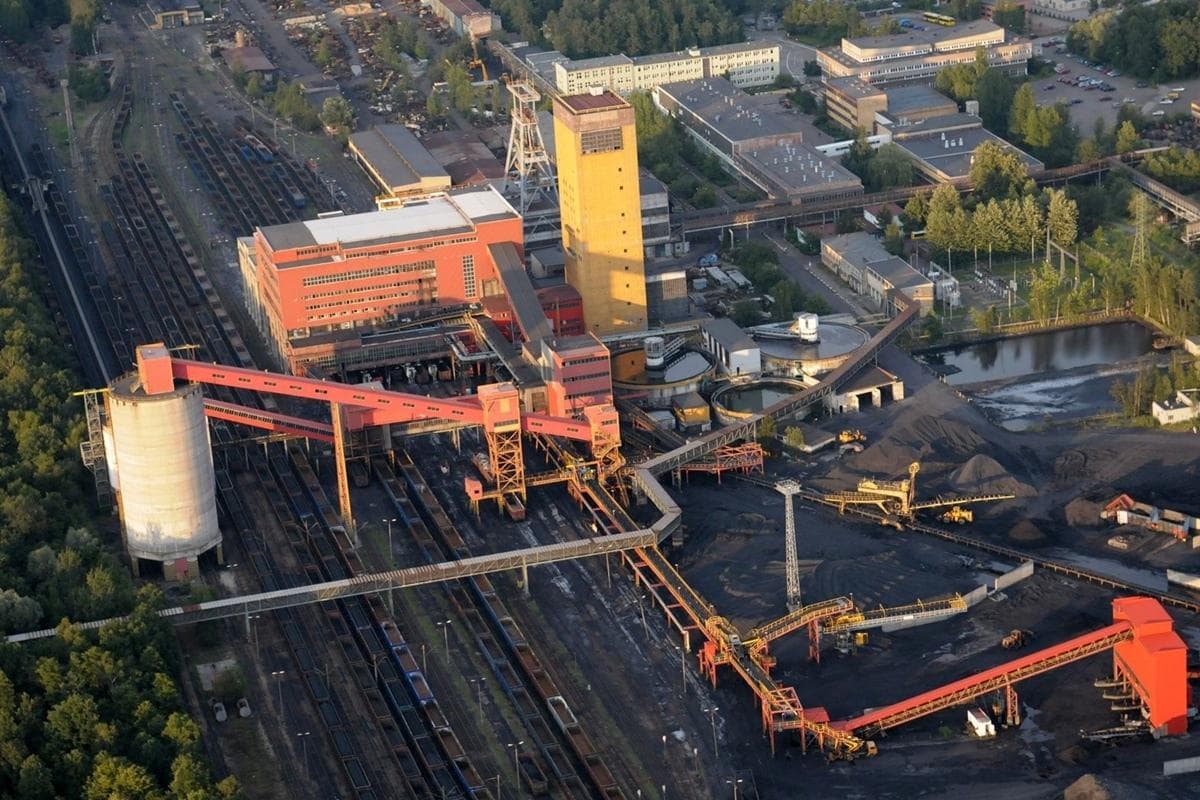
Krakow: From 5 May, operators of closed underground coal mines across the Union have been required to start measuring methane emissions at source, a quiet milestone in the long compliance staircase of the Methane Regulation that has had less public attention than the import-side fight. The next gate falls on 5 August, when annual source-level emissions reports become mandatory, and the larger architectural moment, the launch of the Methane Transparency Database, is scheduled for September.

The closed-mines obligation is structurally important because abandoned and flooded shafts have long been treated as out-of-scope under national inventories, even though research bodies including the International Energy Agency have repeatedly flagged them as a non-trivial source of fugitive emissions. The new measurement obligation does not yet impose a cap. What it does is force operators to install monitoring kit and produce a defensible numerical baseline that the Commission can then use to design any future limit. Several mine-owning utilities in Poland, the Czech Republic and Romania have spent the past year retrofitting sensors and contracting third-party verifiers to keep the August reporting window credible.

The import side, where the regulation has produced its loudest political noise, runs on a different clock. Importers’ obligation to demonstrate that the gas and LNG entering the EU under contracts signed or renewed after 4 August 2024 meets monitoring, reporting and verification equivalence does not formally activate until 1 January 2027. That delay is what allowed energy ministers to support the Commission’s pragmatic implementation framing in December, with Eurogas and a coalition of thirty-one industry associations lobbying for clearer compliance pathways, certification schemes and a smoother handover to importer accountability.

The Methane Transparency Database, due in September, is the piece of public-facing apparatus that will pull the regulation’s data into one place. It will publish operator-level and country-level information drawn from the new reporting streams, beginning with upstream operations inside the Union and expanding outward toward import-side data as the equivalence checks come into force. The database is also expected to feed into the Commission’s wider monitoring efforts under the United Nations Environment Programme’s International Methane Emissions Observatory, where the EU has been pushing for a more comparable global dataset.

For closed mines, the practical question is who pays for the new monitoring infrastructure on assets that, by definition, no longer produce revenue. The cost falls back on the last operator under the regulation’s polluter-pays logic, but several utilities have argued that the obligation should be shared with the regional authorities that took on rehabilitation oversight when the mines were shut. The Commission has so far resisted reopening that allocation, but Member States in the central European coal belt have signalled they will keep raising it.

Verifiers, similarly, are in shorter supply than the regulation assumed. Accredited bodies that can sign off on the new reports are concentrated in a handful of Member States, and demand has already produced waiting lists at several of the larger verification houses. The Commission has been signalling tolerance for delayed first-round filings provided that operators can document a good-faith engagement with an accredited verifier, but the August clock leaves limited room for rolling that tolerance into a formal grace period.

Behind the calendar sit two larger debates. The first is whether the regulation’s source-by-source architecture can deliver the aggregate emissions reductions that the impact assessment promised, or whether a sector-level cap will eventually be needed. The second is what the regulation’s import-side compliance ends up doing to the structure of European gas procurement, with several large utilities already running parallel sourcing strategies that prioritise suppliers with auditable methane numbers. Either way, the May start for closed mines is the cleanest test yet of how the regulation reads when it leaves the policy brief and lands on the operator desk.