August 10, 2026
LATEST
Five Joint Defence Projects Launch Europe’s Military ShieldElectrification Plan Aims to Make Europe First Electro ContinentHorizon Europe Budget Fight Heats Up as Ministers Push BackGoogle’s DMA Fine Sets Off a Transatlantic Tariff ClashTwenty New University Alliances Join Erasmus for Two YearsForeign Subsidies Case Puts Temu in the EU’s SightsVan Tachographs Now Mandatory for Cross-Border FleetsStress Test Exposes Gaps in Euro Area Bank DefencesEurope Bets on a Gulf Partnership Before the Riyadh SummitWhy the Atlantic Route Now Runs Through MauritaniaKyiv and Chisinau Advance as the EU Accession Talks Gather PaceEurope’s New Digital Border System Beds In After a Rocky RolloutBrussels Mounts Its Largest Wildfire Response as the Fires SpreadRetail Spending Slipped in June, Wrong-Footing EconomistsHeatwave Warning Puts Brussels on Alert for Vulnerable GroupsKANAL’s 230 Million Euro Museum Sets a November Opening DatePension Savings Rules Get a Reset as the EU Scraps the 1% CapMedicine Shortages Move to the Heart of Europe’s Pharma ResetJapan Becomes Europe’s Closest Security Partner in AsiaCan Europe’s New Zealand Deal Anchor It in the Pacific?Five Joint Defence Projects Launch Europe’s Military ShieldElectrification Plan Aims to Make Europe First Electro ContinentHorizon Europe Budget Fight Heats Up as Ministers Push BackGoogle’s DMA Fine Sets Off a Transatlantic Tariff ClashTwenty New University Alliances Join Erasmus for Two YearsForeign Subsidies Case Puts Temu in the EU’s SightsVan Tachographs Now Mandatory for Cross-Border FleetsStress Test Exposes Gaps in Euro Area Bank DefencesEurope Bets on a Gulf Partnership Before the Riyadh SummitWhy the Atlantic Route Now Runs Through MauritaniaKyiv and Chisinau Advance as the EU Accession Talks Gather PaceEurope’s New Digital Border System Beds In After a Rocky RolloutBrussels Mounts Its Largest Wildfire Response as the Fires SpreadRetail Spending Slipped in June, Wrong-Footing EconomistsHeatwave Warning Puts Brussels on Alert for Vulnerable GroupsKANAL’s 230 Million Euro Museum Sets a November Opening DatePension Savings Rules Get a Reset as the EU Scraps the 1% CapMedicine Shortages Move to the Heart of Europe’s Pharma ResetJapan Becomes Europe’s Closest Security Partner in AsiaCan Europe’s New Zealand Deal Anchor It in the Pacific?
August 10, 2026
LATEST
Five Joint Defence Projects Launch Europe’s Military ShieldElectrification Plan Aims to Make Europe First Electro ContinentHorizon Europe Budget Fight Heats Up as Ministers Push BackGoogle’s DMA Fine Sets Off a Transatlantic Tariff ClashTwenty New University Alliances Join Erasmus for Two YearsForeign Subsidies Case Puts Temu in the EU’s SightsVan Tachographs Now Mandatory for Cross-Border FleetsStress Test Exposes Gaps in Euro Area Bank DefencesEurope Bets on a Gulf Partnership Before the Riyadh SummitWhy the Atlantic Route Now Runs Through MauritaniaKyiv and Chisinau Advance as the EU Accession Talks Gather PaceEurope’s New Digital Border System Beds In After a Rocky RolloutBrussels Mounts Its Largest Wildfire Response as the Fires SpreadRetail Spending Slipped in June, Wrong-Footing EconomistsHeatwave Warning Puts Brussels on Alert for Vulnerable GroupsKANAL’s 230 Million Euro Museum Sets a November Opening DatePension Savings Rules Get a Reset as the EU Scraps the 1% CapMedicine Shortages Move to the Heart of Europe’s Pharma ResetJapan Becomes Europe’s Closest Security Partner in AsiaCan Europe’s New Zealand Deal Anchor It in the Pacific?Five Joint Defence Projects Launch Europe’s Military ShieldElectrification Plan Aims to Make Europe First Electro ContinentHorizon Europe Budget Fight Heats Up as Ministers Push BackGoogle’s DMA Fine Sets Off a Transatlantic Tariff ClashTwenty New University Alliances Join Erasmus for Two YearsForeign Subsidies Case Puts Temu in the EU’s SightsVan Tachographs Now Mandatory for Cross-Border FleetsStress Test Exposes Gaps in Euro Area Bank DefencesEurope Bets on a Gulf Partnership Before the Riyadh SummitWhy the Atlantic Route Now Runs Through MauritaniaKyiv and Chisinau Advance as the EU Accession Talks Gather PaceEurope’s New Digital Border System Beds In After a Rocky RolloutBrussels Mounts Its Largest Wildfire Response as the Fires SpreadRetail Spending Slipped in June, Wrong-Footing EconomistsHeatwave Warning Puts Brussels on Alert for Vulnerable GroupsKANAL’s 230 Million Euro Museum Sets a November Opening DatePension Savings Rules Get a Reset as the EU Scraps the 1% CapMedicine Shortages Move to the Heart of Europe’s Pharma ResetJapan Becomes Europe’s Closest Security Partner in AsiaCan Europe’s New Zealand Deal Anchor It in the Pacific?

Europe Wants To Triple Its Data Centres To Escape Foreign Clouds

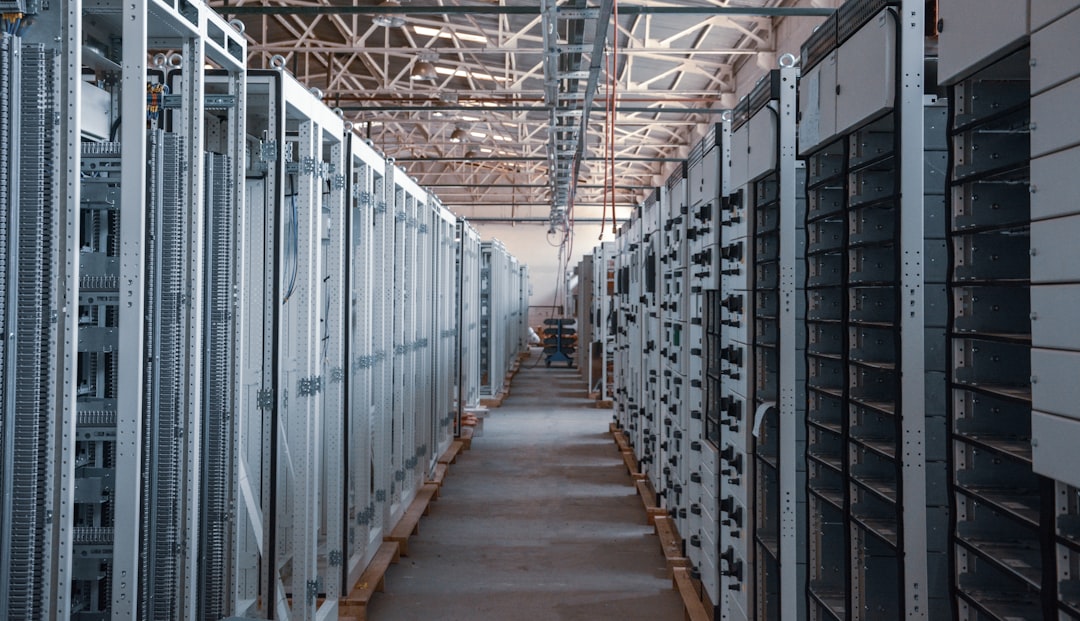
Dublin: The servers humming in windowless halls on the edge of European cities run an uncomfortable share of the continent’s digital life on foreign terms. By the Commission’s own reckoning the bloc depends on suppliers outside its borders for more than four-fifths of its key digital products, services and infrastructure, a dependency that has shifted in the official mind from inconvenience to vulnerability. The technological sovereignty package the Commission unveiled on 3 June is the most concerted attempt yet to change that arithmetic, and its centrepiece is a plan to build, at scale, the computing capacity Europe has long rented from others.

The headline instrument is the proposed Cloud and AI Development Act, an initiative whose ambition is unusually blunt. It aims to roughly triple the bloc’s data-centre capacity over the next five to seven years, on the premise that a continent which cannot host its own data and train its own models is forever negotiating from weakness. Artificial intelligence has sharpened the point. The systems that increasingly underpin commerce, research and public administration are hungry for the kind of large-scale compute that, for now, sits disproportionately on the servers of a handful of American hyperscalers.

The anxiety animating the package is not abstract. Officials have spoken openly of not wanting anyone abroad to hold a kill switch over services Europeans rely on, a phrase that captures a fear sharpened by a less predictable transatlantic relationship. A cloud contract is a benign thing until the supplier, or the government that regulates it, decides otherwise. Building domestic capacity is meant to convert a dependency that could be weaponised into a market relationship Europe can actually shape.

Around the cloud ambition sits a wider stack of measures. A successor to the bloc’s semiconductor strategy seeks to push deeper into cutting-edge chipmaking, while a new open-source strategy elevates European-built, freely modifiable software as a deliberate alternative to proprietary systems controlled elsewhere. The logic threading them together is that sovereignty is not won at any single layer. Chips, infrastructure, cloud and software each represent a chokepoint, and securing one while neglecting the others simply moves the vulnerability somewhere new.

The tension the package cannot fully resolve is between autonomy and openness. Europe does not have the option of walling itself off, because its own firms sell into global markets and depend on foreign technology that no amount of legislation will replace overnight. The Commission has tried to frame the effort as strategic resilience rather than protectionism, a way of building credible alternatives without slamming the door on partners. Critics from the industry warn that the line is thin, and that subsidies and preferences aimed at home-grown providers can curdle into the kind of market distortion that raises costs for the very businesses they mean to help.

There is also the uncomfortable matter of money and power. Data centres are enormously expensive, devour electricity and water, and concentrate in a few favoured locations with cheap energy and cool climates. Tripling capacity means reconciling digital ambition with the bloc’s own climate commitments and with communities that may not welcome a giant server farm next door. The sovereignty Europe seeks in software it must pay for in megawatts, and that bill lands at a moment when energy affordability is already a raw political nerve.

Whether the package succeeds will not be settled by its launch. It is a proposal, the opening bid in a negotiation that Parliament and member states will pull in competing directions over the coming years, and the gap between a stated target and a built facility is where European industrial strategy has often foundered before. The continent has diagnosed its dependence clearly enough. The harder test is whether it can summon the capital, the energy and the political patience to construct its way out of it, rather than once again describing the destination while the servers keep answering to someone else.