August 10, 2026
LATEST
Five Joint Defence Projects Launch Europe’s Military ShieldElectrification Plan Aims to Make Europe First Electro ContinentHorizon Europe Budget Fight Heats Up as Ministers Push BackGoogle’s DMA Fine Sets Off a Transatlantic Tariff ClashTwenty New University Alliances Join Erasmus for Two YearsForeign Subsidies Case Puts Temu in the EU’s SightsVan Tachographs Now Mandatory for Cross-Border FleetsStress Test Exposes Gaps in Euro Area Bank DefencesEurope Bets on a Gulf Partnership Before the Riyadh SummitWhy the Atlantic Route Now Runs Through MauritaniaKyiv and Chisinau Advance as the EU Accession Talks Gather PaceEurope’s New Digital Border System Beds In After a Rocky RolloutBrussels Mounts Its Largest Wildfire Response as the Fires SpreadRetail Spending Slipped in June, Wrong-Footing EconomistsHeatwave Warning Puts Brussels on Alert for Vulnerable GroupsKANAL’s 230 Million Euro Museum Sets a November Opening DatePension Savings Rules Get a Reset as the EU Scraps the 1% CapMedicine Shortages Move to the Heart of Europe’s Pharma ResetJapan Becomes Europe’s Closest Security Partner in AsiaCan Europe’s New Zealand Deal Anchor It in the Pacific?Five Joint Defence Projects Launch Europe’s Military ShieldElectrification Plan Aims to Make Europe First Electro ContinentHorizon Europe Budget Fight Heats Up as Ministers Push BackGoogle’s DMA Fine Sets Off a Transatlantic Tariff ClashTwenty New University Alliances Join Erasmus for Two YearsForeign Subsidies Case Puts Temu in the EU’s SightsVan Tachographs Now Mandatory for Cross-Border FleetsStress Test Exposes Gaps in Euro Area Bank DefencesEurope Bets on a Gulf Partnership Before the Riyadh SummitWhy the Atlantic Route Now Runs Through MauritaniaKyiv and Chisinau Advance as the EU Accession Talks Gather PaceEurope’s New Digital Border System Beds In After a Rocky RolloutBrussels Mounts Its Largest Wildfire Response as the Fires SpreadRetail Spending Slipped in June, Wrong-Footing EconomistsHeatwave Warning Puts Brussels on Alert for Vulnerable GroupsKANAL’s 230 Million Euro Museum Sets a November Opening DatePension Savings Rules Get a Reset as the EU Scraps the 1% CapMedicine Shortages Move to the Heart of Europe’s Pharma ResetJapan Becomes Europe’s Closest Security Partner in AsiaCan Europe’s New Zealand Deal Anchor It in the Pacific?
August 10, 2026
LATEST
Five Joint Defence Projects Launch Europe’s Military ShieldElectrification Plan Aims to Make Europe First Electro ContinentHorizon Europe Budget Fight Heats Up as Ministers Push BackGoogle’s DMA Fine Sets Off a Transatlantic Tariff ClashTwenty New University Alliances Join Erasmus for Two YearsForeign Subsidies Case Puts Temu in the EU’s SightsVan Tachographs Now Mandatory for Cross-Border FleetsStress Test Exposes Gaps in Euro Area Bank DefencesEurope Bets on a Gulf Partnership Before the Riyadh SummitWhy the Atlantic Route Now Runs Through MauritaniaKyiv and Chisinau Advance as the EU Accession Talks Gather PaceEurope’s New Digital Border System Beds In After a Rocky RolloutBrussels Mounts Its Largest Wildfire Response as the Fires SpreadRetail Spending Slipped in June, Wrong-Footing EconomistsHeatwave Warning Puts Brussels on Alert for Vulnerable GroupsKANAL’s 230 Million Euro Museum Sets a November Opening DatePension Savings Rules Get a Reset as the EU Scraps the 1% CapMedicine Shortages Move to the Heart of Europe’s Pharma ResetJapan Becomes Europe’s Closest Security Partner in AsiaCan Europe’s New Zealand Deal Anchor It in the Pacific?Five Joint Defence Projects Launch Europe’s Military ShieldElectrification Plan Aims to Make Europe First Electro ContinentHorizon Europe Budget Fight Heats Up as Ministers Push BackGoogle’s DMA Fine Sets Off a Transatlantic Tariff ClashTwenty New University Alliances Join Erasmus for Two YearsForeign Subsidies Case Puts Temu in the EU’s SightsVan Tachographs Now Mandatory for Cross-Border FleetsStress Test Exposes Gaps in Euro Area Bank DefencesEurope Bets on a Gulf Partnership Before the Riyadh SummitWhy the Atlantic Route Now Runs Through MauritaniaKyiv and Chisinau Advance as the EU Accession Talks Gather PaceEurope’s New Digital Border System Beds In After a Rocky RolloutBrussels Mounts Its Largest Wildfire Response as the Fires SpreadRetail Spending Slipped in June, Wrong-Footing EconomistsHeatwave Warning Puts Brussels on Alert for Vulnerable GroupsKANAL’s 230 Million Euro Museum Sets a November Opening DatePension Savings Rules Get a Reset as the EU Scraps the 1% CapMedicine Shortages Move to the Heart of Europe’s Pharma ResetJapan Becomes Europe’s Closest Security Partner in AsiaCan Europe’s New Zealand Deal Anchor It in the Pacific?

Indonesia And Europe Seal A Trade Deal Years In The Making

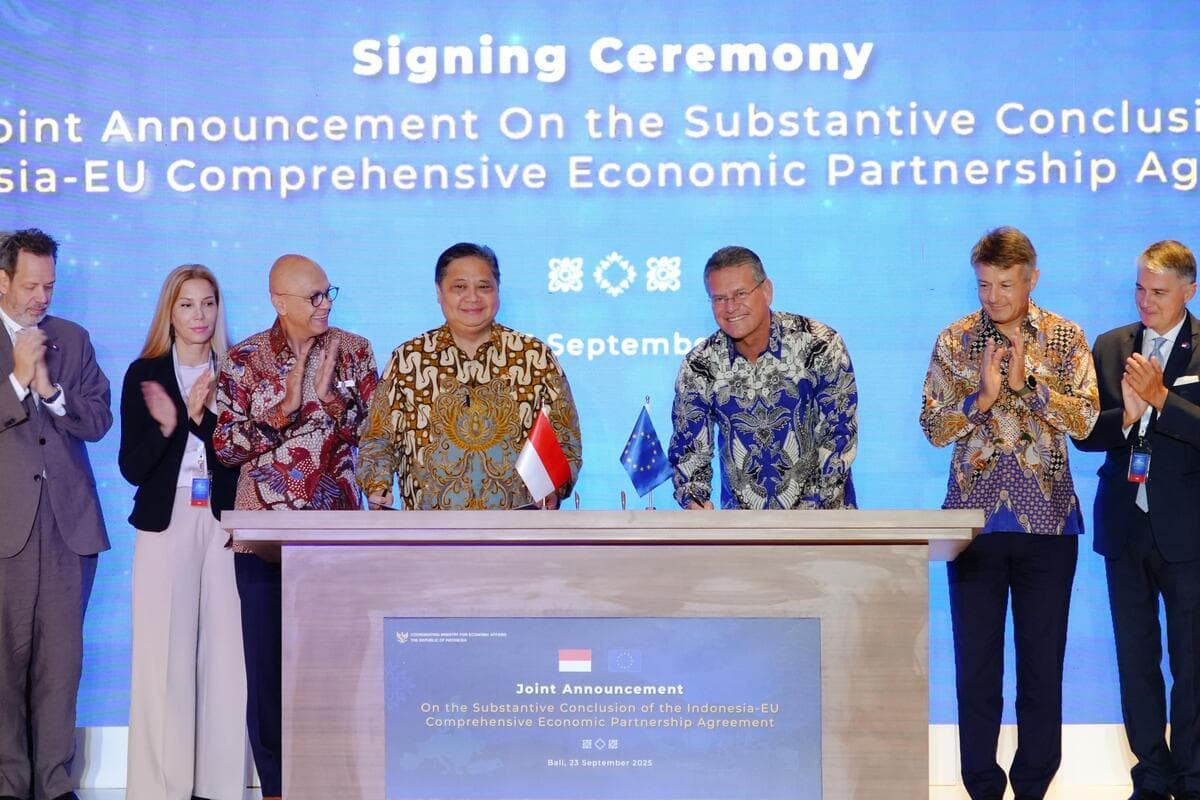
Jakarta: After nearly a decade of stop-start negotiation, Indonesia and the European Union have a trade agreement to show for it, and both capitals are racing to make it real. Ratification of the Comprehensive Economic Partnership Agreement is targeted for the second half of 2026, with implementation expected in early 2027. For Brussels, it is a foothold in Southeast Asia’s largest economy; for Jakarta, it is access to a market of consumers that had grown frustratingly conditional.

The numbers explain the appetite. The CEPA would eliminate tariffs on roughly 80 percent of Indonesian exports to the EU at entry into force and clear 98.5 percent over time, while liberalising the bulk of trade flows within five years. The agreement reaches beyond commodities into electric vehicles, electronics and pharmaceuticals, sectors where Indonesia hopes to climb the value chain rather than remain a supplier of raw inputs. For European exporters, a fast-growing middle class becomes meaningfully cheaper to reach.

No issue has been thornier than palm oil. The commodity is central to Indonesia’s economy and has been a recurring flashpoint with a bloc that treats deforestation as a red line. Rather than pretend the dispute away, the CEPA attaches a dedicated protocol on palm oil, creating a standing channel to manage sustainability rules and regulatory friction. It is a pragmatic fudge that converts a deal-breaker into a managed conversation, which is often the most honest outcome trade diplomacy can offer.

The agreement also speaks to a wider contest. Both sides are diversifying away from overdependence on China, and a Europe anxious about critical minerals eyes Indonesian nickel, the backbone of battery supply chains. Jakarta, in turn, is signing partnerships in several directions at once, from the EU to Canada, refusing to be captured by any single power. The CEPA is as much a statement of strategic autonomy as a tariff schedule.

Caution is warranted. The deal must still clear the European Parliament, the parliaments of every member state and Indonesia’s legislature, a gauntlet that has buried promising agreements before. Domestic farm lobbies in Europe and nationalist sentiment in Indonesia can each slow ratification, and the gap between a signed text and goods crossing borders duty-free remains wide. Early 2027 is a target, not a guarantee.

Even so, the achievement is real. In an era when trade liberalisation is in retreat and protectionism is fashionable, two large economies chose to lower barriers rather than raise them. If ratification holds, the CEPA will stand as evidence that open markets still have defenders, and that patience, however unglamorous, occasionally pays. The harder work of making the paper matter now begins.