August 10, 2026
LATEST
Europe Finally Locks In Its 348-Satellite Answer to StarlinkPlatform Work Rules Face a National Scramble Before DecemberDuty-Free Parcels Reach the End of the Line for EU ShoppersAfter Nine Years, Europe and Australia Seal a Trade PactBeijing Answers Europe’s Russia Sanctions in KindOne Year On, the EU-Japan Alliance Faces Its First TestEurope’s Chip Ambitions Still Run Through Taiwan’s FabsWhy South Korea Bet Its Research Future on Europe’s ProgrammeEurope and Japan Deepen Their Economic Alliance as Rivals CircleFive Joint Defence Projects Launch Europe’s Military ShieldElectrification Plan Aims to Make Europe First Electro ContinentHorizon Europe Budget Fight Heats Up as Ministers Push BackGoogle’s DMA Fine Sets Off a Transatlantic Tariff ClashTwenty New University Alliances Join Erasmus for Two YearsForeign Subsidies Case Puts Temu in the EU’s SightsVan Tachographs Now Mandatory for Cross-Border FleetsStress Test Exposes Gaps in Euro Area Bank DefencesEurope Bets on a Gulf Partnership Before the Riyadh SummitWhy the Atlantic Route Now Runs Through MauritaniaKyiv and Chisinau Advance as the EU Accession Talks Gather PaceEurope Finally Locks In Its 348-Satellite Answer to StarlinkPlatform Work Rules Face a National Scramble Before DecemberDuty-Free Parcels Reach the End of the Line for EU ShoppersAfter Nine Years, Europe and Australia Seal a Trade PactBeijing Answers Europe’s Russia Sanctions in KindOne Year On, the EU-Japan Alliance Faces Its First TestEurope’s Chip Ambitions Still Run Through Taiwan’s FabsWhy South Korea Bet Its Research Future on Europe’s ProgrammeEurope and Japan Deepen Their Economic Alliance as Rivals CircleFive Joint Defence Projects Launch Europe’s Military ShieldElectrification Plan Aims to Make Europe First Electro ContinentHorizon Europe Budget Fight Heats Up as Ministers Push BackGoogle’s DMA Fine Sets Off a Transatlantic Tariff ClashTwenty New University Alliances Join Erasmus for Two YearsForeign Subsidies Case Puts Temu in the EU’s SightsVan Tachographs Now Mandatory for Cross-Border FleetsStress Test Exposes Gaps in Euro Area Bank DefencesEurope Bets on a Gulf Partnership Before the Riyadh SummitWhy the Atlantic Route Now Runs Through MauritaniaKyiv and Chisinau Advance as the EU Accession Talks Gather Pace
August 10, 2026
LATEST
Europe Finally Locks In Its 348-Satellite Answer to StarlinkPlatform Work Rules Face a National Scramble Before DecemberDuty-Free Parcels Reach the End of the Line for EU ShoppersAfter Nine Years, Europe and Australia Seal a Trade PactBeijing Answers Europe’s Russia Sanctions in KindOne Year On, the EU-Japan Alliance Faces Its First TestEurope’s Chip Ambitions Still Run Through Taiwan’s FabsWhy South Korea Bet Its Research Future on Europe’s ProgrammeEurope and Japan Deepen Their Economic Alliance as Rivals CircleFive Joint Defence Projects Launch Europe’s Military ShieldElectrification Plan Aims to Make Europe First Electro ContinentHorizon Europe Budget Fight Heats Up as Ministers Push BackGoogle’s DMA Fine Sets Off a Transatlantic Tariff ClashTwenty New University Alliances Join Erasmus for Two YearsForeign Subsidies Case Puts Temu in the EU’s SightsVan Tachographs Now Mandatory for Cross-Border FleetsStress Test Exposes Gaps in Euro Area Bank DefencesEurope Bets on a Gulf Partnership Before the Riyadh SummitWhy the Atlantic Route Now Runs Through MauritaniaKyiv and Chisinau Advance as the EU Accession Talks Gather PaceEurope Finally Locks In Its 348-Satellite Answer to StarlinkPlatform Work Rules Face a National Scramble Before DecemberDuty-Free Parcels Reach the End of the Line for EU ShoppersAfter Nine Years, Europe and Australia Seal a Trade PactBeijing Answers Europe’s Russia Sanctions in KindOne Year On, the EU-Japan Alliance Faces Its First TestEurope’s Chip Ambitions Still Run Through Taiwan’s FabsWhy South Korea Bet Its Research Future on Europe’s ProgrammeEurope and Japan Deepen Their Economic Alliance as Rivals CircleFive Joint Defence Projects Launch Europe’s Military ShieldElectrification Plan Aims to Make Europe First Electro ContinentHorizon Europe Budget Fight Heats Up as Ministers Push BackGoogle’s DMA Fine Sets Off a Transatlantic Tariff ClashTwenty New University Alliances Join Erasmus for Two YearsForeign Subsidies Case Puts Temu in the EU’s SightsVan Tachographs Now Mandatory for Cross-Border FleetsStress Test Exposes Gaps in Euro Area Bank DefencesEurope Bets on a Gulf Partnership Before the Riyadh SummitWhy the Atlantic Route Now Runs Through MauritaniaKyiv and Chisinau Advance as the EU Accession Talks Gather Pace

Balkan Capitals Bank Fresh Millions For Sticking To Reforms

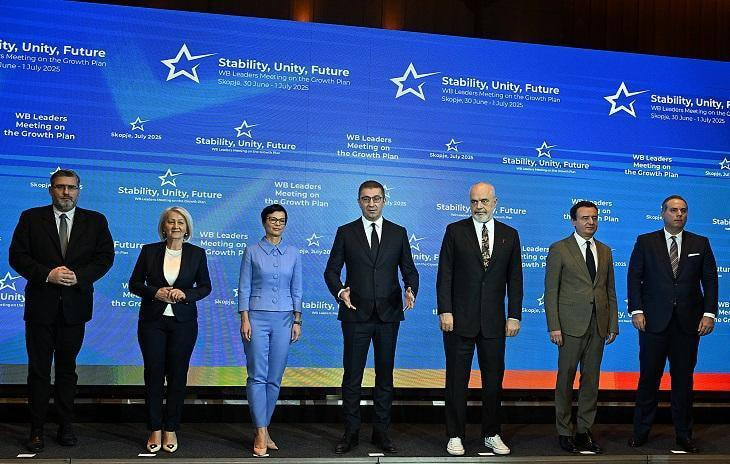
Podgorica: The Montenegrin capital received a modest piece of good news in late May, the kind that rarely makes headlines beyond the region but matters a great deal to governments trying to prove that the European project still delivers. The Commission released a fresh tranche of money under the Growth Plan for the Western Balkans, handing Montenegro 44.2 million euros, Albania 49 million and North Macedonia 65.7 million after judging that each had met the reform conditions attached to the latest payment.

The Growth Plan is the Union’s attempt to answer a complaint heard across the region for two decades: that the promise of membership is permanently receding, with rewards always deferred to some future the applicants never quite reach. Rather than make everything contingent on the final accession vote, the plan front-loads benefits. Countries that pass specific reforms get cash now, along with phased access to the single market, on the theory that tangible gains today will sustain the political will needed for the long climb ahead.

The conditionality is the point. Montenegro’s latest payment was unlocked by reforms to its research and innovation system, including support for scientists and the strengthening of a national innovation ecosystem that has historically been thin. Albania’s tranche rested on measures to improve the business climate, ease investment and widen access to finance for start-ups working in green and digital sectors. North Macedonia was assessed on education and digitalisation. None of these are glamorous, and that is rather the design: the facility rewards the unshowy institutional plumbing that determines whether a candidate can actually function inside the Union rather than the grand gestures that play well at summits.

The cumulative figures show the plan gathering pace. With this release Albania has now drawn 212.8 million euros, Montenegro 89.3 million and North Macedonia 142.1 million. Those sums are small against the scale of the convergence task, but the mechanism is what counts. Each successful payment builds a track record that makes the next one routine, and routine disbursement is precisely what has been missing from the accession process for a generation.

Montenegro remains the front-runner, having opened and provisionally closed the bulk of its negotiating chapters, and its government has spoken openly about a 2028 membership target. Whether that date survives contact with reality is another question; enlargement timetables have a long history of slipping. But the Growth Plan changes the texture of the relationship in the meantime. Instead of waiting passively for a verdict from Brussels, the capitals are being handed a series of smaller tests they can pass on their own schedule, with money following each one.

There is a strategic logic beneath the technocratic surface. The Union spent years treating the Western Balkans as a problem to be managed rather than a region to be integrated, and watched as other powers filled the vacuum with loans and infrastructure of their own. The Growth Plan is a belated recognition that credibility has to be demonstrated in instalments, not promised in communiques. For governments in Podgorica and Tirana, a payment that actually arrives when the paperwork is done is worth more than another declaration of European perspective.