August 10, 2026
LATEST
Duty-Free Parcels Reach the End of the Line for EU ShoppersAfter Nine Years, Europe and Australia Seal a Trade PactBeijing Answers Europe’s Russia Sanctions in KindOne Year On, the EU-Japan Alliance Faces Its First TestEurope’s Chip Ambitions Still Run Through Taiwan’s FabsWhy South Korea Bet Its Research Future on Europe’s ProgrammeEurope and Japan Deepen Their Economic Alliance as Rivals CircleFive Joint Defence Projects Launch Europe’s Military ShieldElectrification Plan Aims to Make Europe First Electro ContinentHorizon Europe Budget Fight Heats Up as Ministers Push BackGoogle’s DMA Fine Sets Off a Transatlantic Tariff ClashTwenty New University Alliances Join Erasmus for Two YearsForeign Subsidies Case Puts Temu in the EU’s SightsVan Tachographs Now Mandatory for Cross-Border FleetsStress Test Exposes Gaps in Euro Area Bank DefencesEurope Bets on a Gulf Partnership Before the Riyadh SummitWhy the Atlantic Route Now Runs Through MauritaniaKyiv and Chisinau Advance as the EU Accession Talks Gather PaceEurope’s New Digital Border System Beds In After a Rocky RolloutBrussels Mounts Its Largest Wildfire Response as the Fires SpreadDuty-Free Parcels Reach the End of the Line for EU ShoppersAfter Nine Years, Europe and Australia Seal a Trade PactBeijing Answers Europe’s Russia Sanctions in KindOne Year On, the EU-Japan Alliance Faces Its First TestEurope’s Chip Ambitions Still Run Through Taiwan’s FabsWhy South Korea Bet Its Research Future on Europe’s ProgrammeEurope and Japan Deepen Their Economic Alliance as Rivals CircleFive Joint Defence Projects Launch Europe’s Military ShieldElectrification Plan Aims to Make Europe First Electro ContinentHorizon Europe Budget Fight Heats Up as Ministers Push BackGoogle’s DMA Fine Sets Off a Transatlantic Tariff ClashTwenty New University Alliances Join Erasmus for Two YearsForeign Subsidies Case Puts Temu in the EU’s SightsVan Tachographs Now Mandatory for Cross-Border FleetsStress Test Exposes Gaps in Euro Area Bank DefencesEurope Bets on a Gulf Partnership Before the Riyadh SummitWhy the Atlantic Route Now Runs Through MauritaniaKyiv and Chisinau Advance as the EU Accession Talks Gather PaceEurope’s New Digital Border System Beds In After a Rocky RolloutBrussels Mounts Its Largest Wildfire Response as the Fires Spread
August 10, 2026
LATEST
Duty-Free Parcels Reach the End of the Line for EU ShoppersAfter Nine Years, Europe and Australia Seal a Trade PactBeijing Answers Europe’s Russia Sanctions in KindOne Year On, the EU-Japan Alliance Faces Its First TestEurope’s Chip Ambitions Still Run Through Taiwan’s FabsWhy South Korea Bet Its Research Future on Europe’s ProgrammeEurope and Japan Deepen Their Economic Alliance as Rivals CircleFive Joint Defence Projects Launch Europe’s Military ShieldElectrification Plan Aims to Make Europe First Electro ContinentHorizon Europe Budget Fight Heats Up as Ministers Push BackGoogle’s DMA Fine Sets Off a Transatlantic Tariff ClashTwenty New University Alliances Join Erasmus for Two YearsForeign Subsidies Case Puts Temu in the EU’s SightsVan Tachographs Now Mandatory for Cross-Border FleetsStress Test Exposes Gaps in Euro Area Bank DefencesEurope Bets on a Gulf Partnership Before the Riyadh SummitWhy the Atlantic Route Now Runs Through MauritaniaKyiv and Chisinau Advance as the EU Accession Talks Gather PaceEurope’s New Digital Border System Beds In After a Rocky RolloutBrussels Mounts Its Largest Wildfire Response as the Fires SpreadDuty-Free Parcels Reach the End of the Line for EU ShoppersAfter Nine Years, Europe and Australia Seal a Trade PactBeijing Answers Europe’s Russia Sanctions in KindOne Year On, the EU-Japan Alliance Faces Its First TestEurope’s Chip Ambitions Still Run Through Taiwan’s FabsWhy South Korea Bet Its Research Future on Europe’s ProgrammeEurope and Japan Deepen Their Economic Alliance as Rivals CircleFive Joint Defence Projects Launch Europe’s Military ShieldElectrification Plan Aims to Make Europe First Electro ContinentHorizon Europe Budget Fight Heats Up as Ministers Push BackGoogle’s DMA Fine Sets Off a Transatlantic Tariff ClashTwenty New University Alliances Join Erasmus for Two YearsForeign Subsidies Case Puts Temu in the EU’s SightsVan Tachographs Now Mandatory for Cross-Border FleetsStress Test Exposes Gaps in Euro Area Bank DefencesEurope Bets on a Gulf Partnership Before the Riyadh SummitWhy the Atlantic Route Now Runs Through MauritaniaKyiv and Chisinau Advance as the EU Accession Talks Gather PaceEurope’s New Digital Border System Beds In After a Rocky RolloutBrussels Mounts Its Largest Wildfire Response as the Fires Spread

Project Transporter Targets Vehicle Convoys Bound for Russia

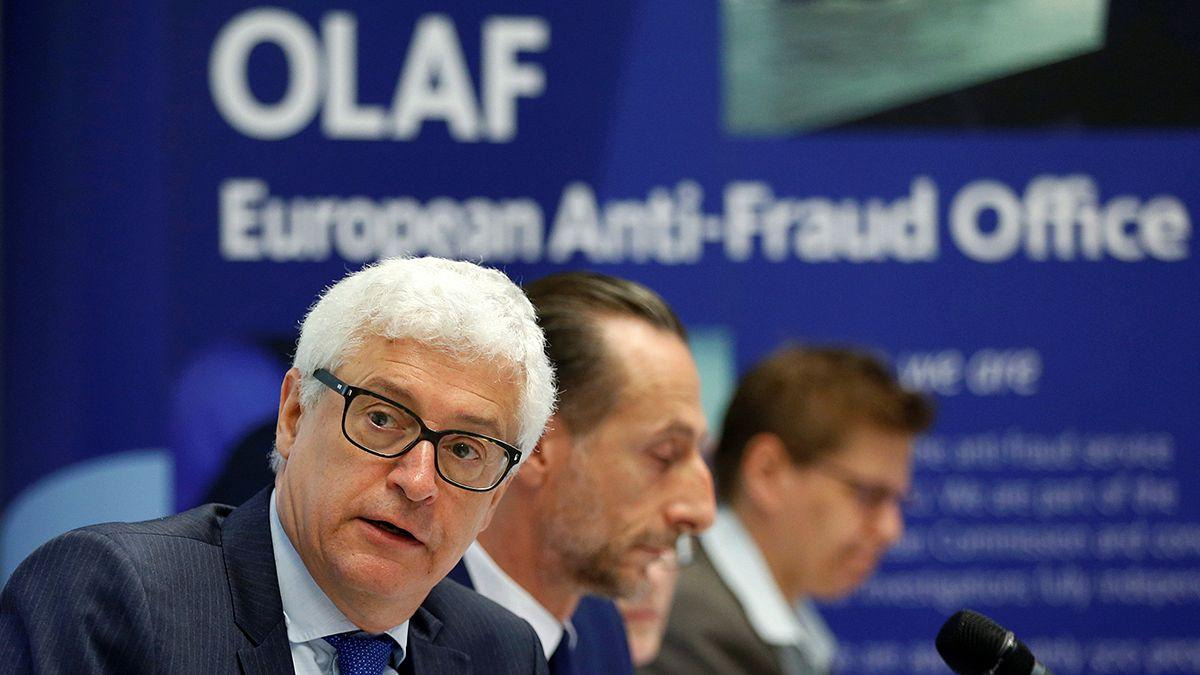
Warsaw: Polish customs investigators triggered the chain of events that has now resulted in the largest cross-border sanctions circumvention case yet coordinated by the European Anti-Fraud Office. Their work began with a routine pattern check on used vehicle exports through eastern road crossings in late 2025, where staff at the National Revenue Administration noticed an unusual concentration of declarations listing Turkish ports as final destinations for second-hand commercial trucks and vans that, on closer inspection, appeared to be assembled in convoys disproportionate to legitimate Turkish demand. That intuition has now translated into criminal investigations across three member states and an operational partnership with Europol that the Commission has dubbed Project Transporter.

The scope of the underlying file is substantial. OLAF’s coordination resulted in the documented circumvention of EU restrictive measures on Russia involving more than 760 transport vehicles exported from several member states. Investigators reconstructed each vehicle’s logistics chain individually, working through bills of lading, transit declarations, GPS data and corporate ownership records to trace the units onward from declared Turkish endpoints. The vehicles, the office concluded, ultimately reached Russian buyers in violation of Article 3k of Council Regulation (EU) No 833/2014, which prohibits the export of a wide range of dual-use and economically significant goods.

Project Transporter formalises what had been a series of ad-hoc cooperation arrangements between OLAF, Europol and national customs authorities since Europol launched its Target Group Sanctions in November 2025. Under the new umbrella, the two bodies share intelligence on suspicious export patterns and coordinate joint analytical work to support criminal prosecutions led at member-state level. Three member states are now running prosecutions tied to the original 760-vehicle dossier, with proceedings expected to lead to indictments before the end of the third quarter.

The vehicle file is part of a broader workload that helped OLAF document €597 million in recommended recoveries during 2025, the figure released with the office’s annual report in April. Beyond that headline, OLAF’s sanctions-circumvention work has expanded to cover several adjacent product categories including industrial machinery, advanced electronics and chemical precursors. The office has also continued to provide technical assistance to Ukrainian customs and law enforcement counterparts under the assistance programme launched in 2022.

What makes the transporter dossier instructive for compliance officers is the role of forged paperwork. OLAF found that exporters relied heavily on falsified certificates of origin and altered transit documents to give Turkish destinations the appearance of commercial substance. The findings have prompted the directorate-general for taxation and customs union to circulate updated risk indicators to national customs authorities, encouraging additional scrutiny of vehicle exports above defined value thresholds and to specific third-country routes. Several member states have introduced mandatory pre-clearance procedures for high-risk vehicle exports as a result.

The European Public Prosecutor’s Office has not formally taken over the file, since the underlying offences fall outside its current competence in most member states, but the office’s director has indicated that the Commission’s proposal to extend EPPO’s remit to sanctions circumvention would change that picture significantly. That proposal is still working through Council, and Hungary continues to oppose unanimous adoption.

For OLAF, the political signal is straightforward. Sanctions enforcement has moved from being an adjunct of the office’s traditional fraud workload to a defining component of its caseload. Director Ville Itälä has used the past two appearances before the Parliament’s CONT committee to argue for a permanent uplift in resources tied to the sanctions function. With Project Transporter producing concrete results, that argument now carries an evidence base.