August 29, 2026
LATEST
What Europe Needs From the GCC Summit Riyadh Will Host in AutumnHolding Limits Still Block a Digital Euro Deal Before DecemberData Rules Agreed With Seoul Now Wait on Parliament’s ConsentChina Listed Fourteen European Firms and November Ends the TruceWhy Australia’s Finished Trade Deal Still Has No Signature DateLate Application Leaves Tokyo Outside the Defence Loan QueueCyber Resilience Rules Give Makers 24 Hours From SeptemberWinter Stocks Test Europe’s New Gas Storage Flexibility RulesInnovation Theory Meets Merger Control in a New Commission StudyMercosur Tariffs Fell in May and the Court Has Not Ruled YetBilaterals III Now Turns on Which Referendum Switzerland PicksDark Patterns Face the EU Digital Fairness ActFifteen Chapters Stand Between Montenegro and 2028Who Blinks First in the FP10 Research Budget FightCustoms Reform Landed in March and Its Data Hub Opens in 2028Victims Rights Gain an EU Helpline and Capitals Have Two YearsIreland Must Move the EU Budget Box Before the October SummitFertiliser Prices Sit 71 Percent Above Their 2024 Average LevelState Aid Exemptions Face a Rewrite With Four Months to SpareIrregular Crossings Fell 37 Percent and Spain Is the ExceptionWhat Europe Needs From the GCC Summit Riyadh Will Host in AutumnHolding Limits Still Block a Digital Euro Deal Before DecemberData Rules Agreed With Seoul Now Wait on Parliament’s ConsentChina Listed Fourteen European Firms and November Ends the TruceWhy Australia’s Finished Trade Deal Still Has No Signature DateLate Application Leaves Tokyo Outside the Defence Loan QueueCyber Resilience Rules Give Makers 24 Hours From SeptemberWinter Stocks Test Europe’s New Gas Storage Flexibility RulesInnovation Theory Meets Merger Control in a New Commission StudyMercosur Tariffs Fell in May and the Court Has Not Ruled YetBilaterals III Now Turns on Which Referendum Switzerland PicksDark Patterns Face the EU Digital Fairness ActFifteen Chapters Stand Between Montenegro and 2028Who Blinks First in the FP10 Research Budget FightCustoms Reform Landed in March and Its Data Hub Opens in 2028Victims Rights Gain an EU Helpline and Capitals Have Two YearsIreland Must Move the EU Budget Box Before the October SummitFertiliser Prices Sit 71 Percent Above Their 2024 Average LevelState Aid Exemptions Face a Rewrite With Four Months to SpareIrregular Crossings Fell 37 Percent and Spain Is the Exception
August 29, 2026
LATEST
What Europe Needs From the GCC Summit Riyadh Will Host in AutumnHolding Limits Still Block a Digital Euro Deal Before DecemberData Rules Agreed With Seoul Now Wait on Parliament’s ConsentChina Listed Fourteen European Firms and November Ends the TruceWhy Australia’s Finished Trade Deal Still Has No Signature DateLate Application Leaves Tokyo Outside the Defence Loan QueueCyber Resilience Rules Give Makers 24 Hours From SeptemberWinter Stocks Test Europe’s New Gas Storage Flexibility RulesInnovation Theory Meets Merger Control in a New Commission StudyMercosur Tariffs Fell in May and the Court Has Not Ruled YetBilaterals III Now Turns on Which Referendum Switzerland PicksDark Patterns Face the EU Digital Fairness ActFifteen Chapters Stand Between Montenegro and 2028Who Blinks First in the FP10 Research Budget FightCustoms Reform Landed in March and Its Data Hub Opens in 2028Victims Rights Gain an EU Helpline and Capitals Have Two YearsIreland Must Move the EU Budget Box Before the October SummitFertiliser Prices Sit 71 Percent Above Their 2024 Average LevelState Aid Exemptions Face a Rewrite With Four Months to SpareIrregular Crossings Fell 37 Percent and Spain Is the ExceptionWhat Europe Needs From the GCC Summit Riyadh Will Host in AutumnHolding Limits Still Block a Digital Euro Deal Before DecemberData Rules Agreed With Seoul Now Wait on Parliament’s ConsentChina Listed Fourteen European Firms and November Ends the TruceWhy Australia’s Finished Trade Deal Still Has No Signature DateLate Application Leaves Tokyo Outside the Defence Loan QueueCyber Resilience Rules Give Makers 24 Hours From SeptemberWinter Stocks Test Europe’s New Gas Storage Flexibility RulesInnovation Theory Meets Merger Control in a New Commission StudyMercosur Tariffs Fell in May and the Court Has Not Ruled YetBilaterals III Now Turns on Which Referendum Switzerland PicksDark Patterns Face the EU Digital Fairness ActFifteen Chapters Stand Between Montenegro and 2028Who Blinks First in the FP10 Research Budget FightCustoms Reform Landed in March and Its Data Hub Opens in 2028Victims Rights Gain an EU Helpline and Capitals Have Two YearsIreland Must Move the EU Budget Box Before the October SummitFertiliser Prices Sit 71 Percent Above Their 2024 Average LevelState Aid Exemptions Face a Rewrite With Four Months to SpareIrregular Crossings Fell 37 Percent and Spain Is the Exception

Can Europe Fill Its Gas Stores Before the Russian Ban Bites

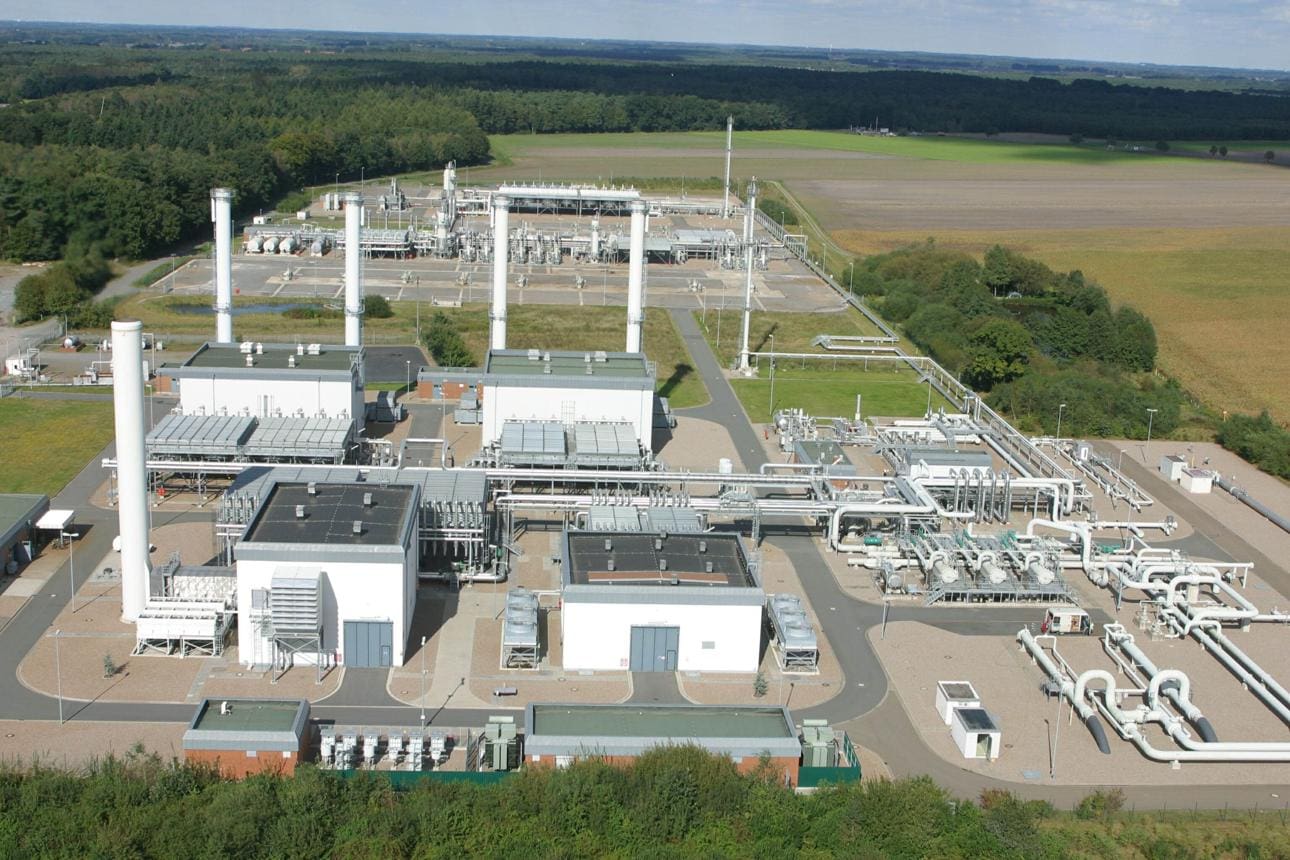
Rehden: Germany’s largest gas cavern spent the summer refilling more slowly than the calendar demands. Across the Union, storage sat near 61.8 per cent on 20 August, close to 699 terawatt hours, and still below the five-year seasonal norm for the date. Traders have watched that gap widen and narrow all summer without resolving the underlying question of where the winter opening balance lands.

The arithmetic looks less alarming than the headline. Operators started the injection season at 34 per cent on 1 April, a low base, and pushed roughly 50 billion cubic metres into the system over the summer. That injection volume beats each of the previous two years. Europe is not filling badly. It started deeper in the hole.

Why the target moved before the season did

Legislators saw this coming. The Union relaxed its mandatory gas storage target from 90 per cent to 83 per cent, and the Parliament pushed for compliance at any point between 1 October and 1 December rather than on one fixed date. That change answered a specific trading problem. A hard deadline told every counterparty exactly when European buyers must appear in the market, and sellers priced accordingly.

Flexibility removes that signal. It also weakens the guarantee. A system that must reach 83 per cent sometime across a two-month window can arrive at 1 November thinner than the number implies, because the peak may fall later than the cold does. Projections for the 1 November level currently spread from roughly 69 per cent to about 81 per cent, depending entirely on whether the present fill rate holds or accelerates.

Twelve points of gas storage represent real money and real risk. The Agency for the Cooperation of Energy Regulators has argued that reaching the older 90 per cent benchmark would require liquefied natural gas imports around 13 per cent above 2025 levels, while the lower target stays reachable on last year’s import volumes. The relaxation therefore bought genuine breathing room rather than merely lowering a scoreboard.

The clock that does not flex

One deadline refuses to move. The Council gave final approval in January to a stepwise prohibition on Russian gas. Long-term liquefied natural gas contracts end on 1 January 2027. Pipeline gas follows on 30 September 2027, and slips to 1 November 2027 only if storage targets go unmet for the coming winter.

Read those two provisions together and an awkward incentive appears. Missing the storage target next winter delays the pipeline ban by five weeks. No government will deliberately underfill storage to buy that extension, but the drafting quietly links supply security performance to the pace of the phase-out, and traders notice such linkages even when ministers avoid discussing them.

The harder constraint is volumetric. Removing contracted Russian liquefied natural gas from 1 January 2027 subtracts supply during the deepest part of a heating season, not during a quiet spring. Replacement cargoes must arrive from the Atlantic basin and Qatar into a market where Middle Eastern conflict has already lifted prices and compressed the summer-to-winter spread that normally rewards operators for filling early.

That compressed spread explains the slow refill better than any policy failure does. Storage economics depend on buying cheap in summer and selling dear in winter. When the curve flattens, the commercial case for injecting weakens, and operators fill only what regulation obliges them to fill. Europe has effectively replaced a market incentive with a legal mandate, then softened the mandate.

Supporters of the flexible target answer that rigid rules cost consumers billions in 2022 and delivered no additional security. They hold the better of that historical argument. The open question is whether a system carrying 69 per cent rather than 81 per cent into November can absorb a cold January alongside the loss of contracted Russian volumes. Nobody will know until the weather answers, and the storage data only tells that story in arrears.