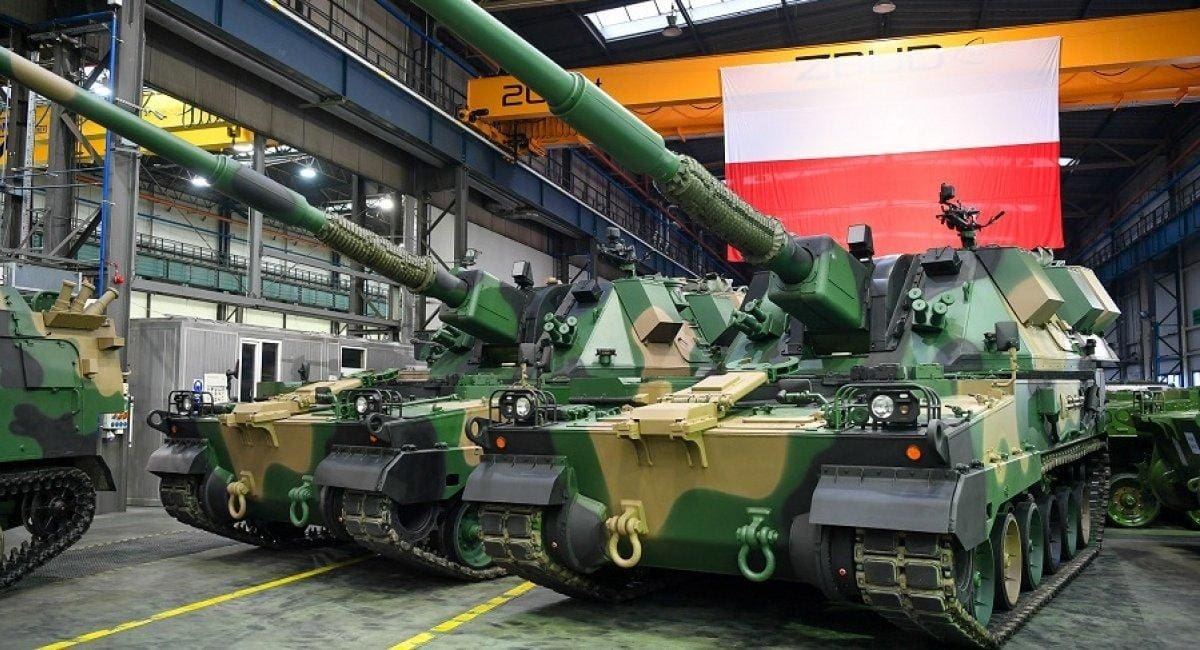
Warsaw: Poland signed first, borrowed most and drew the first cheque. Its 43.7 billion euro allocation under the Union’s Security Action for Europe instrument amounts to roughly 29 per cent of the entire 150 billion euro facility, and the country received an initial 6.6 billion euros in May. No other participant comes close.
The rest of the distribution tells a sharper story than the headline number. Romania takes 16.7 billion euros. Hungary and France take 16.2 billion each. Italy sits just under 15 billion, Belgium above 8.3 billion, Lithuania at 6.37 billion and Portugal at 5.84 billion. Then the list collapses. Spain and Finland take one billion apiece, Greece 787 million, and Denmark 46.8 million, a figure closer to a rounding error than a rearmament programme.
Fiscal space, not threat perception, sets the queue
Analysts expected geography to drive uptake, and partly it does. States along the eastern flank borrow heavily. Yet the pattern breaks quickly. Denmark and Finland face serious threat assessments and barely touched the instrument, and both run their build-ups through national budgets instead.
The explanation lies in what these defence loans actually are. They carry competitive pricing and long maturities, but member states repay every euro. A government with cheap market access and headroom under its own fiscal rules gains little from borrowing through Brussels. A government facing wider spreads gains a great deal. The instrument therefore works less as a common capability programme and more as a spread-compression tool for states whose sovereign borrowing costs sit above the Union average.
That design choice carries consequences. Nineteen of twenty-seven member states participate, and the Commission cleared the first eight national plans in January before the Council signed off on eighteen states between February and April. Signature then proceeded country by country through the spring and summer, with Poland, Romania, France, Portugal, Czechia, Greece and Estonia holding agreements by mid-August. Each signature carries its own equipment list.
Joint procurement in name
The instrument requires common purchasing and European content, and the rules steer buyers toward suppliers inside the Union and associated partners. On paper that consolidates fragmented demand. In practice, a facility disbursed against separate national plans, signed on separate dates, will struggle to aggregate orders in the way its architects described.
Industrial capacity responds to order books, not to loan approvals. A European producer of 155 millimetre ammunition or air defence interceptors expands a line when a firm multi-year contract lands, and the timing of those contracts now depends on individual capitals working through domestic procurement at their own speed. Poland spending 43.7 billion euros over several years shapes the supplier landscape more than the remaining participants combined.
Concentration cuts both ways. It gives European industry one anchor customer large enough to justify serious capacity investment. It also means the instrument’s success or failure will rest largely on whether Polish procurement converts loans into delivered systems rather than into extended negotiations.
A reasonable defence of the current shape exists. The alternative was no common instrument at all, since joint grant funding never commanded unanimity. Loans that borrowers repay sidestep the transfer-union objection blocking deeper fiscal integration, and persuading nineteen states to borrow together against European industrial rules marks a genuine advance over the fragmented procurement of the past decade.
The counterargument stands too. An instrument that mainly reaches states with weaker balance sheets redistributes borrowing capacity rather than building shared capability, and it leaves the Union’s largest defence industrial bases in Germany, Sweden and the Netherlands mostly outside the scheme. Whether these defence loans produced a European market or simply a cheaper way for some governments to buy nationally will become clear when delivery schedules mature, not when loan agreements are signed.