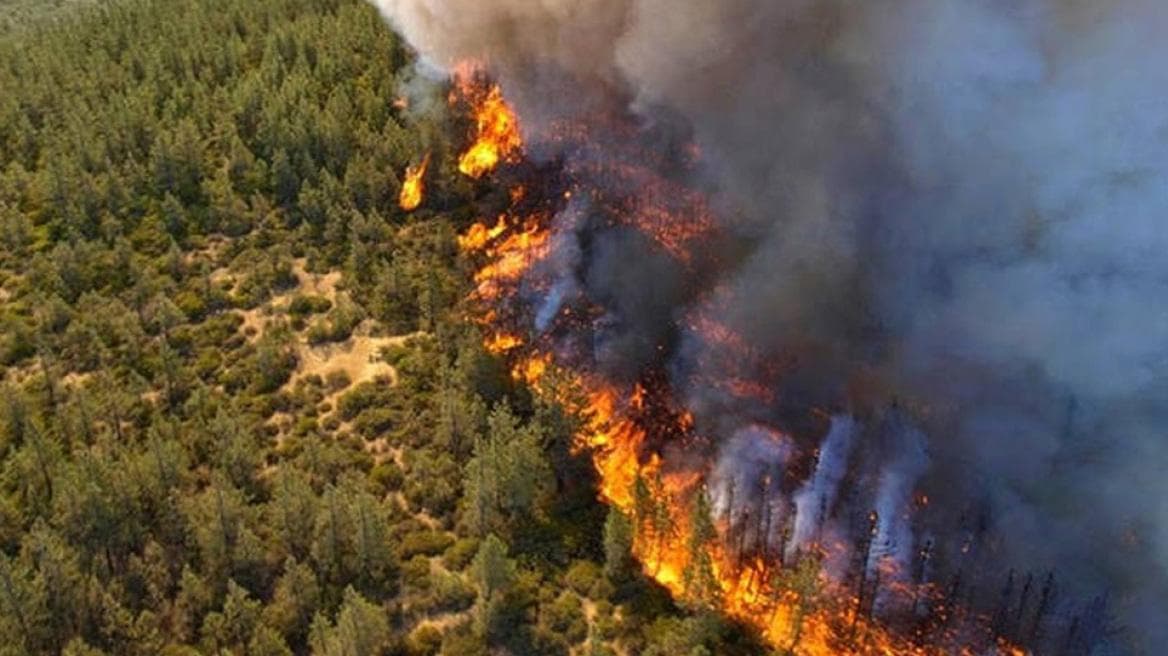
Nicosia: On the sun-bleached approaches to Cyprus, water-bombing aircraft have been parked and fuelled since the first week of June, weeks before the worst of the heat is expected. Their early arrival is the most visible sign of a calculation the European Union has made about the summer ahead: that the fire seasons of recent years are no longer exceptional, and that preparation can no longer wait for the first plume of smoke.
Through its Civil Protection Mechanism, the Union has assembled what officials describe as its largest-ever wildfire response. Some 777 firefighters drawn from fourteen countries have been pre-positioned in the high-risk south, stationed in Cyprus, Greece, Italy, France, Spain and Portugal so that crews are already on the ground in the regions most likely to burn. It is the highest level of participation since the pre-positioning programme began in 2022, a scheme built on the recognition that minutes lost at the start of a fire translate into hectares and, too often, lives.
Above them sits a standing aerial fleet. Twenty-two firefighting aeroplanes and five helicopters are on call from 15 June until the end of October, the months when the Mediterranean basin turns to tinder. These assets form part of rescEU, the strategic reserve financed directly by the Union and held back for moments when a stricken country’s own resources, and the help its neighbours can spare, are simply not enough. Beyond aircraft, rescEU stretches to medical evacuation capacity, field hospitals and stockpiles of essential supplies, a quiet acknowledgement that disasters rarely stay within a single category.
The logic behind the build-up is the grim arithmetic of a warming continent. Southern Europe has endured a succession of summers in which fires outran national fleets, jumped containment lines and forced mass evacuations of residents and tourists alike. Solidarity between member states, the founding premise of the Mechanism, works only if the shared assets exist and are positioned before the emergency, rather than scrambled once a country is already overwhelmed and its neighbours are fighting their own flames.
This year the Union is also pouring concrete into the strategy. A new European regional firefighting station is to open in Cyprus, conceived as a permanent hub that will host six pre-positioned aircraft and serve as a training ground for civil-protection crews from across Europe and the southern Mediterranean. The choice of location is deliberate: an island on the Union’s south-eastern edge, close to the conditions that make the modern fire season so punishing, and a platform for cooperation with non-EU neighbours who share the same skies and the same risks.
Whether the record deployment proves sufficient will be decided not in a planning document but in the windswept hills of August. Pre-positioning shortens response times but cannot conjure rain, and a single bad week of heat and wind can stretch even the best-resourced system to its limit. What the Union can claim is that it has front-loaded its effort, treating the wildfire season as a predictable annual emergency rather than a recurring surprise. For the crews already waiting on the tarmac in Nicosia, the only remaining variable is the weather, and the long, dry months it is about to bring.