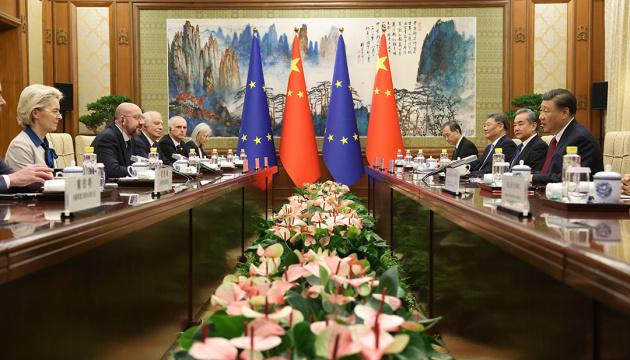
Brussels: European foreign ministers have quietly retired a phrase that shaped a decade of policy toward Beijing. Meeting at the Foreign Affairs Council on 13 July, they endorsed a fresh assessment of the bloc’s strategic environment that drops the familiar label of “partner, competitor and systemic rival.” The text now names China a critical long-term strategic challenge, and that change of wording matters more than it first appears.
The 2019 formula tried to keep three ideas in balance. It let each capital emphasise whichever face of China suited its interests, so exporters heard “partner” while security hawks heard “rival.” The new language removes that comfort. By ranking China as a challenge that will endure for years rather than a rival to be managed case by case, ministers have told their own governments to plan for friction as the default, not the exception.
Two judgements drive the shift. Ministers argue that China now holds “asymmetric advantages” over Europe through its scale in manufacturing, technology and raw materials. They also describe Beijing as a crucial enabler for Moscow, pointing to the dual-use goods and diplomatic cover that help sustain Russia’s war in Ukraine. Put together, those claims frame China less as a trading counterpart and more as a structural pressure on European security.
The economics sharpen the point. Europe’s trade deficit with China runs at roughly a billion euros a day, and the Commission warns that Chinese overcapacity in cars, steel and clean-tech threatens whole sectors at home. Leaders have set an October deadline to rebalance the relationship through dialogue, and Trade Commissioner Maroš Šefčovič is expected in Beijing this autumn for a second round of consultations. The assessment gives those talks a harder backdrop.
Yet the document exposes the same contradiction Brussels has never resolved. The bloc wants to sound firmer while it keeps two narratives running at once, one that seeks stability and cooperation on climate and health, another that treats Beijing as a threat to be contained. A strategic challenge you still trade with daily is not an adversary, and member states remain split on how far to push. Southern economies fear losing access to a vast market, while others want tariffs and screening.
The risk is that the tougher label outruns the tools behind it. Renaming China does not by itself narrow the deficit, secure critical minerals or slow the flow of dual-use exports to Russia. If ministers want the phrase to mean something, they will need common instruments, from export controls to procurement rules, that individual capitals cannot quietly undercut.
For Beijing, the message is unambiguous even so. Europe has stopped pretending that partnership and rivalry weigh equally, and it has written that judgement into an official Council assessment rather than a speech. The words are cheap; the follow-through will not be. Whether this strategic challenge becomes a strategy, or stays a slogan, is the real test of the autumn.