August 10, 2026
LATEST
Five Joint Defence Projects Launch Europe’s Military ShieldElectrification Plan Aims to Make Europe First Electro ContinentHorizon Europe Budget Fight Heats Up as Ministers Push BackGoogle’s DMA Fine Sets Off a Transatlantic Tariff ClashTwenty New University Alliances Join Erasmus for Two YearsForeign Subsidies Case Puts Temu in the EU’s SightsVan Tachographs Now Mandatory for Cross-Border FleetsStress Test Exposes Gaps in Euro Area Bank DefencesEurope Bets on a Gulf Partnership Before the Riyadh SummitWhy the Atlantic Route Now Runs Through MauritaniaKyiv and Chisinau Advance as the EU Accession Talks Gather PaceEurope’s New Digital Border System Beds In After a Rocky RolloutBrussels Mounts Its Largest Wildfire Response as the Fires SpreadRetail Spending Slipped in June, Wrong-Footing EconomistsHeatwave Warning Puts Brussels on Alert for Vulnerable GroupsKANAL’s 230 Million Euro Museum Sets a November Opening DatePension Savings Rules Get a Reset as the EU Scraps the 1% CapMedicine Shortages Move to the Heart of Europe’s Pharma ResetJapan Becomes Europe’s Closest Security Partner in AsiaCan Europe’s New Zealand Deal Anchor It in the Pacific?Five Joint Defence Projects Launch Europe’s Military ShieldElectrification Plan Aims to Make Europe First Electro ContinentHorizon Europe Budget Fight Heats Up as Ministers Push BackGoogle’s DMA Fine Sets Off a Transatlantic Tariff ClashTwenty New University Alliances Join Erasmus for Two YearsForeign Subsidies Case Puts Temu in the EU’s SightsVan Tachographs Now Mandatory for Cross-Border FleetsStress Test Exposes Gaps in Euro Area Bank DefencesEurope Bets on a Gulf Partnership Before the Riyadh SummitWhy the Atlantic Route Now Runs Through MauritaniaKyiv and Chisinau Advance as the EU Accession Talks Gather PaceEurope’s New Digital Border System Beds In After a Rocky RolloutBrussels Mounts Its Largest Wildfire Response as the Fires SpreadRetail Spending Slipped in June, Wrong-Footing EconomistsHeatwave Warning Puts Brussels on Alert for Vulnerable GroupsKANAL’s 230 Million Euro Museum Sets a November Opening DatePension Savings Rules Get a Reset as the EU Scraps the 1% CapMedicine Shortages Move to the Heart of Europe’s Pharma ResetJapan Becomes Europe’s Closest Security Partner in AsiaCan Europe’s New Zealand Deal Anchor It in the Pacific?
August 10, 2026
LATEST
Five Joint Defence Projects Launch Europe’s Military ShieldElectrification Plan Aims to Make Europe First Electro ContinentHorizon Europe Budget Fight Heats Up as Ministers Push BackGoogle’s DMA Fine Sets Off a Transatlantic Tariff ClashTwenty New University Alliances Join Erasmus for Two YearsForeign Subsidies Case Puts Temu in the EU’s SightsVan Tachographs Now Mandatory for Cross-Border FleetsStress Test Exposes Gaps in Euro Area Bank DefencesEurope Bets on a Gulf Partnership Before the Riyadh SummitWhy the Atlantic Route Now Runs Through MauritaniaKyiv and Chisinau Advance as the EU Accession Talks Gather PaceEurope’s New Digital Border System Beds In After a Rocky RolloutBrussels Mounts Its Largest Wildfire Response as the Fires SpreadRetail Spending Slipped in June, Wrong-Footing EconomistsHeatwave Warning Puts Brussels on Alert for Vulnerable GroupsKANAL’s 230 Million Euro Museum Sets a November Opening DatePension Savings Rules Get a Reset as the EU Scraps the 1% CapMedicine Shortages Move to the Heart of Europe’s Pharma ResetJapan Becomes Europe’s Closest Security Partner in AsiaCan Europe’s New Zealand Deal Anchor It in the Pacific?Five Joint Defence Projects Launch Europe’s Military ShieldElectrification Plan Aims to Make Europe First Electro ContinentHorizon Europe Budget Fight Heats Up as Ministers Push BackGoogle’s DMA Fine Sets Off a Transatlantic Tariff ClashTwenty New University Alliances Join Erasmus for Two YearsForeign Subsidies Case Puts Temu in the EU’s SightsVan Tachographs Now Mandatory for Cross-Border FleetsStress Test Exposes Gaps in Euro Area Bank DefencesEurope Bets on a Gulf Partnership Before the Riyadh SummitWhy the Atlantic Route Now Runs Through MauritaniaKyiv and Chisinau Advance as the EU Accession Talks Gather PaceEurope’s New Digital Border System Beds In After a Rocky RolloutBrussels Mounts Its Largest Wildfire Response as the Fires SpreadRetail Spending Slipped in June, Wrong-Footing EconomistsHeatwave Warning Puts Brussels on Alert for Vulnerable GroupsKANAL’s 230 Million Euro Museum Sets a November Opening DatePension Savings Rules Get a Reset as the EU Scraps the 1% CapMedicine Shortages Move to the Heart of Europe’s Pharma ResetJapan Becomes Europe’s Closest Security Partner in AsiaCan Europe’s New Zealand Deal Anchor It in the Pacific?

Galileo’s Next Satellites Line Up for an Ariane Ride

Galileo is about to gain fresh muscle, as Europe lines up its next batch of navigation satellites for a ride on the continent’s own heavy-lift rocket.

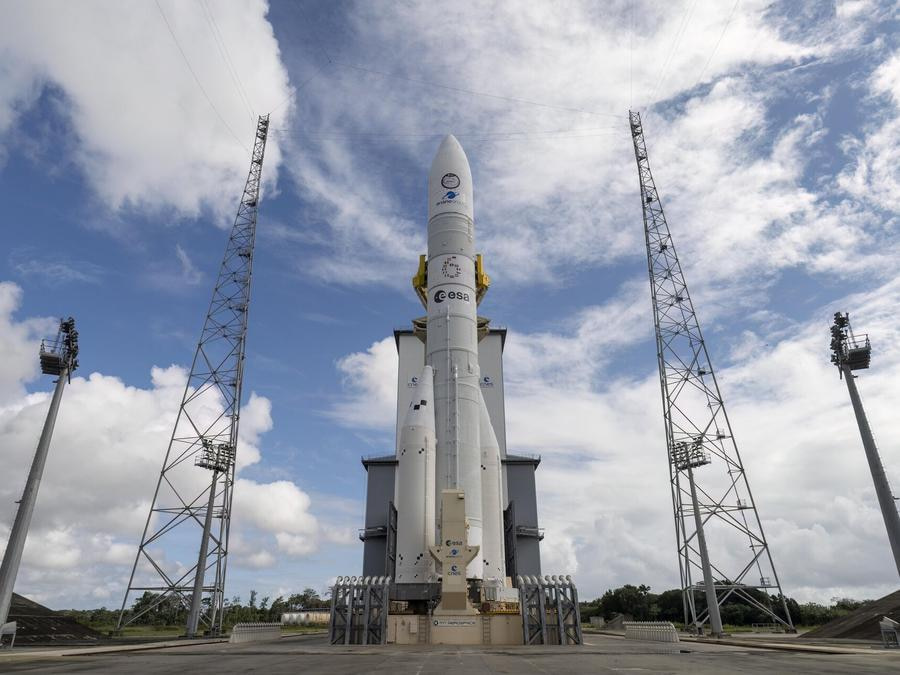
The EU Agency for the Space Programme signed a launch contract covering the Galileo L18 mission, which will carry the second pair of second-generation spacecraft into orbit aboard an Ariane 6. Officials announced the deal at the European Space Conference in the Belgian capital in late January.

The move matters because it ties two of Europe’s strategic bets together. Galileo gives the bloc a satellite-positioning system it controls itself, free of any reliance on the American GPS network, while Ariane 6 gives it an independent way to reach orbit after years of launcher uncertainty. Arianespace confirmed that L18 will mark the rocket’s fifth mission in service of the constellation.

The sequencing tells the story. Two further Ariane 6 flights will finish deploying the first-generation fleet, then L17 will loft the first pair of second-generation satellites, with L18 following close behind. The upgraded spacecraft promise stronger signals, better accuracy and easier maintenance across a constellation that already guides more than four billion devices worldwide.

Galileo has quietly become critical infrastructure. Its High Accuracy Service sharpens positioning for farming, surveying and autonomous machines, its Search and Rescue function relays distress calls from remote seas and mountains, and engineers are preparing an emergency-warning service that could push alerts straight to phones during disasters.

National space agencies and industry read the contract as a vote of confidence in Ariane 6 itself. The rocket endured a long and bumpy path to its first flights, and a steady order book of Galileo missions gives its manufacturers the cadence they need to bring down costs and prove reliability. Each successful launch, in turn, strengthens the case that Europe never again wants to depend on foreign providers to put its most sensitive assets in orbit.

Money and sovereignty drive the urgency. Commission officials frame every Galileo contract as an investment in jobs, industry and strategic autonomy at a moment when other powers are racing to expand their own navigation and communication networks.

The programme also feeds a wider ambition. Alongside the Earth-observation network Copernicus and the incoming secure-connectivity system built around a fresh constellation of satellites, Galileo anchors a space policy that Brussels increasingly treats as a pillar of security rather than a scientific luxury.

Launch dates for L18 stayed off the contract papers, and slippage remains a familiar hazard in any space schedule. Yet the signature sends a clear signal: Europe intends to keep its own satellites flying on its own rockets, and it will sign the cheques to make that happen.