Prague: The European Union has switched on a defence that most drivers, pilots and bankers will never notice, yet increasingly depend on. On 24 July the EU Agency for the Space Programme confirmed the operational launch of Galileo authentication, a service that lets receivers check whether the satellite signals guiding them are the real thing.
The mechanism, known as Open Service Navigation Message Authentication, or OSNMA, tackles a growing menace called spoofing. In a spoofing attack, a transmitter floods a receiver with counterfeit signals and nudges its calculated position off course. Aircraft near conflict zones, ships in contested waters and even delivery fleets have all reported strange jumps in their fix over the past two years.
OSNMA answers the threat with cryptography. Galileo now embeds digital signatures inside the navigation message, and a receiver that holds the matching public keys can verify that the data came from the constellation rather than a hostile ground station. The check does not slow the fix, and it works on the free Open Service that anyone can use.
Prague matters here because the agency that runs the programme sits in the Czech capital, and its engineers spent years testing the feature with manufacturers before flipping the switch. Chipmakers and receiver builders can now bake authentication into consumer devices, from farm tractors that steer themselves to smartphones that timestamp financial trades.
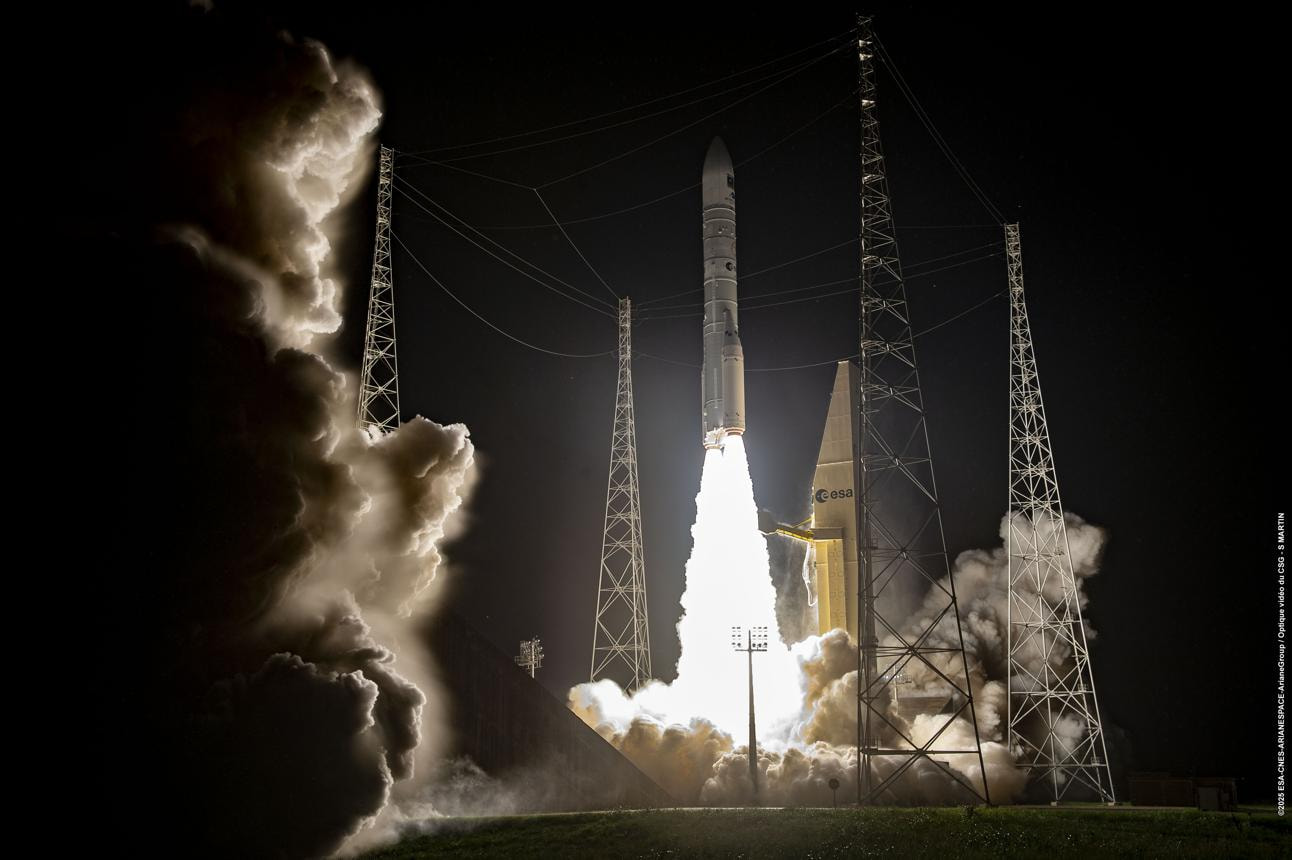
The agency paired the announcement with fresh hardware plans. It signed a launch contract with Arianespace for a new pair of Second Generation Galileo satellites, tagged L18, which will ride an Ariane 6 rocket. Those spacecraft carry stronger signals and more flexible payloads, and they anchor a decade-long upgrade meant to keep Europe independent of the American GPS and China’s BeiDou.
Independence is the quiet political point. European leaders argue that a continent which trusts satellite timing to run its power grids, telecom networks and stock exchanges cannot outsource that trust to others. Authentication turns the argument into engineering, because a spoofed grid clock or a fooled trading platform can cause damage far beyond a wrong turn on a motorway.
Users will not need to do much. As new receivers reach the market, they will simply flag when a signal fails its cryptographic test, and safety-critical systems can then fall back on other sensors. The agency publishes technical guidance and updates through its press room, and it frames the rollout as proof that public space spending delivers everyday resilience, a case it also makes in a recent interview series.
Plenty of work remains. Coverage of authenticated signals will widen as more satellites join, and the second generation still needs to reach orbit before the service hits full strength. For now, though, Europe can tell its citizens something concrete: the map on the dashboard can finally prove it is telling the truth.