August 10, 2026
LATEST
Five Joint Defence Projects Launch Europe’s Military ShieldElectrification Plan Aims to Make Europe First Electro ContinentHorizon Europe Budget Fight Heats Up as Ministers Push BackGoogle’s DMA Fine Sets Off a Transatlantic Tariff ClashTwenty New University Alliances Join Erasmus for Two YearsForeign Subsidies Case Puts Temu in the EU’s SightsVan Tachographs Now Mandatory for Cross-Border FleetsStress Test Exposes Gaps in Euro Area Bank DefencesEurope Bets on a Gulf Partnership Before the Riyadh SummitWhy the Atlantic Route Now Runs Through MauritaniaKyiv and Chisinau Advance as the EU Accession Talks Gather PaceEurope’s New Digital Border System Beds In After a Rocky RolloutBrussels Mounts Its Largest Wildfire Response as the Fires SpreadRetail Spending Slipped in June, Wrong-Footing EconomistsHeatwave Warning Puts Brussels on Alert for Vulnerable GroupsKANAL’s 230 Million Euro Museum Sets a November Opening DatePension Savings Rules Get a Reset as the EU Scraps the 1% CapMedicine Shortages Move to the Heart of Europe’s Pharma ResetJapan Becomes Europe’s Closest Security Partner in AsiaCan Europe’s New Zealand Deal Anchor It in the Pacific?Five Joint Defence Projects Launch Europe’s Military ShieldElectrification Plan Aims to Make Europe First Electro ContinentHorizon Europe Budget Fight Heats Up as Ministers Push BackGoogle’s DMA Fine Sets Off a Transatlantic Tariff ClashTwenty New University Alliances Join Erasmus for Two YearsForeign Subsidies Case Puts Temu in the EU’s SightsVan Tachographs Now Mandatory for Cross-Border FleetsStress Test Exposes Gaps in Euro Area Bank DefencesEurope Bets on a Gulf Partnership Before the Riyadh SummitWhy the Atlantic Route Now Runs Through MauritaniaKyiv and Chisinau Advance as the EU Accession Talks Gather PaceEurope’s New Digital Border System Beds In After a Rocky RolloutBrussels Mounts Its Largest Wildfire Response as the Fires SpreadRetail Spending Slipped in June, Wrong-Footing EconomistsHeatwave Warning Puts Brussels on Alert for Vulnerable GroupsKANAL’s 230 Million Euro Museum Sets a November Opening DatePension Savings Rules Get a Reset as the EU Scraps the 1% CapMedicine Shortages Move to the Heart of Europe’s Pharma ResetJapan Becomes Europe’s Closest Security Partner in AsiaCan Europe’s New Zealand Deal Anchor It in the Pacific?
August 10, 2026
LATEST
Five Joint Defence Projects Launch Europe’s Military ShieldElectrification Plan Aims to Make Europe First Electro ContinentHorizon Europe Budget Fight Heats Up as Ministers Push BackGoogle’s DMA Fine Sets Off a Transatlantic Tariff ClashTwenty New University Alliances Join Erasmus for Two YearsForeign Subsidies Case Puts Temu in the EU’s SightsVan Tachographs Now Mandatory for Cross-Border FleetsStress Test Exposes Gaps in Euro Area Bank DefencesEurope Bets on a Gulf Partnership Before the Riyadh SummitWhy the Atlantic Route Now Runs Through MauritaniaKyiv and Chisinau Advance as the EU Accession Talks Gather PaceEurope’s New Digital Border System Beds In After a Rocky RolloutBrussels Mounts Its Largest Wildfire Response as the Fires SpreadRetail Spending Slipped in June, Wrong-Footing EconomistsHeatwave Warning Puts Brussels on Alert for Vulnerable GroupsKANAL’s 230 Million Euro Museum Sets a November Opening DatePension Savings Rules Get a Reset as the EU Scraps the 1% CapMedicine Shortages Move to the Heart of Europe’s Pharma ResetJapan Becomes Europe’s Closest Security Partner in AsiaCan Europe’s New Zealand Deal Anchor It in the Pacific?Five Joint Defence Projects Launch Europe’s Military ShieldElectrification Plan Aims to Make Europe First Electro ContinentHorizon Europe Budget Fight Heats Up as Ministers Push BackGoogle’s DMA Fine Sets Off a Transatlantic Tariff ClashTwenty New University Alliances Join Erasmus for Two YearsForeign Subsidies Case Puts Temu in the EU’s SightsVan Tachographs Now Mandatory for Cross-Border FleetsStress Test Exposes Gaps in Euro Area Bank DefencesEurope Bets on a Gulf Partnership Before the Riyadh SummitWhy the Atlantic Route Now Runs Through MauritaniaKyiv and Chisinau Advance as the EU Accession Talks Gather PaceEurope’s New Digital Border System Beds In After a Rocky RolloutBrussels Mounts Its Largest Wildfire Response as the Fires SpreadRetail Spending Slipped in June, Wrong-Footing EconomistsHeatwave Warning Puts Brussels on Alert for Vulnerable GroupsKANAL’s 230 Million Euro Museum Sets a November Opening DatePension Savings Rules Get a Reset as the EU Scraps the 1% CapMedicine Shortages Move to the Heart of Europe’s Pharma ResetJapan Becomes Europe’s Closest Security Partner in AsiaCan Europe’s New Zealand Deal Anchor It in the Pacific?

Bangkok Pushes EU Trade Deal Toward Mid-2026 Closure

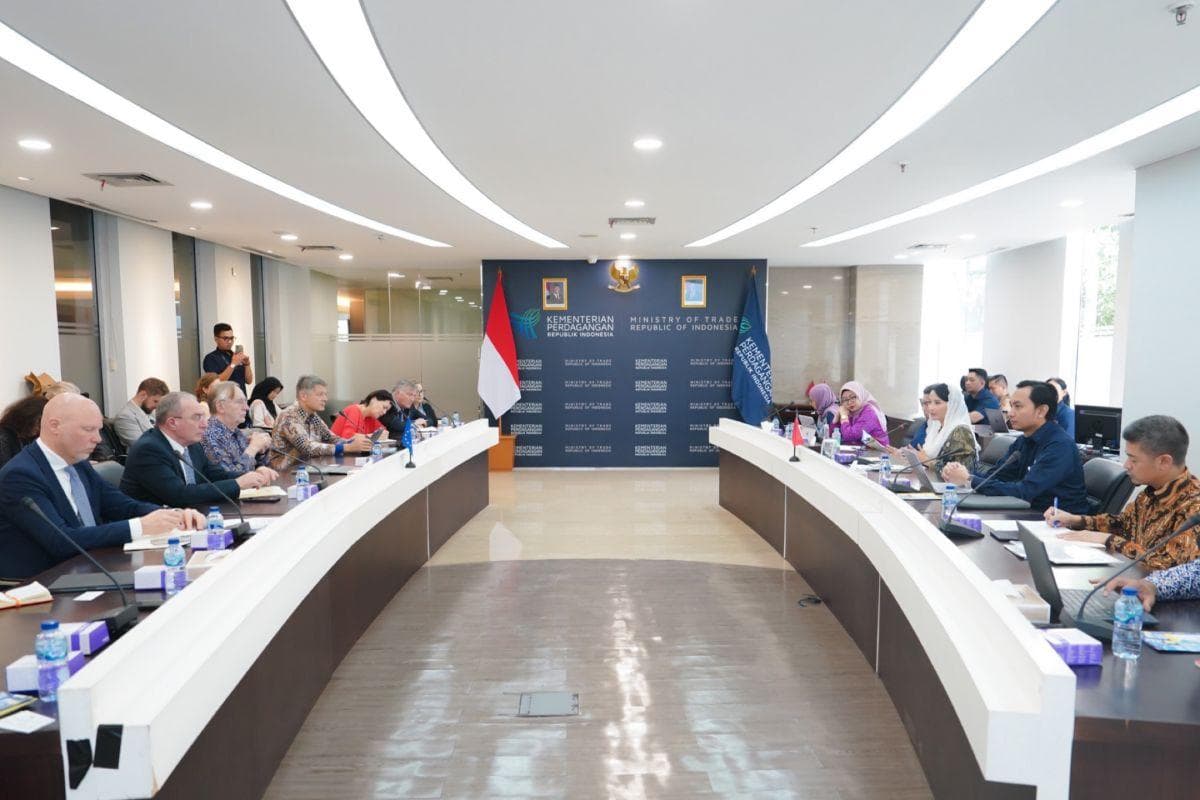
Bangkok: Thailand’s commerce ministry confirmed this week that it remains on track to close a Free Trade Agreement with the European Union by mid-2026, a timetable that would deliver one of the most consequential Southeast Asian trade deals Brussels has signed in more than a decade. Eight formal negotiating rounds have already taken place, the most recent in Brussels in February, and both sides have agreed to intensify the intersessional work that bridges those rounds. Commerce Minister officials are preparing another delegation to Belgium to meet Trade and Economic Security Commissioner Maroš Šefčovič, with the explicit aim of unlocking the remaining politically sensitive chapters.

The architecture of the proposed deal is unusually ambitious for a partner of Thailand’s size and development profile. EU negotiators describe it as a transformational agreement built around three pillars — market access, regulatory rules, and sustainability — rather than a conventional tariff-cutting exercise. Aligning Thai manufacturing with the European Union’s green economy framework sits at the heart of the rules pillar, and the Carbon Border Adjustment Mechanism in particular has become a focal point. Thai exporters of steel, aluminium, cement and selected chemicals are recalibrating compliance systems in advance of full CBAM enforcement, and the FTA is meant to provide a structured glide path.

The outstanding files are familiar to any close observer of EU trade negotiations. Market opening on services and government procurement, agricultural product standards, intellectual property protection and digital trade rules have all required additional technical meetings. Bangkok has historically been cautious about deeper services liberalisation, and Brussels has pressed for ambitious commitments on data flows, online platform rules and protection of geographical indications. Each of these chapters now sits at the threshold of political decision rather than technical drafting, which explains the renewed shuttle diplomacy.

The deal’s strategic significance goes well beyond bilateral commerce. Thailand is the only major ASEAN economy currently in active end-stage negotiations with the European Union following the conclusion of the EU-Singapore digital trade agreement and the slow progress on relaunched talks with Indonesia and the Philippines. Closing the Thai file would restore momentum to Europe’s broader ASEAN strategy, give exporters a second large Southeast Asian access point alongside Vietnam and Singapore, and provide Brussels with a credible counterweight to the regional architecture being built around the Regional Comprehensive Economic Partnership and the Indo-Pacific Economic Framework.

For Thailand the calculation is anchored in industrial repositioning. The proposed agreement is explicitly designed to attract European investment into the so-called S-Curve industries — electric vehicles, biotechnology, smart electronics, advanced robotics and food security clusters — using the Commission’s €300 billion Global Gateway platform as a financing backbone. Thai officials see European capital and standards as a way to upgrade supply chains that have become uncomfortably dependent on Chinese inputs, while keeping access to Chinese end-markets through parallel agreements. The FTA is being framed in Bangkok less as a trade deal than as an industrial policy lever.

There remain credible risks to the mid-2026 timetable. Civil society organisations on both sides have flagged sustainability impact assessment work as underdeveloped, particularly on labour rights and palm-oil deforestation provisions. European Parliament rapporteurs are expected to demand robust enforcement language before granting consent, and any text that appears to dilute CBAM commitments will face hostile scrutiny. On the Thai side, government procurement opening remains politically delicate ahead of domestic electoral cycles.

A signed deal before the summer recess would nonetheless be a meaningful win for both capitals. It would consolidate the European Union’s status as the second-largest trade partner Thailand is actively deepening ties with, anchor a high-standards model in a region increasingly tempted by lower-ambition arrangements, and give Brussels a usable proof point that its trade machinery can still deliver under pressure. The negotiating teams have a narrow window to convert eight rounds of progress into a signature.