August 10, 2026
LATEST
Five Joint Defence Projects Launch Europe’s Military ShieldElectrification Plan Aims to Make Europe First Electro ContinentHorizon Europe Budget Fight Heats Up as Ministers Push BackGoogle’s DMA Fine Sets Off a Transatlantic Tariff ClashTwenty New University Alliances Join Erasmus for Two YearsForeign Subsidies Case Puts Temu in the EU’s SightsVan Tachographs Now Mandatory for Cross-Border FleetsStress Test Exposes Gaps in Euro Area Bank DefencesEurope Bets on a Gulf Partnership Before the Riyadh SummitWhy the Atlantic Route Now Runs Through MauritaniaKyiv and Chisinau Advance as the EU Accession Talks Gather PaceEurope’s New Digital Border System Beds In After a Rocky RolloutBrussels Mounts Its Largest Wildfire Response as the Fires SpreadRetail Spending Slipped in June, Wrong-Footing EconomistsHeatwave Warning Puts Brussels on Alert for Vulnerable GroupsKANAL’s 230 Million Euro Museum Sets a November Opening DatePension Savings Rules Get a Reset as the EU Scraps the 1% CapMedicine Shortages Move to the Heart of Europe’s Pharma ResetJapan Becomes Europe’s Closest Security Partner in AsiaCan Europe’s New Zealand Deal Anchor It in the Pacific?Five Joint Defence Projects Launch Europe’s Military ShieldElectrification Plan Aims to Make Europe First Electro ContinentHorizon Europe Budget Fight Heats Up as Ministers Push BackGoogle’s DMA Fine Sets Off a Transatlantic Tariff ClashTwenty New University Alliances Join Erasmus for Two YearsForeign Subsidies Case Puts Temu in the EU’s SightsVan Tachographs Now Mandatory for Cross-Border FleetsStress Test Exposes Gaps in Euro Area Bank DefencesEurope Bets on a Gulf Partnership Before the Riyadh SummitWhy the Atlantic Route Now Runs Through MauritaniaKyiv and Chisinau Advance as the EU Accession Talks Gather PaceEurope’s New Digital Border System Beds In After a Rocky RolloutBrussels Mounts Its Largest Wildfire Response as the Fires SpreadRetail Spending Slipped in June, Wrong-Footing EconomistsHeatwave Warning Puts Brussels on Alert for Vulnerable GroupsKANAL’s 230 Million Euro Museum Sets a November Opening DatePension Savings Rules Get a Reset as the EU Scraps the 1% CapMedicine Shortages Move to the Heart of Europe’s Pharma ResetJapan Becomes Europe’s Closest Security Partner in AsiaCan Europe’s New Zealand Deal Anchor It in the Pacific?
August 10, 2026
LATEST
Five Joint Defence Projects Launch Europe’s Military ShieldElectrification Plan Aims to Make Europe First Electro ContinentHorizon Europe Budget Fight Heats Up as Ministers Push BackGoogle’s DMA Fine Sets Off a Transatlantic Tariff ClashTwenty New University Alliances Join Erasmus for Two YearsForeign Subsidies Case Puts Temu in the EU’s SightsVan Tachographs Now Mandatory for Cross-Border FleetsStress Test Exposes Gaps in Euro Area Bank DefencesEurope Bets on a Gulf Partnership Before the Riyadh SummitWhy the Atlantic Route Now Runs Through MauritaniaKyiv and Chisinau Advance as the EU Accession Talks Gather PaceEurope’s New Digital Border System Beds In After a Rocky RolloutBrussels Mounts Its Largest Wildfire Response as the Fires SpreadRetail Spending Slipped in June, Wrong-Footing EconomistsHeatwave Warning Puts Brussels on Alert for Vulnerable GroupsKANAL’s 230 Million Euro Museum Sets a November Opening DatePension Savings Rules Get a Reset as the EU Scraps the 1% CapMedicine Shortages Move to the Heart of Europe’s Pharma ResetJapan Becomes Europe’s Closest Security Partner in AsiaCan Europe’s New Zealand Deal Anchor It in the Pacific?Five Joint Defence Projects Launch Europe’s Military ShieldElectrification Plan Aims to Make Europe First Electro ContinentHorizon Europe Budget Fight Heats Up as Ministers Push BackGoogle’s DMA Fine Sets Off a Transatlantic Tariff ClashTwenty New University Alliances Join Erasmus for Two YearsForeign Subsidies Case Puts Temu in the EU’s SightsVan Tachographs Now Mandatory for Cross-Border FleetsStress Test Exposes Gaps in Euro Area Bank DefencesEurope Bets on a Gulf Partnership Before the Riyadh SummitWhy the Atlantic Route Now Runs Through MauritaniaKyiv and Chisinau Advance as the EU Accession Talks Gather PaceEurope’s New Digital Border System Beds In After a Rocky RolloutBrussels Mounts Its Largest Wildfire Response as the Fires SpreadRetail Spending Slipped in June, Wrong-Footing EconomistsHeatwave Warning Puts Brussels on Alert for Vulnerable GroupsKANAL’s 230 Million Euro Museum Sets a November Opening DatePension Savings Rules Get a Reset as the EU Scraps the 1% CapMedicine Shortages Move to the Heart of Europe’s Pharma ResetJapan Becomes Europe’s Closest Security Partner in AsiaCan Europe’s New Zealand Deal Anchor It in the Pacific?

Brussels And Tokyo Push Past The Two-Nanometre Chip Frontier

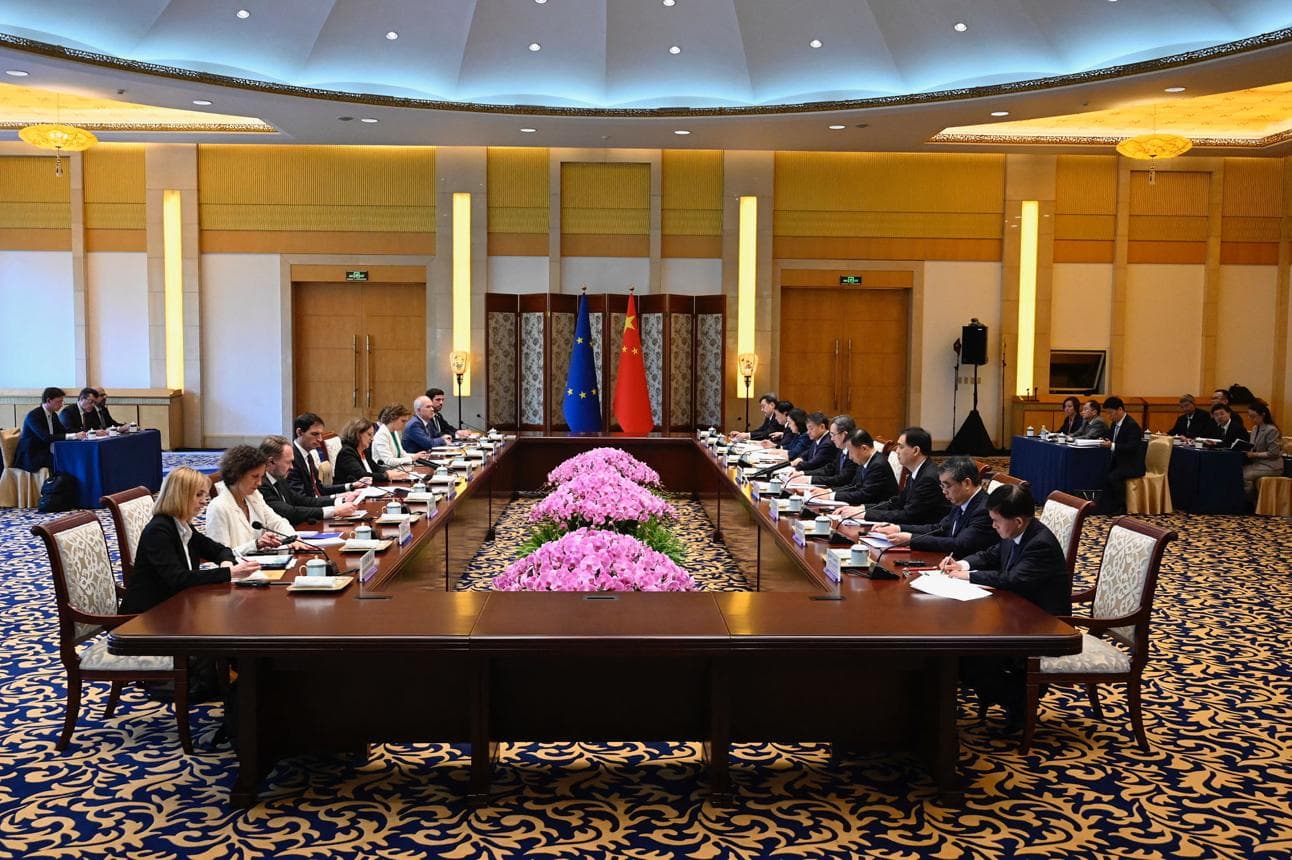
Brussels: When EU and Japanese officials sat down for the fourth meeting of their Digital Partnership Council in Brussels this May, the headline commitment was deceptively narrow. The two sides agreed to deepen cooperation on “beyond-2nm” semiconductors, quantum technology and the data rules that will govern both. Yet the modesty of the language hides a larger calculation about how two technology powers, neither of which controls the most advanced chip foundries, intend to stay relevant in a field increasingly defined by Washington and Beijing.

The agenda ran across artificial intelligence, semiconductor supply chains, quantum, digital infrastructure, data governance and platform regulation. On chips, both delegations acknowledged the obvious vulnerability: their industries depend on a small number of East Asian fabrication plants, and any disruption to that supply, whether commercial or geopolitical, would hit European carmakers and Japanese electronics firms alike. Rather than pretend either can build a sovereign foundry at scale, the council focused on the parts of the value chain where each is genuinely strong.

That complementarity is the strategic logic. Japan retains world-leading positions in chipmaking materials, photoresists and precision equipment, alongside an ambitious effort to manufacture next-generation logic at home. The EU brings advanced research institutes, lithography supply through a single dominant equipment maker, and a regulatory weight that shapes global standards. Pairing research roadmaps for sub-two-nanometre processes lets both pool scarce talent and avoid duplicating expensive pilot lines. It is industrial policy by coordination rather than by subsidy race.

The quieter agreement may prove the more consequential. The two sides launched a Data Strategy Working Group intended to improve interoperability between their data systems and policy frameworks. For companies that move research data, design files and customer information across the two markets, divergent rules are a tax on collaboration. Aligning definitions for trusted data flows, while preserving Europe’s privacy architecture, is the unglamorous plumbing that determines whether joint chip and quantum projects can actually function.

None of this resolves the fundamental asymmetry. Neither Brussels nor Tokyo will displace the volume leaders in advanced manufacturing this decade, and cooperation councils have a habit of generating communiqués faster than capacity. The test will be whether the research alignment translates into shared facilities, common standards and resilient supplier networks before the next geopolitical shock forces improvisation.

What the partnership does offer is a hedge built on shared assumptions. Both are open economies wary of coercion, both face the same dependency map, and both prefer rules to raw leverage. The next council is scheduled for Tokyo in 2027. Between now and then, the measure of success will not be the warmth of the language but the number of concrete projects that survive the journey from joint statement to functioning supply chain.