August 10, 2026
LATEST
Five Joint Defence Projects Launch Europe’s Military ShieldElectrification Plan Aims to Make Europe First Electro ContinentHorizon Europe Budget Fight Heats Up as Ministers Push BackGoogle’s DMA Fine Sets Off a Transatlantic Tariff ClashTwenty New University Alliances Join Erasmus for Two YearsForeign Subsidies Case Puts Temu in the EU’s SightsVan Tachographs Now Mandatory for Cross-Border FleetsStress Test Exposes Gaps in Euro Area Bank DefencesEurope Bets on a Gulf Partnership Before the Riyadh SummitWhy the Atlantic Route Now Runs Through MauritaniaKyiv and Chisinau Advance as the EU Accession Talks Gather PaceEurope’s New Digital Border System Beds In After a Rocky RolloutBrussels Mounts Its Largest Wildfire Response as the Fires SpreadRetail Spending Slipped in June, Wrong-Footing EconomistsHeatwave Warning Puts Brussels on Alert for Vulnerable GroupsKANAL’s 230 Million Euro Museum Sets a November Opening DatePension Savings Rules Get a Reset as the EU Scraps the 1% CapMedicine Shortages Move to the Heart of Europe’s Pharma ResetJapan Becomes Europe’s Closest Security Partner in AsiaCan Europe’s New Zealand Deal Anchor It in the Pacific?Five Joint Defence Projects Launch Europe’s Military ShieldElectrification Plan Aims to Make Europe First Electro ContinentHorizon Europe Budget Fight Heats Up as Ministers Push BackGoogle’s DMA Fine Sets Off a Transatlantic Tariff ClashTwenty New University Alliances Join Erasmus for Two YearsForeign Subsidies Case Puts Temu in the EU’s SightsVan Tachographs Now Mandatory for Cross-Border FleetsStress Test Exposes Gaps in Euro Area Bank DefencesEurope Bets on a Gulf Partnership Before the Riyadh SummitWhy the Atlantic Route Now Runs Through MauritaniaKyiv and Chisinau Advance as the EU Accession Talks Gather PaceEurope’s New Digital Border System Beds In After a Rocky RolloutBrussels Mounts Its Largest Wildfire Response as the Fires SpreadRetail Spending Slipped in June, Wrong-Footing EconomistsHeatwave Warning Puts Brussels on Alert for Vulnerable GroupsKANAL’s 230 Million Euro Museum Sets a November Opening DatePension Savings Rules Get a Reset as the EU Scraps the 1% CapMedicine Shortages Move to the Heart of Europe’s Pharma ResetJapan Becomes Europe’s Closest Security Partner in AsiaCan Europe’s New Zealand Deal Anchor It in the Pacific?
August 10, 2026
LATEST
Five Joint Defence Projects Launch Europe’s Military ShieldElectrification Plan Aims to Make Europe First Electro ContinentHorizon Europe Budget Fight Heats Up as Ministers Push BackGoogle’s DMA Fine Sets Off a Transatlantic Tariff ClashTwenty New University Alliances Join Erasmus for Two YearsForeign Subsidies Case Puts Temu in the EU’s SightsVan Tachographs Now Mandatory for Cross-Border FleetsStress Test Exposes Gaps in Euro Area Bank DefencesEurope Bets on a Gulf Partnership Before the Riyadh SummitWhy the Atlantic Route Now Runs Through MauritaniaKyiv and Chisinau Advance as the EU Accession Talks Gather PaceEurope’s New Digital Border System Beds In After a Rocky RolloutBrussels Mounts Its Largest Wildfire Response as the Fires SpreadRetail Spending Slipped in June, Wrong-Footing EconomistsHeatwave Warning Puts Brussels on Alert for Vulnerable GroupsKANAL’s 230 Million Euro Museum Sets a November Opening DatePension Savings Rules Get a Reset as the EU Scraps the 1% CapMedicine Shortages Move to the Heart of Europe’s Pharma ResetJapan Becomes Europe’s Closest Security Partner in AsiaCan Europe’s New Zealand Deal Anchor It in the Pacific?Five Joint Defence Projects Launch Europe’s Military ShieldElectrification Plan Aims to Make Europe First Electro ContinentHorizon Europe Budget Fight Heats Up as Ministers Push BackGoogle’s DMA Fine Sets Off a Transatlantic Tariff ClashTwenty New University Alliances Join Erasmus for Two YearsForeign Subsidies Case Puts Temu in the EU’s SightsVan Tachographs Now Mandatory for Cross-Border FleetsStress Test Exposes Gaps in Euro Area Bank DefencesEurope Bets on a Gulf Partnership Before the Riyadh SummitWhy the Atlantic Route Now Runs Through MauritaniaKyiv and Chisinau Advance as the EU Accession Talks Gather PaceEurope’s New Digital Border System Beds In After a Rocky RolloutBrussels Mounts Its Largest Wildfire Response as the Fires SpreadRetail Spending Slipped in June, Wrong-Footing EconomistsHeatwave Warning Puts Brussels on Alert for Vulnerable GroupsKANAL’s 230 Million Euro Museum Sets a November Opening DatePension Savings Rules Get a Reset as the EU Scraps the 1% CapMedicine Shortages Move to the Heart of Europe’s Pharma ResetJapan Becomes Europe’s Closest Security Partner in AsiaCan Europe’s New Zealand Deal Anchor It in the Pacific?

Brussels Bets A 50 Percent Duty Will Save Its Steelmakers

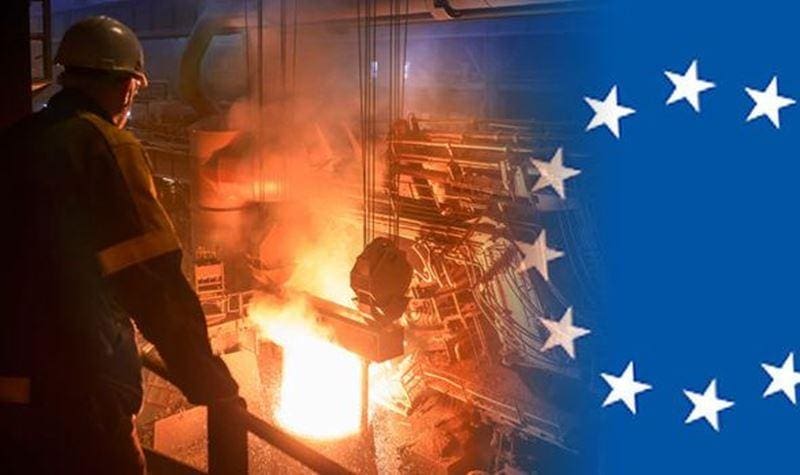
Brussels: The European Union is replacing the patchwork of safeguard quotas that has shielded its steel industry since 2018 with a far blunter instrument, and the numbers reveal how anxious policymakers have become about a market awash in cheap imports. From 1 July, tariff-free imports across the thirty product categories covered by the regime will be capped at 18,345,922 tonnes a year, a reduction of roughly 47 percent against the 2024 quota levels. Anything arriving above that ceiling will face a customs duty of 50 percent, double the 25 percent that applied under the outgoing safeguard. The European Parliament adopted the framework on 19 May, and once the Council completes its own formality the measure becomes one of the most restrictive trade defences the bloc has deployed in a generation.

The logic rests on a simple diagnosis. Global steelmaking capacity exceeds demand by several hundred million tonnes, and a large share of that surplus originates in economies where production is subsidised or insulated from carbon costs. When the United States raised its own steel tariffs, European officials feared that tonnage once destined for American ports would be diverted toward the open European market. Halving the duty-free allowance and doubling the penalty above it is intended to remove that incentive at the border rather than after the damage to domestic mills has been done.

A quieter but consequential element is the new melt and pour requirement. Origin will now be determined by where steel is first melted and poured, not merely where it was last processed or lightly finished. The change is designed to close a long-exploited loophole whereby slab produced in one country is rolled or coated in another and re-labelled to slip past quotas. Importers will have to document the country of melt and pour, and the Commission must adopt implementing rules on the acceptable evidence by 31 August. European Economic Area suppliers remain subject to the traceability obligation even though they sit outside the quota ceiling, a sign of how seriously enforcement is being taken.

For European producers, the appeal is obvious. Mills have spent years operating below capacity while contending with high energy prices and the rising cost of emissions allowances, and they argue that without a credible floor under volumes the case for investing in cleaner furnaces collapses. The measure dovetails with the bloc’s carbon border levy, which will eventually price the emissions embedded in imported steel, so that protection and decarbonisation are meant to advance together rather than at cross purposes.

The risks run in the other direction. Downstream manufacturers, from carmakers to construction firms and appliance makers, consume far more steel by value than the mills produce, and they will pay more if the duty pushes up domestic prices. Bruegel and other analysts have cautioned that a protection plan this aggressive could raise input costs across the very industries Europe is trying to keep competitive, and that a 50 percent wall invites retaliation and disputes at the World Trade Organization, where the bloc has signalled it may have to renegotiate its tariff commitments. There is also the awkward fact that quotas tightened to defend producers are felt most acutely by the smaller fabricators who lack the bargaining power to secure scarce tariff-free tonnage.

What makes the regulation genuinely new is not the existence of a safeguard but its permanence of ambition. The 2018 measures were emergency responses meant to expire; this framework reads as a structural commitment to keep import volumes compressed indefinitely while the industry retools. That shifts the political burden onto enforcement and onto the implementing rules still to be written this summer. If the melt and pour evidence requirements are loose, transhipment will simply find new routes. If they are watertight, compliance costs ripple through every supply chain that touches imported steel.

The coming months will test whether a single high wall can do what years of calibrated quotas could not. Brussels has decided that the threat of diverted global overcapacity is large enough to justify the gamble, and that the survival of European steelmaking is worth the price its customers will pay.