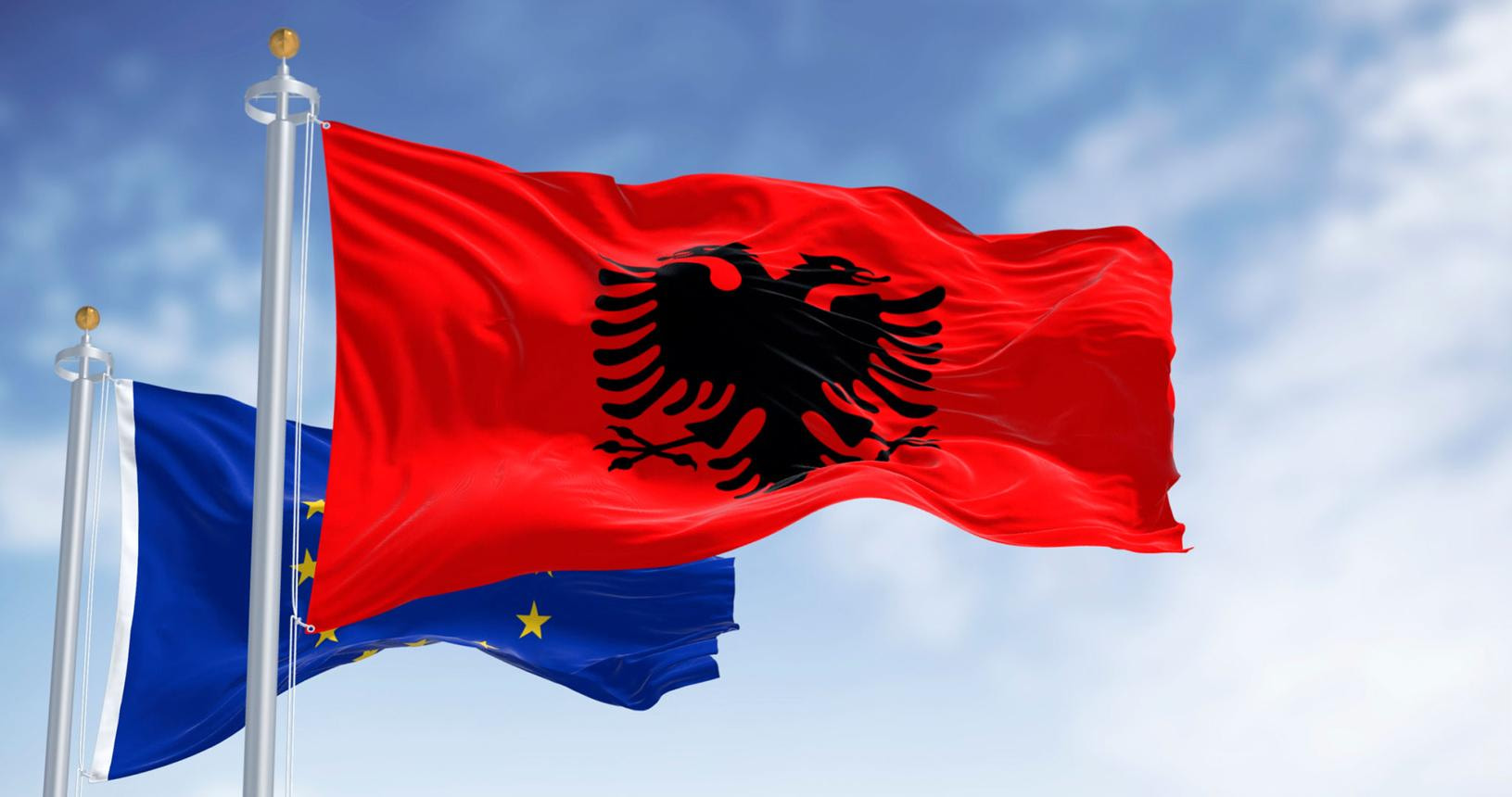
For more than a decade the Western Balkans have been the perpetual waiting room of European integration, a region promised membership in principle and kept at arm’s length in practice. That long stasis is beginning to crack. Late last month an intergovernmental conference held in the Belgian capital confirmed that Albania has officially transitioned into the concluding phase of its accession negotiations, becoming only the second candidate after Montenegro to reach this advanced stage.
The eighth such conference between the two sides served a specific procedural purpose: it confirmed that Tirana had met the interim benchmarks set earlier and established the closing benchmarks for Cluster 1, the so-called fundamentals. That cluster covers the most politically sensitive files in the entire process, including Chapter 23 on the judiciary and fundamental rights and Chapter 24 on justice, freedom and security. These are the chapters where reforms are hardest to fake and easiest to reverse, which is precisely why the Union front-loads them. Reaching the closing phase on the fundamentals signals that the bloc judges Albania’s rule-of-law trajectory credible enough to start counting down rather than merely monitoring.
The symbolism is significant, but the mechanics matter more. Entering the concluding phase does not mean chapters are closed; it means Albania can begin closing them once the agreed conditions are met. The distinction is the difference between a finish line in view and a finish line crossed. Montenegro, the front-runner, illustrates both the promise and the grind. As of this spring nineteen chapters were open and fourteen provisionally closed, with two more, on freedom of movement for workers and on consumer and health protection, expected to close at the General Affairs Council in mid-June. Ambassadors have already approved an ad hoc working group to begin drafting Montenegro’s accession treaty, and officials speak openly of closing every chapter by the end of the year.
For Albania, the path is longer but the direction is now unambiguous. The challenge shifts from opening doors to delivering the substance behind them: independent courts that withstand political pressure, anti-corruption bodies with teeth, and public administration that functions when the cameras leave. Enlargement fatigue inside the Union, and the memory of earlier accessions where rule-of-law backsliding followed membership, mean candidates today face stricter and more reversible conditionality than their predecessors did. Progress can be paused or unwound if reforms stall.
The geopolitical backdrop sharpens the urgency. A bloc that once treated enlargement as a bureaucratic afterthought has rediscovered its strategic value, conscious that a Western Balkans left in limbo is a Western Balkans courted by rival powers. Folding Albania and Montenegro into the Union is as much about closing a map as about rewarding reform. Yet the institutions are wary of repeating past mistakes by admitting members before their democratic plumbing is sound.
Whether Albania converts this milestone into membership will depend less on conferences in the Belgian capital and more on the unglamorous work of judicial appointments, prosecutions and institutional reform carried out at home. The procedural machinery has done what it can; it has put the country within reach of the goal. The remaining distance must be covered by Tirana itself, and the Union will be watching each step with the scepticism that a hard-won lesson tends to produce.