
Money is the quietest measure of how much a continent values its culture, and this year the numbers tell a careful story. The 2026 work programme for Creative Europe, the EU’s main funding stream for the cultural and creative sectors, carries a budget of around 380 million euros, a figure meant to keep the sector steady rather than transform it.
The programme’s stated goals read like a list of the anxieties of the moment: safeguarding cultural diversity, defending democracy, supporting the green and digital transitions and shoring up the competitiveness of an industry that employs millions yet rarely commands the attention given to manufacturing or finance. For artists, festivals, publishers and small production houses, Creative Europe is often the difference between a cross-border project happening or quietly dying on a spreadsheet.
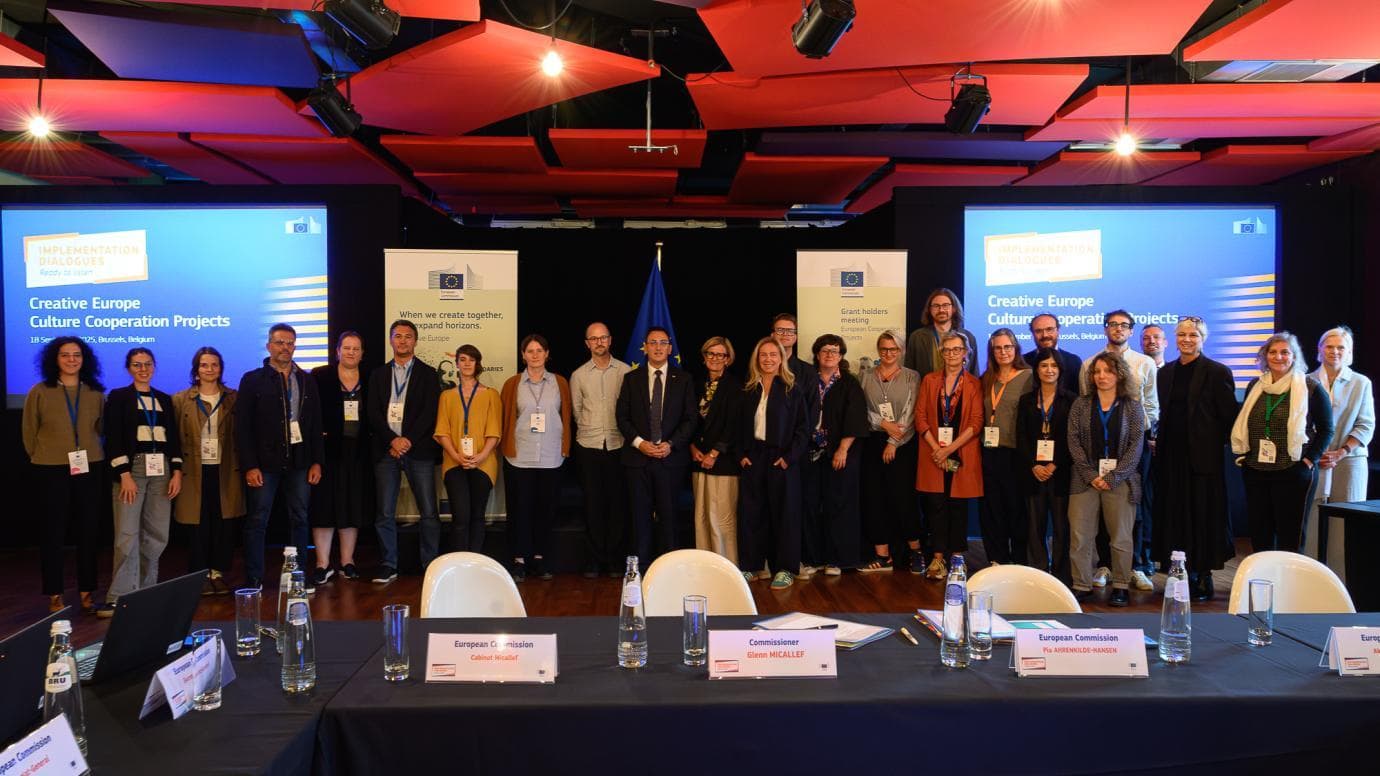
Early June brought a reminder of what that money actually buys. The European Education and Culture Executive Agency published a survey of fifty projects backed under the European Cooperation strand, grouped into thematic constellations of connected ideas. The framing is more than marketing. It is an attempt to show that scattered grants add up to something coherent, a web of collaborations linking theatres in one country with archives, musicians or digital studios in another.
Yet the size of the pot invites hard questions. At 380 million euros for an entire continent’s cultural ambitions, Creative Europe is modest next to the sums Europe commits elsewhere. The cultural and creative industries account for a substantial share of EU output and employment, and advocates have long argued that the funding does not match the rhetoric about culture as the soul of the European project.
The picture looks brighter alongside Erasmus+, whose 2026 call opened with a budget of roughly 5.2 billion euros for learning mobility and cooperation. Together the two programmes form the backbone of how the Union invests in people and ideas rather than roads and reactors, sending students abroad, funding teacher exchanges and bankrolling the kind of contact between young Europeans that treaties cannot legislate into being.
Still, the sector enters this cycle wary. The pandemic hollowed out audiences and freelance incomes, streaming has reshaped who captures the value of creative work, and artificial intelligence now raises uncomfortable questions about authorship and fair pay. A programme designed to support continuity may struggle to answer challenges that demand reinvention.
There is also the looming shadow of the next long-term EU budget, where culture must compete with defence, migration and green spending for a finite pool. Cultural organisations fear that in a tighter fiscal climate their funding will be among the first to be quietly trimmed, framed as discretionary even as it underpins tourism, education and social cohesion.
Defenders of the current approach make a reasonable case. Stable, predictable funding lets organisations plan beyond a single season, and the cooperation model spreads benefits across borders rather than concentrating them in a few capitals. In a Union often accused of being remote and technocratic, programmes that put a violinist on a train or a film crew across a frontier do quiet work that no directive can replicate.
The deeper question is whether continuity is enough. Europe says its culture is part of what makes it worth defending. The 2026 figures suggest a commitment that is real but cautious, a lifeline extended with one hand while the other watches the budget.


