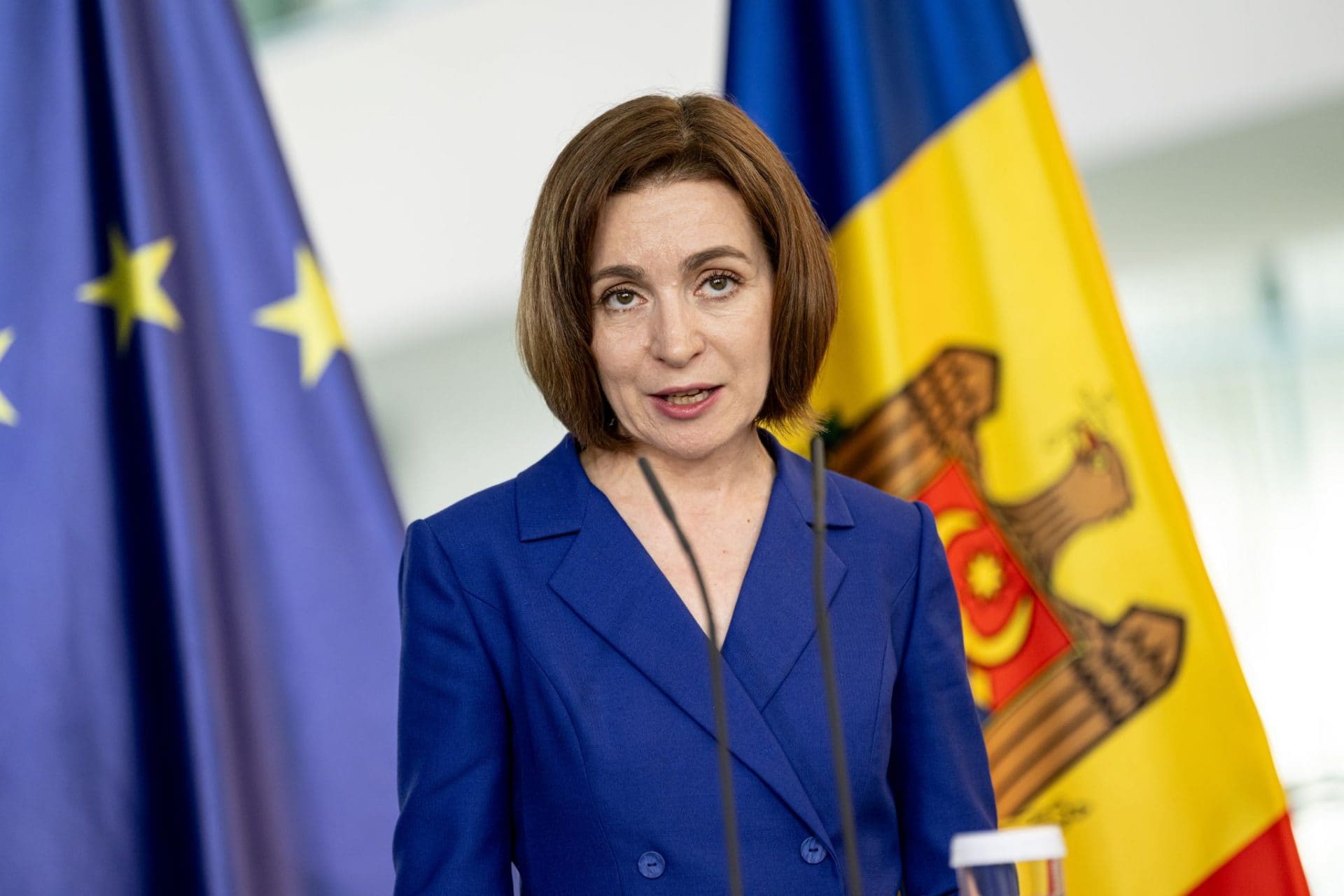
A small country on the front line of Russia’s hybrid war moved closer to the European Union on Monday, as leaders gathered for the second EU-Moldova summit and pledged fresh money, energy support and security guarantees. Antonio Costa and Ursula von der Leyen hosted President Maia Sandu, framing the meeting as proof that enlargement is back as a strategic priority rather than a distant aspiration.
The headline commitment was financial. The bloc confirmed up to 1.9 billion euros for Moldova over 2025 to 2027 under its dedicated Growth Plan, money tied to reforms and intended to accelerate integration well before any accession date. For one of Europe’s poorest economies, the sum is substantial, and leaders presented it as a down payment on membership rather than ordinary aid.
Energy ran through much of the discussion. Moldova has spent the past two years weaning itself off the Russia-linked thermal plant in the breakaway Transnistria region, leaning instead on electricity imported from neighbouring Romania. Leaders praised that shift and pointed to a two-year strategy for energy independence and resilience, a politically charged file given Moscow’s repeated use of gas and power as instruments of pressure.
The summit also doubled as a security conversation. EU leaders reiterated what they called unwavering support for Moldova’s sovereignty in the face of Russian hybrid attacks, from disinformation campaigns to interference in elections. The bloc has been expanding cooperation through its civilian Partnership Mission in the country and its broader hybrid toolbox, and cyber resilience featured prominently in the talks.
On the accession track itself, the timing was deliberate. Just a week earlier, the EU and Moldova opened negotiations on the first cluster of membership chapters, the so-called fundamentals covering rule of law, justice and fundamental rights. Leaders used the summit to take stock of that progress and to press Chisinau on judicial reform and the fight against organised crime, the areas where candidate countries most often stall.
The optics matter for both sides. For Moldova, a steady stream of summits and money signals that Europe will not abandon it to its larger neighbour. For the EU, backing a vulnerable applicant is a way to show that its enlargement promises carry weight after years of drift. A joint declaration capping the day set out shared priorities, though the harder work, turning political goodwill into closed chapters, still lies ahead.
The challenge now is sustaining the pace. Enlargement has a long history of grand declarations followed by fatigue, and Moldova’s path runs through some of the most demanding reforms the Union requires. Monday’s summit bought momentum. Whether it endures will depend on what happens between the headlines.