August 10, 2026
LATEST
Five Joint Defence Projects Launch Europe’s Military ShieldElectrification Plan Aims to Make Europe First Electro ContinentHorizon Europe Budget Fight Heats Up as Ministers Push BackGoogle’s DMA Fine Sets Off a Transatlantic Tariff ClashTwenty New University Alliances Join Erasmus for Two YearsForeign Subsidies Case Puts Temu in the EU’s SightsVan Tachographs Now Mandatory for Cross-Border FleetsStress Test Exposes Gaps in Euro Area Bank DefencesEurope Bets on a Gulf Partnership Before the Riyadh SummitWhy the Atlantic Route Now Runs Through MauritaniaKyiv and Chisinau Advance as the EU Accession Talks Gather PaceEurope’s New Digital Border System Beds In After a Rocky RolloutBrussels Mounts Its Largest Wildfire Response as the Fires SpreadRetail Spending Slipped in June, Wrong-Footing EconomistsHeatwave Warning Puts Brussels on Alert for Vulnerable GroupsKANAL’s 230 Million Euro Museum Sets a November Opening DatePension Savings Rules Get a Reset as the EU Scraps the 1% CapMedicine Shortages Move to the Heart of Europe’s Pharma ResetJapan Becomes Europe’s Closest Security Partner in AsiaCan Europe’s New Zealand Deal Anchor It in the Pacific?Five Joint Defence Projects Launch Europe’s Military ShieldElectrification Plan Aims to Make Europe First Electro ContinentHorizon Europe Budget Fight Heats Up as Ministers Push BackGoogle’s DMA Fine Sets Off a Transatlantic Tariff ClashTwenty New University Alliances Join Erasmus for Two YearsForeign Subsidies Case Puts Temu in the EU’s SightsVan Tachographs Now Mandatory for Cross-Border FleetsStress Test Exposes Gaps in Euro Area Bank DefencesEurope Bets on a Gulf Partnership Before the Riyadh SummitWhy the Atlantic Route Now Runs Through MauritaniaKyiv and Chisinau Advance as the EU Accession Talks Gather PaceEurope’s New Digital Border System Beds In After a Rocky RolloutBrussels Mounts Its Largest Wildfire Response as the Fires SpreadRetail Spending Slipped in June, Wrong-Footing EconomistsHeatwave Warning Puts Brussels on Alert for Vulnerable GroupsKANAL’s 230 Million Euro Museum Sets a November Opening DatePension Savings Rules Get a Reset as the EU Scraps the 1% CapMedicine Shortages Move to the Heart of Europe’s Pharma ResetJapan Becomes Europe’s Closest Security Partner in AsiaCan Europe’s New Zealand Deal Anchor It in the Pacific?
August 10, 2026
LATEST
Five Joint Defence Projects Launch Europe’s Military ShieldElectrification Plan Aims to Make Europe First Electro ContinentHorizon Europe Budget Fight Heats Up as Ministers Push BackGoogle’s DMA Fine Sets Off a Transatlantic Tariff ClashTwenty New University Alliances Join Erasmus for Two YearsForeign Subsidies Case Puts Temu in the EU’s SightsVan Tachographs Now Mandatory for Cross-Border FleetsStress Test Exposes Gaps in Euro Area Bank DefencesEurope Bets on a Gulf Partnership Before the Riyadh SummitWhy the Atlantic Route Now Runs Through MauritaniaKyiv and Chisinau Advance as the EU Accession Talks Gather PaceEurope’s New Digital Border System Beds In After a Rocky RolloutBrussels Mounts Its Largest Wildfire Response as the Fires SpreadRetail Spending Slipped in June, Wrong-Footing EconomistsHeatwave Warning Puts Brussels on Alert for Vulnerable GroupsKANAL’s 230 Million Euro Museum Sets a November Opening DatePension Savings Rules Get a Reset as the EU Scraps the 1% CapMedicine Shortages Move to the Heart of Europe’s Pharma ResetJapan Becomes Europe’s Closest Security Partner in AsiaCan Europe’s New Zealand Deal Anchor It in the Pacific?Five Joint Defence Projects Launch Europe’s Military ShieldElectrification Plan Aims to Make Europe First Electro ContinentHorizon Europe Budget Fight Heats Up as Ministers Push BackGoogle’s DMA Fine Sets Off a Transatlantic Tariff ClashTwenty New University Alliances Join Erasmus for Two YearsForeign Subsidies Case Puts Temu in the EU’s SightsVan Tachographs Now Mandatory for Cross-Border FleetsStress Test Exposes Gaps in Euro Area Bank DefencesEurope Bets on a Gulf Partnership Before the Riyadh SummitWhy the Atlantic Route Now Runs Through MauritaniaKyiv and Chisinau Advance as the EU Accession Talks Gather PaceEurope’s New Digital Border System Beds In After a Rocky RolloutBrussels Mounts Its Largest Wildfire Response as the Fires SpreadRetail Spending Slipped in June, Wrong-Footing EconomistsHeatwave Warning Puts Brussels on Alert for Vulnerable GroupsKANAL’s 230 Million Euro Museum Sets a November Opening DatePension Savings Rules Get a Reset as the EU Scraps the 1% CapMedicine Shortages Move to the Heart of Europe’s Pharma ResetJapan Becomes Europe’s Closest Security Partner in AsiaCan Europe’s New Zealand Deal Anchor It in the Pacific?

A New Fast-Track Fund Wants Europe’s Defence Startups To Scale

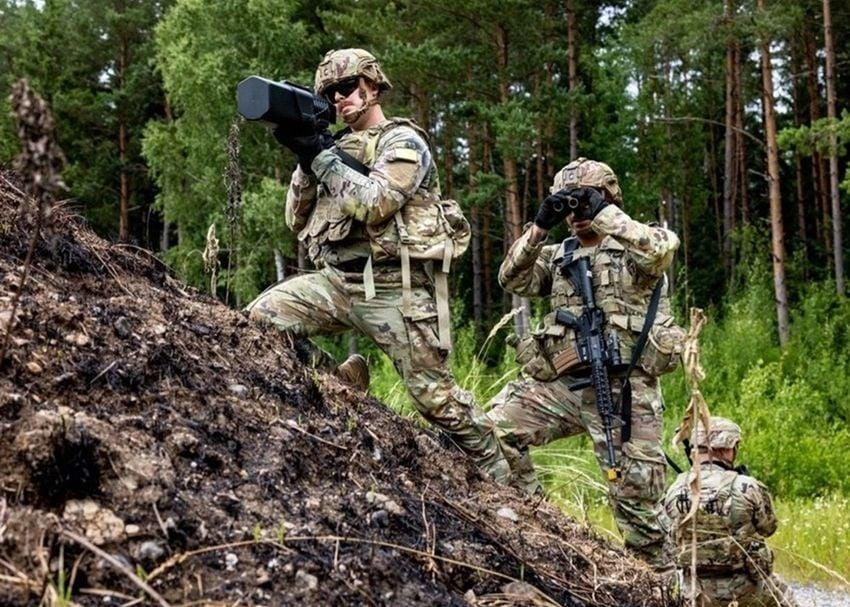
Munich: In a city whose defence startups have spent the past three years promising that a handful of engineers can build weapons faster than a state arsenal, a new pot of European money is about to test the claim. The European Commission’s AGILE programme, a one hundred and fifteen million euro pilot for rapid defence innovation, is moving from proposal toward reality, and for the small companies that have crowded into Europe’s defence-tech scene it represents something rare: an EU instrument designed around their speed rather than against it.

The premise is an admission of failure. For all the talk of European strategic autonomy, the Union’s funding machinery has been notoriously slow, built for consortia of large primes that can survive years between an application and a grant. The start-ups working on drones, artificial intelligence and quantum sensing operate on a different clock, and many have complained that by the time European money arrives the technology, or the company, has moved on. AGILE is the Commission’s attempt to meet them where they are.

Its defining feature is the calendar. The programme promises to cut the time from application to grant to roughly four months, a pace almost unheard of in Brussels procurement, and to push the resulting technology toward armed forces within one to three years. Individual projects would receive between one and five million euros, with the pilot expected to back somewhere between twenty and thirty of them. The money itself comes from internal reallocation within the existing defence and space budget, a tidy way of launching something new without a fresh fight over funds.

The amounts are small, and deliberately so. One hundred and fifteen million euros is a rounding error beside the bloc’s larger defence ambitions, including the one and a half billion euros committed under the European defence industry programme. AGILE is not meant to arm a continent. It is meant to prove a method, to show that European money can chase disruptive ideas with the same appetite for risk that private venture capital brings, and to keep the most promising young firms from drifting toward American buyers or American markets.

That last anxiety is rarely stated but never far away. Europe has produced genuine defence-tech success stories, yet it has also watched talented founders conclude that the continent talks about innovation more easily than it pays for it. A programme that fails fast and cheaply, but fails, would confirm the cynics. One that turns a few of its twenty-odd bets into deployed capability would give the Commission a template it could scale, and a reply to the founders who say Brussels is structurally incapable of moving quickly.

The timing is not accidental. With Russia’s war on Ukraine grinding into another year and European airspace repeatedly violated along the eastern flank, the appetite for faster, cheaper, more adaptable systems has rarely been higher. Drones and electronic warfare have rewritten assumptions about what wins on a modern battlefield, and much of that learning has come from improvisation rather than decade-long procurement cycles.

AGILE is expected to become operational at the start of 2027, which means its first real verdict lies some way off. For now it is a wager that Europe’s defence establishment can borrow the habits of its start-ups without smothering them in the process. Munich’s engineers, who have heard generous promises before, will judge it not by the press release but by how quickly the first cheque actually clears.