Bratislava: The CERV Daphne strand call for 2026 has opened with an indicative envelope around 32 million euro, and the Slovak national contact point is already routing applicant guidance through civil society networks ahead of the summer evaluation window that will test whether the rights and values programme can deliver against rising violence-against-women caseloads in the central European region.
The call sits inside the European Commission’s Citizens, Equality, Rights and Values programme, the seven-year funding instrument that consolidated the predecessor Rights, Equality and Citizenship and Europe for Citizens streams into a single envelope for the 2021 to 2027 cycle. The Daphne strand is the dedicated line for projects combating gender-based violence and violence against children, and it has consistently been one of the most over-subscribed strands of the entire programme.
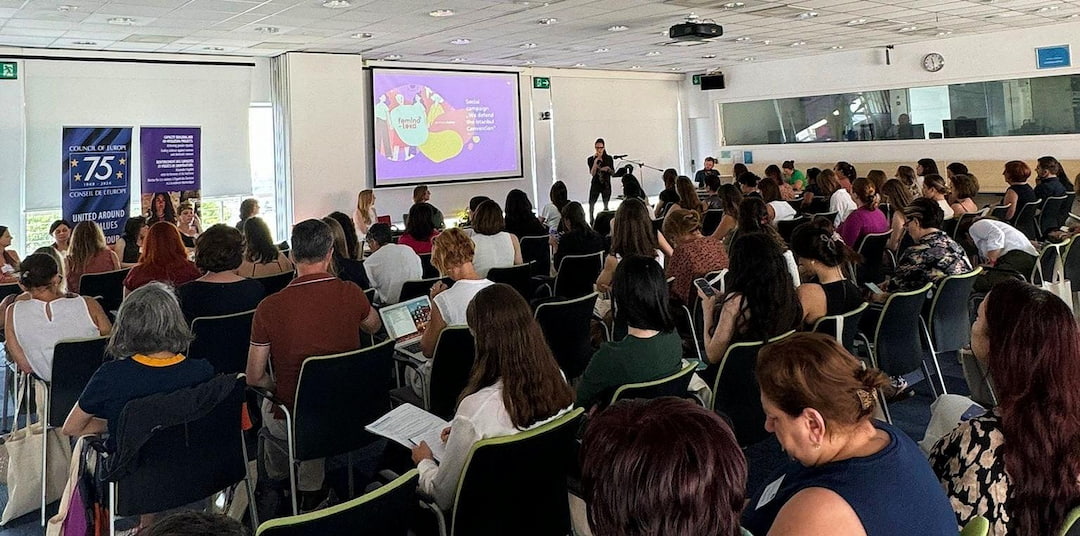
The 2026 work programme reorganised the priorities slightly. Online violence and the integrated implementation of the Istanbul Convention sit alongside support for child victims of violence, with a sharper focus on prevention programmes targeting perpetrators and on systemic capacity-building in national support services. Applicants will be assessed against the standard CERV criteria of relevance, methodology, coordination capacity, sustainability, and EU added value, with weighted scoring that has historically rewarded transnational consortia over single-country bids.
For Bratislava the call matters more than the absolute number suggests. Slovakia has been one of the slower countries on Istanbul Convention movement and the ministerial signal in early 2026 reaffirmed that ratification remained off the immediate political agenda. That gap has pushed Slovak civil society organisations toward CERV funding as the principal European-level tool for victim support, training of frontline professionals, and awareness-raising work that domestic budgets have not consistently underwritten.
The technical mechanics are familiar to repeat applicants. Project grants are awarded for two to three year terms, with co-funding requirements that drop for organisations defined as small entities under the financial regulation. Operating grants are kept on a separate track for the framework partners. The application portal sits in the Funding and Tenders system, with eForm submission through the Commission’s standard interface and evaluation by external experts coordinated through the European Education and Culture Executive Agency.
The wider CERV picture frames the Daphne call. The programme is in the back half of its 2021 to 2027 envelope, with roughly 1.55 billion euro in total committed across the four strands and the operating grant lines for European networks. The mid-term evaluation is now feeding into preparatory work for the post-2027 successor instrument, and the Commission has signalled that the rights and values logic will carry into the next multi-annual financial framework alongside the contested Single Strategic Plan architecture.
That post-2027 question hangs over the current call cycle. If the next MFF folds CERV into a broader internal cohesion or social envelope, the dedicated visibility of strands like Daphne could erode. National contact points in central Europe have been pressing the Commission to preserve a standalone rights and values line, drawing on the political experience of the 2021 to 2027 period when the programme functioned as a counterweight in member states with restrictive civic space dynamics.
The summer evaluation timeline runs through August into early autumn, with grant agreements typically signed before year end and project start dates from early 2027. For Slovak applicants the window aligns with the run-up to several national political milestones, including the planned review of victim support services that has been promised in the government programme but delayed by budget pressures. The CERV money will not close that gap, but it will sharpen the political case for sustained domestic action.