August 10, 2026
LATEST
Five Joint Defence Projects Launch Europe’s Military ShieldElectrification Plan Aims to Make Europe First Electro ContinentHorizon Europe Budget Fight Heats Up as Ministers Push BackGoogle’s DMA Fine Sets Off a Transatlantic Tariff ClashTwenty New University Alliances Join Erasmus for Two YearsForeign Subsidies Case Puts Temu in the EU’s SightsVan Tachographs Now Mandatory for Cross-Border FleetsStress Test Exposes Gaps in Euro Area Bank DefencesEurope Bets on a Gulf Partnership Before the Riyadh SummitWhy the Atlantic Route Now Runs Through MauritaniaKyiv and Chisinau Advance as the EU Accession Talks Gather PaceEurope’s New Digital Border System Beds In After a Rocky RolloutBrussels Mounts Its Largest Wildfire Response as the Fires SpreadRetail Spending Slipped in June, Wrong-Footing EconomistsHeatwave Warning Puts Brussels on Alert for Vulnerable GroupsKANAL’s 230 Million Euro Museum Sets a November Opening DatePension Savings Rules Get a Reset as the EU Scraps the 1% CapMedicine Shortages Move to the Heart of Europe’s Pharma ResetJapan Becomes Europe’s Closest Security Partner in AsiaCan Europe’s New Zealand Deal Anchor It in the Pacific?Five Joint Defence Projects Launch Europe’s Military ShieldElectrification Plan Aims to Make Europe First Electro ContinentHorizon Europe Budget Fight Heats Up as Ministers Push BackGoogle’s DMA Fine Sets Off a Transatlantic Tariff ClashTwenty New University Alliances Join Erasmus for Two YearsForeign Subsidies Case Puts Temu in the EU’s SightsVan Tachographs Now Mandatory for Cross-Border FleetsStress Test Exposes Gaps in Euro Area Bank DefencesEurope Bets on a Gulf Partnership Before the Riyadh SummitWhy the Atlantic Route Now Runs Through MauritaniaKyiv and Chisinau Advance as the EU Accession Talks Gather PaceEurope’s New Digital Border System Beds In After a Rocky RolloutBrussels Mounts Its Largest Wildfire Response as the Fires SpreadRetail Spending Slipped in June, Wrong-Footing EconomistsHeatwave Warning Puts Brussels on Alert for Vulnerable GroupsKANAL’s 230 Million Euro Museum Sets a November Opening DatePension Savings Rules Get a Reset as the EU Scraps the 1% CapMedicine Shortages Move to the Heart of Europe’s Pharma ResetJapan Becomes Europe’s Closest Security Partner in AsiaCan Europe’s New Zealand Deal Anchor It in the Pacific?
August 10, 2026
LATEST
Five Joint Defence Projects Launch Europe’s Military ShieldElectrification Plan Aims to Make Europe First Electro ContinentHorizon Europe Budget Fight Heats Up as Ministers Push BackGoogle’s DMA Fine Sets Off a Transatlantic Tariff ClashTwenty New University Alliances Join Erasmus for Two YearsForeign Subsidies Case Puts Temu in the EU’s SightsVan Tachographs Now Mandatory for Cross-Border FleetsStress Test Exposes Gaps in Euro Area Bank DefencesEurope Bets on a Gulf Partnership Before the Riyadh SummitWhy the Atlantic Route Now Runs Through MauritaniaKyiv and Chisinau Advance as the EU Accession Talks Gather PaceEurope’s New Digital Border System Beds In After a Rocky RolloutBrussels Mounts Its Largest Wildfire Response as the Fires SpreadRetail Spending Slipped in June, Wrong-Footing EconomistsHeatwave Warning Puts Brussels on Alert for Vulnerable GroupsKANAL’s 230 Million Euro Museum Sets a November Opening DatePension Savings Rules Get a Reset as the EU Scraps the 1% CapMedicine Shortages Move to the Heart of Europe’s Pharma ResetJapan Becomes Europe’s Closest Security Partner in AsiaCan Europe’s New Zealand Deal Anchor It in the Pacific?Five Joint Defence Projects Launch Europe’s Military ShieldElectrification Plan Aims to Make Europe First Electro ContinentHorizon Europe Budget Fight Heats Up as Ministers Push BackGoogle’s DMA Fine Sets Off a Transatlantic Tariff ClashTwenty New University Alliances Join Erasmus for Two YearsForeign Subsidies Case Puts Temu in the EU’s SightsVan Tachographs Now Mandatory for Cross-Border FleetsStress Test Exposes Gaps in Euro Area Bank DefencesEurope Bets on a Gulf Partnership Before the Riyadh SummitWhy the Atlantic Route Now Runs Through MauritaniaKyiv and Chisinau Advance as the EU Accession Talks Gather PaceEurope’s New Digital Border System Beds In After a Rocky RolloutBrussels Mounts Its Largest Wildfire Response as the Fires SpreadRetail Spending Slipped in June, Wrong-Footing EconomistsHeatwave Warning Puts Brussels on Alert for Vulnerable GroupsKANAL’s 230 Million Euro Museum Sets a November Opening DatePension Savings Rules Get a Reset as the EU Scraps the 1% CapMedicine Shortages Move to the Heart of Europe’s Pharma ResetJapan Becomes Europe’s Closest Security Partner in AsiaCan Europe’s New Zealand Deal Anchor It in the Pacific?

Fingerprints Replace Passport Stamps As Europe’s Borders Go Digital

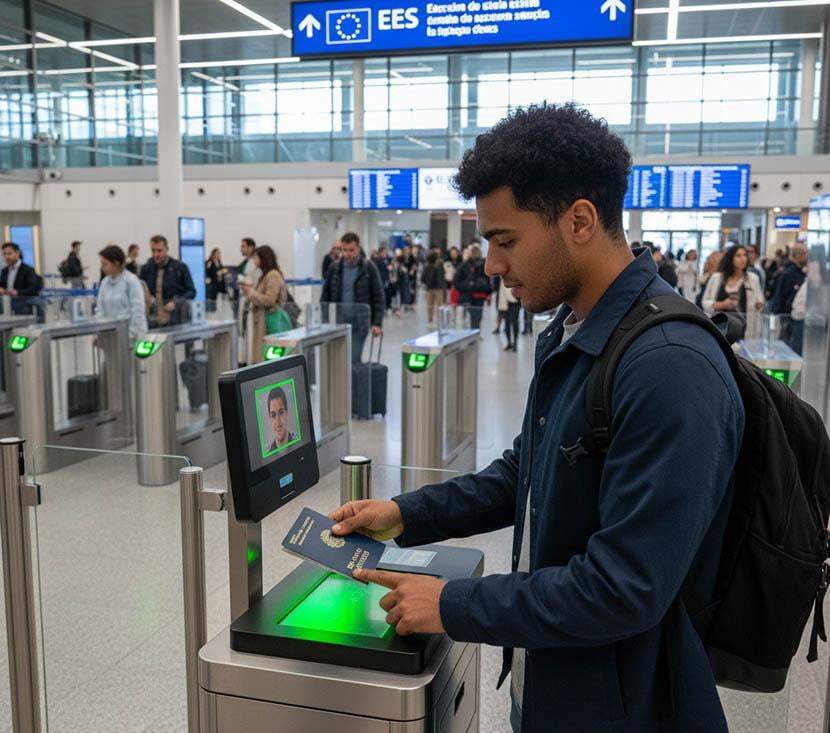
Frankfurt: The stamp in the passport, that small inky proof of where a traveller has been, is quietly disappearing from Europe’s frontiers. Since the Entry/Exit System became fully operational in April, non-EU visitors arriving for short stays no longer have their documents marked by hand. Instead their face and fingerprints are recorded in a central database the moment they cross into the Schengen area, and a digital record tracks every entry and exit thereafter. The change, years late and long disputed, is now simply the way Europe’s borders work.

The system replaces a method of counting visitors that was as old as it was unreliable. For decades the only evidence that a tourist or business traveller had overstayed the ninety-day limit was a manual stamp a border guard might or might not have applied correctly. Overstayers slipped through, identities were hard to verify, and national authorities had no shared picture of who was inside the bloc. EES is meant to close that gap by registering third-country nationals biometrically and calculating their permitted stay automatically.

The rollout was deliberately cautious, and for good reason. After repeated delays driven by fears of chaos at airports and land crossings, the bloc chose a phased introduction running from last October to this April rather than a single switch-on. Even now the rules allow member states temporary flexibility to ease or suspend checks when queues threaten to overwhelm a terminal, an acknowledgement that biometric registration takes longer than a glance at a stamp and that the first summer under the new regime will be its real test.

The harder change is still to come. ETIAS, the travel authorisation that visa-exempt visitors will have to obtain before they set off, is expected toward the end of this year. It works less like a visa than like the electronic pre-clearance that the United States and others already demand, a short online application screened against security and migration databases before a traveller boards a plane. For the millions who currently breeze into Europe with only a passport, it will be the first time entry requires permission granted in advance.

Civil liberties groups have watched the build-out with unease. A database holding the biometrics of hundreds of millions of travellers is a tempting target and a powerful tool, and campaigners worry about how long data is retained, who may query it, and whether function creep will gradually widen access from border control to general policing. Supporters counter that the system merely brings Europe into line with international norms and that orderly external borders are the precondition for the free movement the bloc prizes internally.

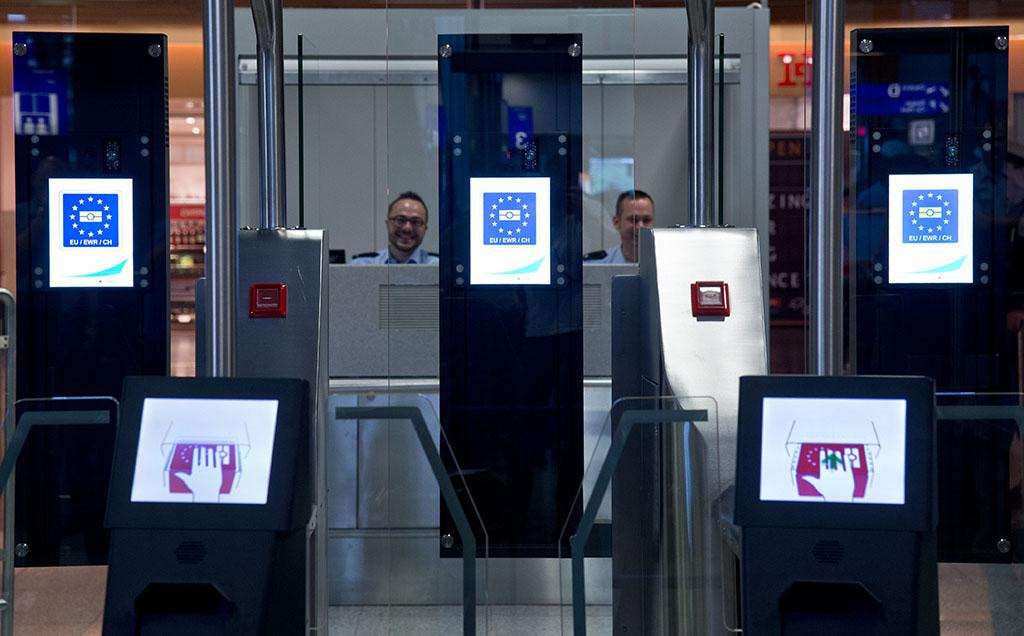
There is an operational anxiety too. Airlines, airports and land-border operators have spent heavily on kiosks and dedicated lanes, and the experience so far has been uneven, with some crossings absorbing the new checks smoothly and others reporting longer waits. The interplay between EES and ETIAS, once both are running, will determine whether the digital border feels seamless or simply adds friction to every arrival.

What is no longer in doubt is the direction. Europe has decided that its external frontier should be data-driven, biometric and automated, a single system stretched across more than two dozen countries. The passport stamp, that modest souvenir of travel, is becoming a relic. Whether its replacement delivers the security and efficiency promised, or merely a more sophisticated kind of queue, will become clear as the first full season of digital borders unfolds.