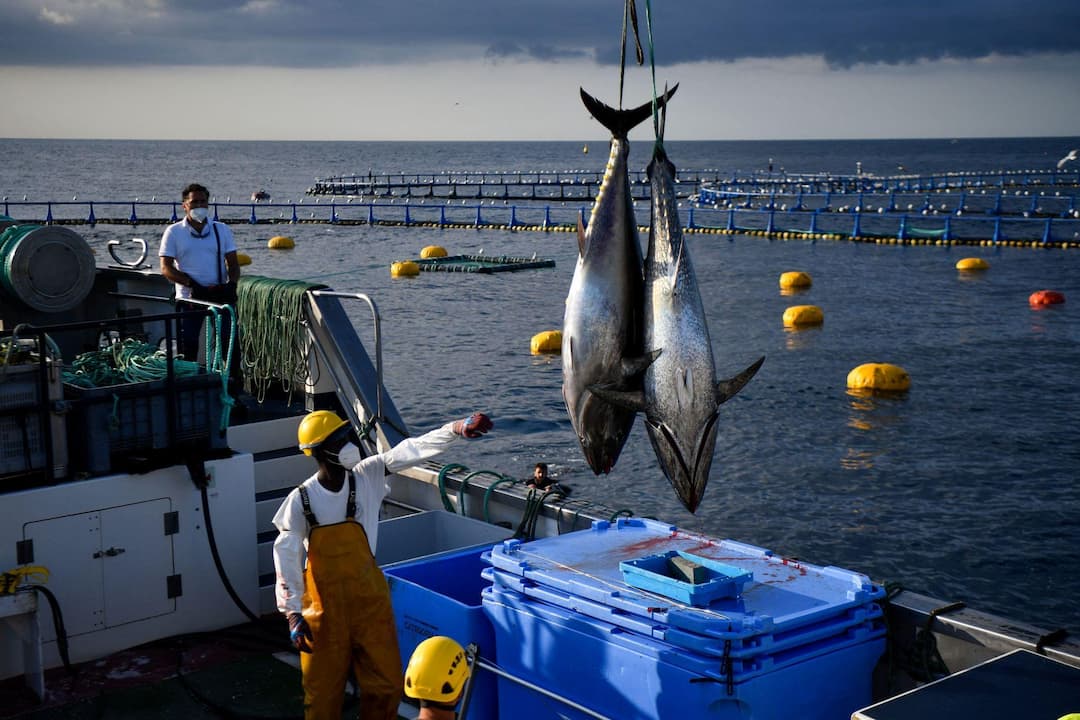
Vigo: The Mediterranean’s most lucrative and most scrutinised fishery has reopened under an expanded surveillance net, as the European Fisheries Control Agency coordinates an intensified control campaign for the bluefin tuna purse-seine season that began in late May. Operating from its coordination centre on Spain’s Atlantic coast, the agency is pooling inspection assets from eight member states to keep a close eye on a fleet that fishes one of the sea’s great conservation success stories.
The numbers behind the campaign are striking. More than two hundred purse seiners are licensed to chase bluefin this season, dozens of them flying EU flags, working within a tightly capped window of just a few weeks. EFCA’s role is to weave national patrol vessels, aircraft and inspectors into a single deployment plan, and to extend that watch to third-country vessels in international waters under the joint inspection scheme run by ICCAT, the regional body that governs Atlantic and Mediterranean tuna.
The intensity of the monitoring is a direct legacy of past failure. Two decades ago Atlantic bluefin was a byword for overfishing, with quotas routinely ignored and the spawning stock pushed toward collapse. The recovery that followed, built on hard catch limits, individual vessel quotas and an exhaustive catch-documentation system that follows each fish from net to plate, has become the textbook case for what disciplined fisheries management can achieve. Sustaining it depends on the assumption that the rules are actually enforced at sea.
That is the purpose of the deployment. Purse seining concentrates enormous value into a short, frantic period, when schools are located, encircled and often transferred live into towed cages for fattening. Each of those steps is a point where reported catches can drift from real ones, and where independent verification matters most. Cross-checking transfer declarations, monitoring cage operations and ensuring that every tonne is properly attributed to a quota is painstaking work, and it is the difference between a paper recovery and a real one.
Why it matters extends well beyond the species itself. Bluefin is the proof of concept that Europe’s broader fisheries policy points to when defending controversial quota cuts elsewhere. If the most heavily policed stock in the region can be shown to stay within scientific limits year after year, the political case for restraint on hake, sardine and other pressured species becomes easier to make.
The season will close within weeks, and the agency’s daily recommendations to inspectors will quietly shape where boats are boarded and cages checked. None of it will generate dramatic headlines if it works as intended. That, in a sense, is the point. A fishery that once symbolised the tragedy of the commons now serves as a reminder that recovery is possible, but only for as long as someone keeps watching the water.