August 10, 2026
LATEST
Five Joint Defence Projects Launch Europe’s Military ShieldElectrification Plan Aims to Make Europe First Electro ContinentHorizon Europe Budget Fight Heats Up as Ministers Push BackGoogle’s DMA Fine Sets Off a Transatlantic Tariff ClashTwenty New University Alliances Join Erasmus for Two YearsForeign Subsidies Case Puts Temu in the EU’s SightsVan Tachographs Now Mandatory for Cross-Border FleetsStress Test Exposes Gaps in Euro Area Bank DefencesEurope Bets on a Gulf Partnership Before the Riyadh SummitWhy the Atlantic Route Now Runs Through MauritaniaKyiv and Chisinau Advance as the EU Accession Talks Gather PaceEurope’s New Digital Border System Beds In After a Rocky RolloutBrussels Mounts Its Largest Wildfire Response as the Fires SpreadRetail Spending Slipped in June, Wrong-Footing EconomistsHeatwave Warning Puts Brussels on Alert for Vulnerable GroupsKANAL’s 230 Million Euro Museum Sets a November Opening DatePension Savings Rules Get a Reset as the EU Scraps the 1% CapMedicine Shortages Move to the Heart of Europe’s Pharma ResetJapan Becomes Europe’s Closest Security Partner in AsiaCan Europe’s New Zealand Deal Anchor It in the Pacific?Five Joint Defence Projects Launch Europe’s Military ShieldElectrification Plan Aims to Make Europe First Electro ContinentHorizon Europe Budget Fight Heats Up as Ministers Push BackGoogle’s DMA Fine Sets Off a Transatlantic Tariff ClashTwenty New University Alliances Join Erasmus for Two YearsForeign Subsidies Case Puts Temu in the EU’s SightsVan Tachographs Now Mandatory for Cross-Border FleetsStress Test Exposes Gaps in Euro Area Bank DefencesEurope Bets on a Gulf Partnership Before the Riyadh SummitWhy the Atlantic Route Now Runs Through MauritaniaKyiv and Chisinau Advance as the EU Accession Talks Gather PaceEurope’s New Digital Border System Beds In After a Rocky RolloutBrussels Mounts Its Largest Wildfire Response as the Fires SpreadRetail Spending Slipped in June, Wrong-Footing EconomistsHeatwave Warning Puts Brussels on Alert for Vulnerable GroupsKANAL’s 230 Million Euro Museum Sets a November Opening DatePension Savings Rules Get a Reset as the EU Scraps the 1% CapMedicine Shortages Move to the Heart of Europe’s Pharma ResetJapan Becomes Europe’s Closest Security Partner in AsiaCan Europe’s New Zealand Deal Anchor It in the Pacific?
August 10, 2026
LATEST
Five Joint Defence Projects Launch Europe’s Military ShieldElectrification Plan Aims to Make Europe First Electro ContinentHorizon Europe Budget Fight Heats Up as Ministers Push BackGoogle’s DMA Fine Sets Off a Transatlantic Tariff ClashTwenty New University Alliances Join Erasmus for Two YearsForeign Subsidies Case Puts Temu in the EU’s SightsVan Tachographs Now Mandatory for Cross-Border FleetsStress Test Exposes Gaps in Euro Area Bank DefencesEurope Bets on a Gulf Partnership Before the Riyadh SummitWhy the Atlantic Route Now Runs Through MauritaniaKyiv and Chisinau Advance as the EU Accession Talks Gather PaceEurope’s New Digital Border System Beds In After a Rocky RolloutBrussels Mounts Its Largest Wildfire Response as the Fires SpreadRetail Spending Slipped in June, Wrong-Footing EconomistsHeatwave Warning Puts Brussels on Alert for Vulnerable GroupsKANAL’s 230 Million Euro Museum Sets a November Opening DatePension Savings Rules Get a Reset as the EU Scraps the 1% CapMedicine Shortages Move to the Heart of Europe’s Pharma ResetJapan Becomes Europe’s Closest Security Partner in AsiaCan Europe’s New Zealand Deal Anchor It in the Pacific?Five Joint Defence Projects Launch Europe’s Military ShieldElectrification Plan Aims to Make Europe First Electro ContinentHorizon Europe Budget Fight Heats Up as Ministers Push BackGoogle’s DMA Fine Sets Off a Transatlantic Tariff ClashTwenty New University Alliances Join Erasmus for Two YearsForeign Subsidies Case Puts Temu in the EU’s SightsVan Tachographs Now Mandatory for Cross-Border FleetsStress Test Exposes Gaps in Euro Area Bank DefencesEurope Bets on a Gulf Partnership Before the Riyadh SummitWhy the Atlantic Route Now Runs Through MauritaniaKyiv and Chisinau Advance as the EU Accession Talks Gather PaceEurope’s New Digital Border System Beds In After a Rocky RolloutBrussels Mounts Its Largest Wildfire Response as the Fires SpreadRetail Spending Slipped in June, Wrong-Footing EconomistsHeatwave Warning Puts Brussels on Alert for Vulnerable GroupsKANAL’s 230 Million Euro Museum Sets a November Opening DatePension Savings Rules Get a Reset as the EU Scraps the 1% CapMedicine Shortages Move to the Heart of Europe’s Pharma ResetJapan Becomes Europe’s Closest Security Partner in AsiaCan Europe’s New Zealand Deal Anchor It in the Pacific?

IRIS2 satellite project speeds up after sharp space conference push

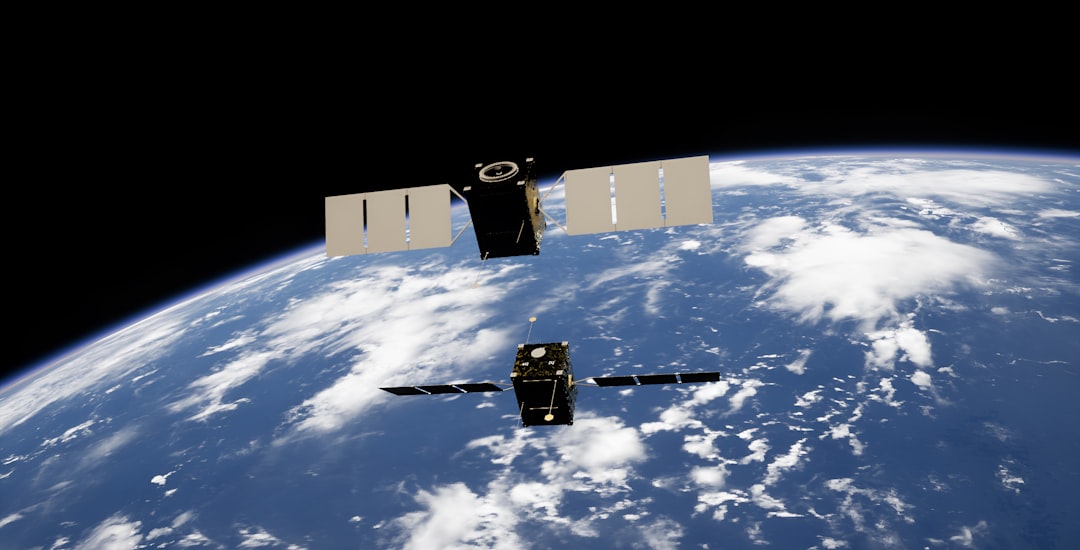
Strasbourg: The European Union’s third flagship space programme has moved from contract to construction phase. IRIS2 — Infrastructure for Resilience, Interconnectivity and Security by Satellite — will deploy approximately 290 satellites across multiple orbits, providing sovereign communications capacity for governments, businesses and citizens by the end of the decade. Following the 12-year concession contract signed with the SpaceRISE consortium in December 2024, the European Commissioner for Defence and Space Andrius Kubilius set 2029 as the target for initial services at the 2026 European Space Conference, accelerating an earlier 2030 timeline.

The constellation architecture combines 18 satellites in Medium Earth Orbit, 264 in higher Low Earth Orbit and 10 in lower LEO, supported by ground control centres distributed across the EU. The total investment is estimated at 10.6 billion euros, with 60 per cent from European public funds and 40 per cent from the SpaceRISE consortium of SES, Eutelsat and Hispasat. SES leads MEO deployment, Eutelsat is responsible for LEO capacity, and Hispasat designs and operates the governmental ground segment, including the facilities that interconnect orbital layers with terrestrial networks.

On 27 January 2026, the EU Agency for the Space Programme announced that the GOVSATCOM programme — a bridge service to IRIS2 — became operational, integrating eight satellites contributed by Member States and pooling capacity for EU institutions, ministries and embassies. The system provides a transitional capability that establishes operational procedures and security accreditation processes ahead of IRIS2’s full deployment. Poland in September 2025 allocated funds for six secure communications satellites as an additional national contribution to the EU constellation.

IRIS2 will integrate quantum key distribution through the European Quantum Communication Infrastructure, providing cryptographic protection at a level not previously available in commercial satellite networks. Data will be routed to five ground points of presence, all on European territory, eliminating reliance on third-country terrestrial relay infrastructure. The system uses inter-satellite laser communications, a technology that telecommunications specialists describe as a prerequisite for resilient, low-latency multi-orbit operations.

The geopolitical context shapes the project’s strategic case. Following the suspension of US military aid to Ukraine in early 2025, questions arose about the long-term reliability of Starlink services for European operations. IRIS2 was always envisaged as a counterweight to commercial mega-constellations, but the wartime exposure of dependence on a single non-European provider sharpened political resolve to accelerate the European alternative. SpaceX’s Starshield programme, the most direct comparator, is restricted to US government users by design.

Commissioner Kubilius has been explicit about the wider security framing. In remarks at the European Space Conference in Brussels in January 2026, he warned that Member States fear war is coming and emphasised that only unity can deter aggression. The conference also unveiled the first images from Eumetsat’s MTG-S1 Infrared Sounder, a new weather satellite whose 2,000-wavelength observations are expected to sharpen forecasting for extreme weather events later in 2026. The European Space Agency’s Biomass mission, commissioned earlier in the year with its P-band radar, has opened new measurement of CO2 absorption by tropical forests.

Industrial questions remain. Members of the SpaceRise consortium have flagged manufacturing of ground terminals and securing critical satellite components as outstanding challenges. The first IRIS2 satellites may launch with limited capabilities and improve iteratively throughout the 2030s, an approach borrowed from low-cost rapid-iteration designs. The commercial business case has drawn scrutiny: telecommunications operators have asked whether the consortium’s service offering can profitably reach private customers while government users are bound by sovereign procurement constraints.

The Galileo and Copernicus programmes, the two existing flagships, are themselves undergoing capability upgrades. Galileo’s new encrypted and secure navigation service entered operational status, providing authenticated positioning for users operating in contested environments. Copernicus’s Sentinel-1 reconstruction continues following the loss of Sentinel-1B, and the Sentinel-1D replacement launch sequence remains on track. Together, the three flagships consolidate what officials describe as a sovereign space layer beneath Europe’s digital, defence and climate policies.